



















Night Taco













You clock in, flip the sign to open, and the first headlights are already swinging into the lot before you’ve wiped down the counter. That’s how every shift starts in Night Taco — no warm-up, no tutorial pop-ups walking you through the fryer, just an order ticket and a line of cars that won’t stop coming until sunrise. The game drops you behind the counter of a roadside stand and lets the dread build one order at a time.
| Genre | Psychological horror, food-service simulation |
| Setting | A roadside taco stand during an all-night shift |
| Average Session | 15–20 minutes |
| Endings | Two, based on dialogue choices |
| Player Rating | 4.1 out of 5 |
Working the Window in Night Taco
The loop sounds simple: take the order, prepare the taco, hand it through the window, repeat until the shift clock runs out. Night Taco keeps that structure deliberately plain, because the tension isn’t in the recipe — it’s in what happens around it while your hands are busy. You can’t close early and you can’t skip a car; your shift ends at sunrise and the orders keep coming whether you’re ready or not.
Early tickets are mundane. Regular orders, regular customers, nothing that would raise an eyebrow in a normal late-night diner. The game uses that normalcy on purpose, training you to focus on the counter instead of the window, which is exactly where it wants your attention when things start to slip.
What makes the loop hold up over a single sitting is pacing rather than variety. There’s no skill tree, no difficulty slider — just a slow tightening of the same few minutes of preparation, stretched across a night that keeps insisting it’s almost over.
What New Players Get Wrong on Their First Shift
The most common mistake is treating Night Taco like a straightforward cooking sim and rushing every ticket to beat some invisible timer. There isn’t one in the way players expect — the real pressure comes from noticing environmental changes, not from plating speed. Players who blitz through orders without looking up tend to miss the cues that matter most.
The second mistake is skipping dialogue too fast. Some early comments on the game’s page noted that lines can advance before you’ve finished reading them, and because the choices you make in those exchanges quietly steer which of the two endings you land on, missing a line can mean missing context you’ll want later.
Dialogue pacing: conversations with customers at the window move on their own timer, so slowing down and actually reading each exchange is worth more than rushing back to the grill.
How the Night Changes as Your Shift Goes On
Night Taco doesn’t announce its escalation. Instead it erodes the environment in small, deniable increments that most players only notice in hindsight. By the time you’ve served a dozen or so tickets, several things have usually shifted:
- The radio behind the counter starts skipping mid-song
- The lot lights outside begin going dark one at a time
- Customers appear at times the lot should be empty
- Routine tasks — folding, plating, handing off an order — start to feel slower and heavier than they should
None of these changes are explained. Night Taco trusts you to notice the drift on your own, which is part of why players describe the back half of a shift as considerably more unsettling than the first, even though the mechanical loop hasn’t changed at all.
The Regular Who Won’t Leave the Window
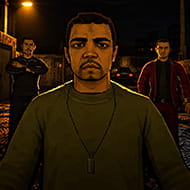
Late into most shifts, a figure lingers at the order window long after the last car in the lot should have left. Night Taco never fully explains who this visitor is, and that ambiguity is deliberate — the game leans on PS1-style horror conventions where suggestion does more work than explanation. Players in the community frequently compare the presence at the window to classic stalker-style antagonists from older survival horror, more for the slow-burn dread than for any jump scare payoff.
Because the game favors atmosphere over cheap scares, the moment tends to land harder for players who’ve been paying attention to the radio and the lights rather than those speed-running orders. It rewards patience, which is an unusual thing to say about a fast-food shift.
Two Endings, One Long Night in Night Taco
How you respond during customer dialogue determines which of the two available endings you reach, and Night Taco doesn’t flag which lines matter in the moment. Some players have reported finishing a full run before realizing a specific exchange near the middle of the shift had already locked in their outcome.
Advanced players tend to replay with an eye on consistency — picking a clear emotional stance in every conversation rather than mixing polite and dismissive responses, since the game appears to track pattern more than any single choice. This isn’t confirmed outright by the developer, but it lines up with what repeat players describe seeing across different runs of Night Taco.
How many endings does Night Taco have?
There are two endings, and which one you reach depends on the dialogue choices you make with customers throughout the shift rather than on how efficiently you serve orders.
How long does a full playthrough take?
A single shift runs roughly 15 to 20 minutes, which matches the game’s own listed average session length and makes it easy to replay for the second ending in one sitting.
Does serving orders quickly change the outcome?
No — speed at the grill doesn’t affect which ending you get. The dialogue you choose during customer interactions is what actually shapes the outcome, not how fast you fill tickets.
Night Taco earns its dread the slow way, through a radio that skips a little more each hour and a visitor at the window who was never invited to stay. It’s a short game, but the two endings and the quiet erosion of that taco stand give it more reason to replay than its runtime suggests.