

















Not My Dad
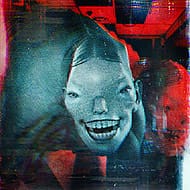
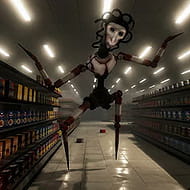
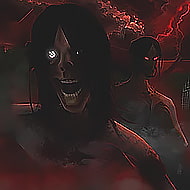



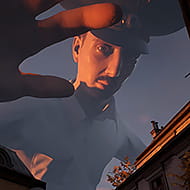



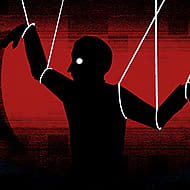


You finish brushing your teeth, flick off the bathroom light, and pause at the top of the stairs because something in the house sounds different tonight. This is the opening tension of Not My Dad, a first-person psychological horror game built around a routine that keeps threatening to fall apart. You are not hunting monsters with a flashlight or solving elaborate puzzles in a haunted mansion. You are doing homework, eating dinner, and getting ready for bed, while trying not to draw the attention of the one person in the house who used to feel safe.
| Genre | Psychological Horror, Adventure |
| Perspective | First-Person |
| Setting | A single family home |
| Core Loop | Complete daily tasks without disturbing Dad |
| Player Count | Single-player |
Everyday Chores as an Early Warning System
The core mechanic in Not My Dad is deceptively small. You eat, you brush your teeth, you do homework, and you get ready for bed, and each of these tasks is a checkpoint rather than a chore. The game frames domestic routine as a way of measuring how safe the house currently is, which is a clever inversion of the usual horror formula where danger is loud and obvious from the first minute.
Beginners tend to treat these tasks as filler before the real scares start, rushing through them to see what happens next. That instinct works against you. Dad reacts to how you move through the house, not just to scripted triggers, so players who slow down and actually pay attention to small details tend to notice something is wrong well before anything jumps out at them.
A newcomer’s first mistake is usually noise. Slamming doors, running through hallways, or skipping a task altogether draws exactly the kind of attention the game wants you to avoid, and the house has a way of making you feel that mistake immediately.
Not My Dad and the Rules of the House
Every horror game establishes rules, and Not My Dad keeps its rules quiet on purpose. Nobody hands you a checklist explaining what Dad tolerates and what sets him off. You learn the boundaries the same way a kid in that situation would, through trial, discomfort, and a growing sense that something about tonight is not normal.
- Completing tasks quietly reduces the chance of an encounter
- Ignoring a task can escalate tension later in the same evening
- Certain rooms feel different depending on how recently Dad has been near them
This slow accumulation of unspoken rules is why the game rewards a second playthrough. Once you understand the rhythm of the house, you start noticing environmental cues you missed the first time, which is exactly the kind of detail players who enjoy this game tend to talk about afterward.
Reading Dad Before He Reads You
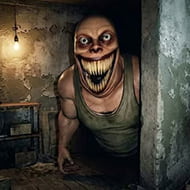
Dad is the game’s only named figure, and he is not written as a jump-scare puppet who exists solely to chase you down a hallway. Early sequences present him as tired, ordinary, and only slightly off, which is what makes later moments land harder. The demo’s opening stretch spends real time letting you exist alongside him doing nothing threatening at all.
By the time Dad’s behavior shifts, the game has already taught you what normal looks like in this house, so the change registers as wrong rather than simply scripted. Players who came in expecting a traditional stalker chase often describe this slower build as the thing that actually got under their skin.
Sound plays a bigger role here than most players expect going in.
Footsteps on a specific floorboard, a door left ajar that was closed minutes earlier, or Dad’s voice from a room you thought was empty all function as the game’s real scare delivery system, more so than any single scripted encounter.
The Closet, the Skin, and What Players Think Is Happening
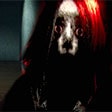
One recurring detail from the demo has become a genuine point of community discussion: a closet in the house that several players independently flagged as central to whatever is actually wrong with Dad. Community theories floating around after the demo’s release describe Dad as something closer to a skin thief wearing a familiar face, a theory built entirely from environmental hints rather than anything stated outright.
Whether that theory holds up once the full game arrives is genuinely unclear, and that ambiguity is part of the appeal for horror fans who prefer piecing together a mystery over being told the answer directly. Streamers who have played the demo tend to spend as much time speculating out loud as they do reacting to scares, which says something about how the writing is landing.
Casual horror fans, meanwhile, often care less about the underlying theory and more about the discomfort of being watched inside a space that should feel like home.
Difficulty Curve: From Quiet Tasks to Real Danger
Early in the game, danger is implied rather than present, and the tension comes from anticipation rather than direct threat. Once Dad’s presence becomes more active, the same rooms you moved through freely now require actual decision-making about timing, noise, and which task to prioritize.
This shift is deliberately uneven. A task that felt trivial minutes earlier can suddenly carry real risk once the house’s atmosphere changes, and the game gives very little warning before that happens. Players who treat every playthrough the same way tend to get caught off guard exactly when the stakes rise.
Completionist-minded players, in particular, have reported replaying the same short sequence multiple times just to see how differently the house behaves depending on how carefully they moved.
Why Not My Dad Divides Horror Fans
The demo currently runs a tight 10 to 15 minutes, and reactions to that length are genuinely split. Some players see it as an efficient, well-paced proof of concept that respects their time. Others feel like they were just settling into the house’s rhythm when the demo ended, and that frustration shows up repeatedly in comment threads.
This divide is worth acknowledging honestly rather than glossing over, because it reflects a real tension in how Not My Dad is currently positioned: is it a taste of something bigger, or a complete short-form experience on its own? Right now it reads more like the former, which is exciting for players eager to see the full house explored but frustrating for anyone who wanted a longer sit in one go.
How long is the Not My Dad demo?
The demo currently available runs roughly 10 to 15 minutes, built around a handful of nightly tasks inside the house. It is intentionally brief, functioning as a self-contained slice of the larger house rather than a full chapter.
What happens if Dad catches you breaking the routine?
The official framing warns of very serious consequences for bothering Dad, and player accounts back that up, describing sudden shifts in his behavior once a task is skipped or a noise draws his attention. The game does not spell out exactly what triggers this, which keeps players cautious rather than reckless.
What is actually wrong with Dad in Not My Dad?
Nothing is confirmed outright, which is part of the design. Community theories built around the closet and Dad’s changing behavior suggest something has replaced or altered him, but the demo leaves that interpretation to the player rather than stating it directly.
Not My Dad works because it trusts a closet, a set of nightly chores, and one increasingly unfamiliar father to carry the entire weight of its horror. Whatever the full release eventually confirms about what is hiding behind Dad’s face, the demo has already convinced a lot of players that this house is worth being afraid of.