















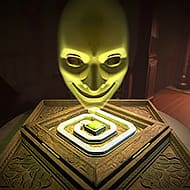


Pacify












Pacify looks like a haunted-house jump-scare game you’ll finish in an evening, but it plays like a resource-management puzzle where the ghost is the least predictable variable in the room. That mismatch between expectation and reality is exactly why it’s held onto a dedicated player base for years past its original release.
| Genre | Cooperative survival horror |
| Players | 1 to 4, with a separate PvP mode |
| Setting | Ludere’s Funeral Parlor and additional locations added over time |
| Core loop | Investigate, collect evidence, pacify or evade the resident spirit |
Emilia’s Two States and Why They Matter
The first ghost players face in Pacify is Emilia, a spirit who switches between a calmer state and a hostile one depending on player actions inside the house. Understanding what triggers that shift is the actual skill the early game is testing, far more than reflexes or map memorization.
Get it wrong and the chase starts immediately.
New players consistently make the same mistake: they gather every marked doll they can find and stack them in one convenient spot near the boiler room, assuming that’s an efficient shortcut. Pacify actively punishes this — the dolls scattered around the house can reactivate under certain conditions, which exists specifically to stop players from treating collection as a solved problem too early.
Burning Marked Dolls Without Losing Your Group
The primary objective across Emilia’s story involves locating dolls marked during past paranormal sessions and burning them in the fireplace, since destroying them upsets the possessed spirit tied to them. It sounds straightforward until you’re doing it with three other players who’ve split up to cover more ground and lost track of each other’s positions.
Communication is arguably the real mechanic here, not the doll-burning itself.
- Coordinate who’s collecting versus who’s watching Emilia’s last known position
- Keep at least one regular doll on hand as a single-use shield if she catches you
- Track keys separately from dolls, since locked doors gate entire sections of the house
Speedrunning players who’ve optimized doll routes still get caught out by groups who don’t communicate, which is part of why solo play in Pacify is considered meaningfully harder than the intended co-op experience.
The Doll State and Why Getting Caught Isn’t Always Game Over
When Emilia catches a player without a doll shield in hand, that player shrinks into a doll state rather than dying outright — movement slows, vision narrows, but the run continues. Another player can restore them by handing Emilia the correct doll while she’s mid-transformation, which turns a near-loss into a coordinated rescue rather than a failure state.
It’s one of the more community-loved mechanics precisely because it keeps a bad moment from ending the session for everyone.
New groups often don’t realize the doll state is recoverable and panic-abandon a downed teammate, while more experienced groups treat it as a normal beat in the run — worth mentioning if you’re introducing friends to Pacify for the first time, since managing expectations here changes how tense the early sessions feel.
PvE Versus PvP: Two Very Different Reasons to Play
Pacify’s cooperative mode has players working together against the ghost, while its PvP mode reframes the same house as a competition where players race for evidence and can sabotage each other, including shoving opponents down to make them spill collected items. These are genuinely different experiences built on the same map and the same core loop.
Players drawn to atmosphere and story tend to stick with co-op almost exclusively.
Players who enjoy social deduction or competitive horror, on the other hand, gravitate toward PvP specifically because the sabotage mechanics let human unpredictability replace the ghost as the main threat — a distinct playstyle that Pacify supports without forcing players to pick a lane permanently.
How Ludere’s Funeral Parlor Set the Template
Ludere’s Funeral Parlor is the first location in Pacify and remains the reference point players use when discussing later additions to the game, since its narrow corridors and boiler-room layout established the pacing every subsequent map has been measured against. It’s a haunted house in the literal sense, but the level design does most of the horror work rather than relying purely on scripted scares.
By the time you’ve cleared it once, the layout stops feeling random and starts feeling deliberately claustrophobic.
Later locations expanded the formula with new ghosts and new mechanics, but Ludere’s Funeral Parlor is still where most new players form their first impression of what Pacify actually demands from a group.
Escalation Tied to Player Progress, Not a Fixed Timer
Rather than running on a flat countdown, Emilia’s speed and aggression scale with how much progress the group makes — burning more dolls or completing more objectives makes her noticeably faster and more willing to hunt actively instead of wandering. This is a deliberate tension-building choice rather than difficulty for its own sake.
It also means rushing objectives carelessly can backfire.
Groups that burn every doll in a short burst without checking their surroundings often find themselves facing a fully escalated Emilia while still scattered across the house, which is a specific and recognizable failure pattern longtime players warn newcomers about.
Proximity Voice Chat and the Panic It Causes
Pacify includes a proximity voice chat system with situational voice-changing effects, meaning what your teammates hear from you changes depending on where you are and what’s happening nearby. It’s a small technical feature with an outsized effect on how tense a session feels, since panicked callouts sound different depending on proximity to danger.
This system is frequently cited as one of the reasons Pacify plays better in a full group than solo.
Solo players lose access to that layer entirely, which is one more reason the single-player experience is considered a harder, quieter version of what the game is actually built around.
What Longtime Players Still Debate About Pacify
One recurring point of disagreement among longtime players is how much the multiple storylines and added locations have diluted the tight, singular scares of the original Ludere’s Funeral Parlor release. Some players feel each new ghost and mechanic keeps the formula fresh; others feel the game was strongest when it was smaller and more focused.
Neither side is wrong, exactly.
What’s not in dispute is that the original doll-and-fireplace loop, built around Emilia specifically, remains the version most players introduce their friends to first — a strong sign of which content has aged best.
How do you actually pacify the ghost in Pacify?
With Emilia specifically, progress depends on locating and burning her marked dolls in the fireplace while managing whether she’s in her calmer or hostile state. Triggering the wrong condition can flip her aggression suddenly, so careful exploration matters more than speed.
What happens if a ghost catches you in Pacify?
Getting caught without a doll shield turns you into a doll rather than ending your run outright. A teammate can restore you by giving the correct doll to the ghost while you’re transforming, making rescues a normal part of most sessions.
Is Pacify better played solo or with a full group?
It’s built around a group of up to four. Solo play removes coordination options and the proximity voice chat’s tension entirely, making the same objectives noticeably harder to complete safely.
Pacify has stayed relevant for years not because its jump scares are especially novel, but because Emilia’s mood system and the doll-and-fireplace loop create genuine tension between rushing objectives and playing carefully — and nothing sums that tension up better than watching a group burn their last doll too fast and realize, one hallway too late, exactly how much faster she’s become.