












Project Threshold







In Project Threshold you start with nothing but a hallway and two doors, one blue and one red, and that single choice is the entire game distilled into a few seconds. There’s no weapon to pick up first, no tutorial room to ease you in. You just have to choose, and whatever waits behind that door is yours to survive or not.
| Genre | Psychological horror, walking simulator |
| Platform | Windows, Linux |
| Progression | Memory-based, no checkpoints |
| Structure | 10 sets of doors leading to distinct fear rooms |
Ten Sets of Doors and No Way Back
The core loop of Project Threshold is brutally simple to describe and considerably harder to survive. You move through ten sets of doors in sequence, and each pair, blue and red, leads to a completely different scenario. There’s no way to know in advance which door hides the safer path, which means your first attempt at any given set is essentially a coin flip.
What makes this interesting rather than just frustrating is the lack of checkpoints. If you’re caught or killed anywhere along the ten sets, you restart the entire game from the first door, not just the room you failed in. That single design decision reframes the whole experience: every run is really a memorization exercise disguised as a horror game.
By the time you’ve died a handful of times, you start treating each door less like an unknown and more like a flashcard. This is where the game’s real hook lives, not in any individual scare but in the slow accumulation of knowledge that makes each subsequent attempt meaningfully easier than the last.
Facing Roaches, Dolls, and Floating Heads Firsthand
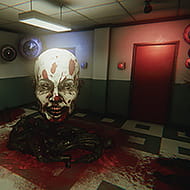
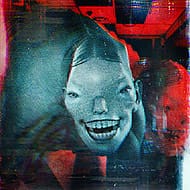
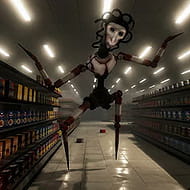
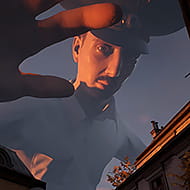
Rather than hiding behind abstract menus or health bars, Project Threshold turns each fear into a physical room you have to walk through. Cockroach-covered floors, spiders, floating heads, abnormally tall figures, large bodies of water, and rooms populated by mannequins or surgeons are all represented as literal spaces you have to cross, not warnings you click past.
Some rooms ask you to simply keep walking despite what’s in front of you, testing nerve more than reflexes. Others expect observation, timing, or a willingness to approach the very thing that’s supposed to scare you off, which flips the usual horror instinct of retreat into something closer to a puzzle.
The cockroach room in particular gets brought up constantly by players as the one that broke their composure first, and it’s often cited as the moment new players realize this game isn’t going to ease them into anything.
The Sitting Doll Room and Other Memory Puzzles
One of the most talked-about sequences in Project Threshold involves a sitting girl, or doll, that requires a specific solution rather than a simple walk-through. Players consistently describe figuring this one out as a small triumph, since the game rarely tells you outright what’s expected.
Text prompts like “LOOK AT IT” appear at key moments, and the wording is deliberately unsettling rather than instructional, which forces you to interpret intent rather than follow a clear command. It’s a small trick, but it does a lot of work toward making the player second-guess every decision.
- Rooms are not numbered stages with scores, but individual fear scenarios tied to specific phobias
- Some sequences reward moving forward despite disturbing imagery rather than hesitating
- A few rooms are solved by approaching the source of the fear directly instead of avoiding it
Once you’ve cracked a room’s actual solution, it stops being scary almost entirely on repeat visits, which is by design given how heavily the game leans on memory over reflex.
Why Getting Caught Sends You Back to the Start
There are no traditional weapons, character classes, or combat upgrades anywhere in Project Threshold. You cannot fight your way out of a bad room, which means every encounter is really a test of whether you already know what’s coming.
This is also the game’s most divisive design choice. Some players find the full restart unbearably punishing, describing runs as pure trial and error with no depth beyond memorizing a 50-50 chance at each set of doors. Others argue that exact harshness is what makes the tension real, since nothing about progress feels safe until you’ve actually internalized the correct sequence.
Either way, it’s worth going in knowing this upfront: Project Threshold expects you to die, often, before it expects you to succeed.
What Beginners Get Wrong Early in Project Threshold
New players tend to rush the early doors the same way they’d approach any other horror game, expecting a save point or partial progress to protect them. That mindset gets punished immediately here.
The other common mistake is treating each door choice as pure guessing even on repeat attempts, rather than actually tracking which side led to trouble last time. Since layouts and outcomes for a given door repeat consistently within a save, deliberate memorization beats blind luck by a wide margin once you’re past your first couple of runs.
A smaller but real mistake: panicking and running through a room meant to be walked calmly, which in several fear scenarios actually triggers the exact outcome you were trying to avoid.
Advanced Memorization Techniques Most Players Skip
Committed players eventually build a mental or written checklist of every door pairing and its outcome, treating a full clear less like a horror playthrough and more like a speedrun route. Community guides built around this exact approach exist specifically to help players reach a full, safe run without a single death.
- Note which color door led to trouble at each of the ten sets on your first blind pass
- Prioritize memorizing the two or three hardest rooms first, since those are usually where repeat deaths cluster
- Stay calm and move at a normal pace through rooms that ask you to keep walking, since panicking can trigger worse outcomes
Players chasing full achievement completion in particular treat this kind of route-building as essential, since there’s no in-game shortcut to it.
Questions Players Ask About Project Threshold
How many doors are in Project Threshold?
There are ten sets of doors total, each offering a blue and a red option, with a different fear scenario waiting behind each side.
What happens if you die or get caught?
You restart the entire game from the very first set of doors. There are no checkpoints anywhere in the ten-door sequence.
How do you solve the sitting doll room?
The room isn’t meant to be avoided outright; it expects a specific reaction from the player rather than simple retreat, and figuring out that expected response is treated by the community as one of the game’s signature puzzle moments.
Project Threshold isn’t interested in giving you a fair fight, and it never pretends otherwise. Between the coin-flip doors, the sitting doll room, and the total restart looming over every mistake, it turns a simple two-door choice into a genuinely tense memory game that only gets easier the more times it kills you.