
















Rehaunted
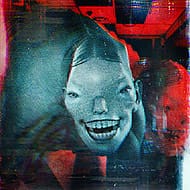





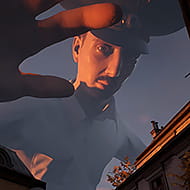





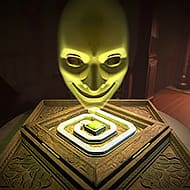
The most surprising thing about Rehaunted isn’t the ghost. It’s the magnifying glass. Most detective horror games hand you a flashlight and call it a day, but Rehaunted builds an entire investigation loop around a lens that reveals paranormal clues invisible to the naked eye, and that single tool ends up carrying more of the horror than any jump scare does.
| Genre | Detective, Psychological Horror |
| Setting | A single haunted house |
| Players | Single-player |
| Perspective | First-person |
Connor Raines and the Five-Stage Loop
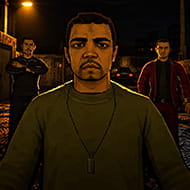
You play detective Connor Raines, sent to investigate what looks like a routine death: a young woman found dead inside her own home. Rehaunted keeps its entire case contained to that one house, and the investigation runs on a repeating loop — scan a room with the UV flashlight, photograph anything that reacts, examine the photo with the magnifying glass, log the finding over the walkie-talkie, then pin it to the evidence board.
Beginners tend to break that chain without realizing it. Photograph a clue but never log it over the radio, and it never reaches the board. Pin something to the board without the photo backing it up, and Raines won’t trust it enough to move the case forward. The five tools only work as a single pipeline, not five separate gadgets, and understanding that early saves a lot of frustration later in the game.
Early rooms teach the loop gently. By the time you’re several rooms deep into the house, the game stops holding your hand, and expects you to run the full sequence on instinct.
Evidence That Refuses to Agree
What makes the case genuinely uncomfortable isn’t the house’s atmosphere alone — it’s that the evidence actively contradicts itself. Blood traces point one direction, fingerprints point another, and hidden recordings complicate both. Rehaunted never smooths that tension out for you; it’s built to leave you second-guessing your own conclusions right up to the ending.
A second detective, reachable only by walkie-talkie, adds dialogue choices that challenge assumptions Raines has already made. Players who enjoy connecting scattered testimony against physical evidence tend to get the most satisfaction from this back-and-forth, while players hoping for a straightforward jump-scare gauntlet may find the pacing too deliberate.
There’s a term players keep circling back to in discussions: “the caretaker,” a figure tied to the house’s rituals whose exact role the game never confirms outright. Whether the death was caused by a person, a ritual, or the house itself is left genuinely unresolved, and the community remains split on which reading the evidence actually supports.
Reaching the Evidence Ending
Rehaunted doesn’t offer a rescue fantasy. By the time Raines enters the house, the woman is already dead, and his job is determining what happened rather than preventing it. The evidence ending — the game’s closest thing to a “true detective” conclusion — is earned by logging, photographing, and connecting every key clue rather than rushing the final rooms.
- Run the full UV, photograph, magnify, radio, board sequence on every room, not just the obvious ones
- Treat contradictory evidence as information rather than a bug — the house is designed to disagree with itself
- Pay attention to radio dialogue with the second detective, since some options only surface once earlier clues are logged
Completionist players chasing every ending tend to replay the house multiple times, since the conclusion assembles itself from accumulated evidence rather than a menu choice at the end.
Launch Reception and What Divided Players
Rehaunted’s release wasn’t smooth. Day-one bugs affected dialogue timers during walkie-talkie conversations and caused menus to lock up when switching tools, and that rough launch shaped a good chunk of the game’s mixed early reception. The developer has continued pushing updates since, with player feedback specifically credited for what got prioritized first.
That launch friction is worth acknowledging honestly, because the underlying investigation design is stronger than the bugs suggested at first. Players who came back after patches tend to report a noticeably smoother experience than the day-one reviews describe.
Does Connor Raines survive Rehaunted?
Yes — in the evidence ending specifically, Raines walks out of the house because he completed the investigation correctly. He was never in physical danger the way a rescue-mission structure would suggest; his survival isn’t the tension, the accuracy of his conclusions is.
What is the evidence ending in Rehaunted?
It’s the conclusion built from every clue you successfully photograph, log, and pin to the evidence board over the course of the investigation, rather than a choice selected from a menu at the end.
Does Rehaunted ever explain what actually happened to the victim?
Not definitively — the game leaves whether the death was caused by a person, a ritual, or the house itself deliberately open, with “the caretaker” left as one of several threads the community continues debating rather than a confirmed answer.
Rehaunted asks you to trust a magnifying glass and an evidence board more than your own first impression of the crime scene, and that’s a harder ask than most detective horror games make. Connor Raines doesn’t need to survive anything supernatural to make it out of the house — he just needs the board to hold together, which is a strange, quiet kind of tension that stays with you well after the case closes.