












Slender The Eight Pages










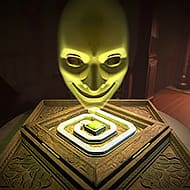
The flashlight in Slender: The Eight Pages doesn’t just light your way through the forest — it’s also part of what makes Slender Man notice you’re there. That single detail is why so many players end up creeping through near-total darkness by the time they’re chasing their sixth or seventh page.
| Genre | Survival horror, first-person |
| Setting | A fenced forest at night |
| Objective | Collect eight pages hidden among ten landmarks |
| Combat | None — avoidance only |
Ten Landmarks, Eight Pages, and a Forest at Night
The setup for Slender: The Eight Pages is about as stripped down as horror games get. You’re dropped into a dark, fenced-in forest with nothing but a flashlight, and eight pages are scattered somewhere among ten fixed landmarks, things like a truck, a stone wall, a well, and a building with several rooms inside it.
Since only eight of the ten landmarks actually have a page, two locations on any given run will be empty, and there’s no way to tell which ones in advance. That uncertainty is a deliberate part of the design, forcing you to check spots you’d otherwise assume are safe to skip.
The building is worth calling out specifically, since it contains several interior rooms and at most one page total. Searching it fully guarantees you’ll find that page if it’s there, but it also burns a lot of flashlight battery in a space where Slender Man is especially dangerous to encounter.
Reading the Static: How Slender Man Escalates
Slender Man doesn’t chase you in any conventional sense early on. He teleports between locations outside your view, and it’s only once you’ve collected several pages that he starts appearing closer, more often, and eventually within your direct line of sight.
- Background sound effects shift noticeably after certain odd-numbered pages, signaling the game is escalating
- After enough pages, Slender Man gains the ability to appear directly behind you rather than only ahead
- Static and screen distortion build the longer you look at him, and staring too long ends the run outright
This is where the game’s real horror lives: not in any single scripted scare, but in the growing dread of not knowing whether the next landmark you approach is going to have him standing right there.
The Flashlight Tradeoff Every Player Learns the Hard Way
Every new player treats the flashlight as an obvious necessity at first, and every experienced player eventually learns to ration it instead. Running it constantly drains the battery well before you’ve found all eight pages, leaving you stumbling through pitch dark forest with no way to see incoming terrain, let alone Slender Man himself.
The tradeoff cuts both ways, though: turning the flashlight off does conserve battery, but it also makes it much harder to spot him early enough to react, since you’re relying on peripheral movement and sound instead of a lit beam. Community discussion around this balance is honestly still split. Some players consider battery management the game’s smartest mechanic; others find it frustrating that using your only tool is effectively punished the more you rely on it.
One of the more common beginner mistakes is holding the flashlight on constantly out of nervousness, which usually leaves a player without light exactly when they need it most, somewhere around the sixth or seventh page when Slender Man is at his most aggressive.
Questions Players Ask About Slender: The Eight Pages
- How many pages are in Slender: The Eight Pages? There are eight pages total, scattered among ten possible landmarks, meaning two locations on any given run will come up empty.
- Does the flashlight attract Slender Man? Yes — using it makes you easier for him to notice, which is why experienced players switch it off whenever they’re confident nothing is nearby.
- What happens after you collect all eight pages? The forest goes eerily quiet, and then Slender Man appears directly in front of you, forcing an automatic run through the woods accompanied by heavy static before the screen cuts to black.
Slender: The Eight Pages gets by on almost nothing: a flashlight, a fence line, eight scraps of paper, and one figure who’s only ever a glance away from ruining your run. Whether you’re circling back to the stone wall for a page you missed or bolting from a building you searched a little too thoroughly, the tension never really comes from what’s on screen so much as what you’re afraid is about to be.