




















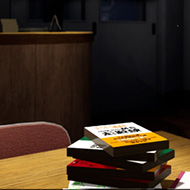
Study Time Anomaly
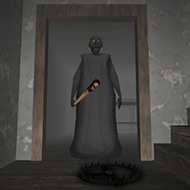
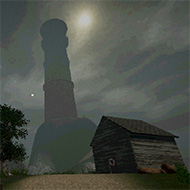





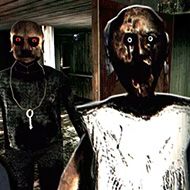

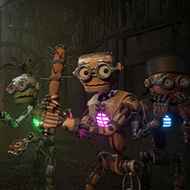



Thirty-one anomalies are hiding somewhere in a single empty school hallway, and Study Time Anomaly never tells you exactly where to look. You fell asleep studying for exams, woke up alone in the building, and now the only way home is figuring out what’s wrong before the loop decides you’re staying.
| Genre | Psychological horror observation game |
| Setting | An empty school hallway at night |
| Perspective | First-person, single-player |
| Core Objective | Spot anomalies and choose the correct exit to escape the loop |
The Anomaly-Spotting Loop That Drives Study Time Anomaly
The structure is deceptively simple: walk the same stretch of school, look for anything that doesn’t match what you saw a moment ago, and pick the correct staircase to progress. Get it wrong, or miss something dangerous, and you’re sent back to try again with the loop slightly rearranged. That Exit-8-style repetition is the entire game, and it works because the school never feels quite as static as it should.
Beginners tend to rush the visual scan, treating it like a simple spot-the-difference puzzle instead of paying attention to sound and behavior cues too. Some of the thirty-one anomalies aren’t purely visual — a handful depend on how you’ve been interacting with the school itself, which means passive scanning alone won’t catch everything.
What surprises new players most is how much restraint the game shows. There’s a deliberate choice here to avoid leaning on constant jumpscares, favoring a creeping wrongness instead — a detail that longtime horror fans specifically call out as refreshing given how saturated the anomaly-horror genre has become.
Reading the Hallway Instead of Just Walking It
Difficulty in Study Time Anomaly doesn’t come from combat or timers; it comes from attentiveness fatigue. Early loops are relatively forgiving, with obvious anomalies planted to teach you the observation habit the game expects. Later loops hide anomalies in places you’ve stopped double-checking, banking on the complacency your own progress builds.
Advanced players describe developing a mental checklist they run through at every loop, scanning specific fixtures and details in a consistent order rather than eyeballing the whole hallway at once. That systematic approach is genuinely the technique most players miss on their first attempt, and it’s also the technique the community recommends most in guides and Discord discussion.
Players chasing full completion for the anomaly-tracking achievement often report finding two entries stubbornly refusing to check off even after spotting everything visible, which speaks to how a few anomalies are tied to interaction sequences rather than pure observation.
Escape Routes and the Four Ways a Night Can End
Choosing the correct staircase on each floor determines whether you escape the loop or stay trapped in the school, and the game supports four distinct endings depending on how the night plays out. That branching is what turns a fairly short experience into something worth returning to more than once — a single playthrough won’t show you the full range of what the school has planned.
A full run sits comfortably under two hours for most players, which keeps the tension tight instead of letting the loop structure wear thin the way repetition-based horror sometimes does over a longer runtime.
How many anomalies are in Study Time Anomaly?
There are thirty-one anomalies built into the game at launch, ranging from subtle environmental shifts to genuinely dangerous encounters, with a few tied specifically to how you interact with the school rather than what you simply observe.
How many endings does Study Time Anomaly have?
The game supports four separate endings, determined by the choices you make and how successfully you identify anomalies and select the correct stairwell on each floor.
Does Study Time Anomaly have jumpscares?
The design deliberately avoids leaning on frequent jumpscares, favoring a slower, more disturbing tone built around observation and dread rather than sudden shocks at every turn.
Study Time Anomaly turns a single school hallway into something genuinely unsettling by trusting players to notice what’s wrong on their own, and once you’ve walked past that stairwell for the third time wondering if it looked the same last loop, the game has already won.