























Granny Multiplayer





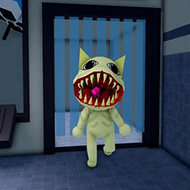





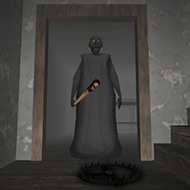
Granny gives you five days to escape her house, and in the base game that countdown is a solo nightmare. Granny Multiplayer changes exactly one thing about that premise — you’re no longer alone in the dark — and that single change reshapes almost everything about how the horror actually plays out.
Why Granny Multiplayer Changes the Core Formula
The original house, the same creaking floorboards, the same Granny patrolling by sound rather than sight — Granny Multiplayer keeps all of it intact while adding cooperative play on top. Instead of creeping through the house solo, players now coordinate: one person draws Granny’s attention while another slips past to grab a key item, a division of labor that simply didn’t exist in the single-player version.
What beginners get wrong is assuming more players means more safety. Granny’s hearing is just as sharp with two people sneaking around as it is with one, and a careless partner can get both players caught faster than either would have been caught alone.
Coordination becomes the actual skill here — call outs, timing, and knowing when to split up versus stay together define a good run far more than any single player’s individual stealth.
Voice or text communication ends up mattering more than most new teams expect. A silent partner who spots Granny moving toward a shared objective but says nothing can cost the run just as easily as a loud footstep, and experienced teams develop their own shorthand for calling out her position without wasting precious seconds.
Five Days, Bear Traps, and Granny’s Patrol
The five-day structure carries over from the original: get caught by Granny and a day passes, survive long enough and you can sometimes earn an extra day by completing a task for her. Granny Multiplayer keeps this tension intact, but now failure affects the whole team’s clock, not just one player’s run.
Her bear traps remain scattered through the house, silent until a careless footstep sets one off — and in multiplayer, warning a teammate about a trap’s location becomes one of the small but critical communication habits that separates a clean run from a chaotic one. Watching for her other pets lurking in darker corners of the house adds another layer neither player can fully monitor alone.
Hiding Spots and the Garage Door Escape
- Wardrobes and Coffins — classic hiding spots from the base game, now shared resources that only fit one player at a time, forcing tough calls under pressure.
- Weapons — two distinct weapon types exist to stun Granny temporarily, buying the team a short window to reposition.
- Garage Door — one of the game’s core escape routes, requiring enough coordination between players to open it before Granny closes the distance.
Difficulty settings — Practice, Easy, Normal, Hard, and Extreme — carry over unchanged, and Practice mode remains the only way to explore the house without Granny actively hunting, useful for new teams learning the layout together before attempting a real run.
Item routing becomes a genuine team decision once a second player enters the equation. Deciding who carries a weapon, who checks upstairs versus downstairs, and who commits to opening the garage door while the other creates a distraction all turn what was once a solitary puzzle into something closer to a heist plan that has to survive contact with an unpredictable opponent.
What Divides Players About Granny Multiplayer
The most common critique isn’t the horror itself but the coordination overhead — teams that don’t communicate well can find Granny Multiplayer more frustrating than scary, since a silent teammate wandering into a trap breaks tension rather than building it. Players who find a reliable partner tend to describe the opposite experience: tenser, funnier, and more replayable than the solo original.
There’s also a recurring debate about whether a second player actually makes the house feel less threatening. Some argue that splitting up to cover more ground removes the isolation that made the solo version so effective; others counter that the constant risk of a teammate getting caught first adds an entirely new kind of dread that a single-player run never had to account for.
- Does Granny Multiplayer change the map from the original game? No — it uses the same house layout, just with cooperative objectives layered on top.
- Can one player hide while the other keeps moving? Yes, and experienced teams often use this split deliberately to bait Granny away from an objective.
- Is Extreme difficulty much harder with two players? It can be, since Granny’s patrol doesn’t slow down for a second player, and one mistake can cost the whole team a day.
Granny Multiplayer doesn’t reinvent the house or the woman patrolling it — it just proves that being hunted alongside someone else can be scarier, funnier, and far less predictable than facing Granny by yourself.