








Terrible Lizards
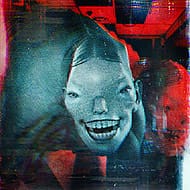

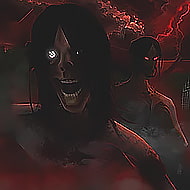



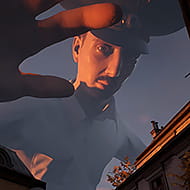





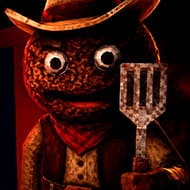
What happens when the last customer of the night at Dalton’s Dinos doesn’t leave — and neither does whatever’s living underneath the gift shop? That’s the question Terrible Lizards opens with, dropping you into a dead 1992 Route 66 attraction with a car that won’t start and a phone that keeps ringing from somewhere it shouldn’t.
| Genre | Action, Adventure, Horror Parkour |
| Platform | PC (Steam) |
| Perspective | First-person |
| Setting | Dalton’s Dinos, an abandoned Route 66 roadside attraction, 1992 |
| Combat | None — movement-based evasion only |
Stranded at Dalton’s Dinos With No Way Out
Terrible Lizards sets its hook fast: your car has died somewhere on a stretch of New Mexico highway, the nearest landmark is a roadside dinosaur park nobody’s staffed in years, and there’s no cell signal to call for help. It’s 1992 in the game’s timeline, which matters mechanically as much as it does atmospherically — there’s no map ping, no fast travel prompt, and no rescue text you can send.
A phone rings inside the attraction almost immediately, and the voice on the other end asks for help finding a missing child. That single call sets the tone for the whole opening act: you’re not exploring Dalton’s Dinos out of curiosity, you’re doing it because someone on the other end of a landline is more desperate than you are.
New players consistently underestimate how quickly the park stops feeling abandoned. The staff are gone, but Dalton’s Dinos is not empty, and the game doesn’t waste much runtime before making that distinction clear.
Run, Climb, and Slide Instead of Fighting
There are no weapons in Terrible Lizards, and that absence is the entire design philosophy of the game in one sentence. Wall runs, slides, climbs, and bounces are your only tools against whatever’s hunting you through the depot, which turns every chase into a spatial puzzle rather than a stealth-kill opportunity.
The parkour is built to feel intuitive within the first few encounters but keeps adding wrinkles — a ledge that only holds weight for a second, a corridor too narrow for a full sprint — that punish players who rely on muscle memory from other movement-heavy games instead of reading the specific terrain in front of them.
Speedrun-minded players have already started mapping optimal wall-run chains through the early depot sections, since momentum carries between moves in a way that rewards planning a route two or three obstacles ahead rather than reacting one jump at a time.
What Dalton’s Dinos Is Really Hiding
Environmental storytelling carries most of the plot. Tapes, handwritten notes, and old recordings scattered through the park’s maintenance tunnels and gift shop backrooms piece together what actually happened to the staff and why the attraction closed the way it did. None of this is optional flavor text — the mystery of what Dalton’s Dinos is hiding below ground is the throughline connecting every chase sequence.
By the time you reach the lower maintenance levels, the game has stopped hinting and started showing, and the shift in tone there is one of the more talked-about moments in early community reactions.
Creatures That Shamble, Then Charge
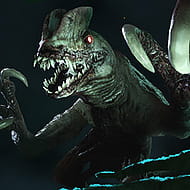
The things stalking the park don’t behave uniformly, and learning their tells is as important as learning the level geometry. Some shamble at a distance, giving you time to reroute. Others charge the moment they spot you, which is when the wall-run and slide mechanics stop being exploration tools and start being survival tools.
A short paragraph worth noting on its own: sound cues matter more here than visual ones.
Players who keep audio on and headphones in report far fewer surprise catches than those relying on peripheral vision alone, since the creatures’ proximity is telegraphed audibly before they’re ever on screen.
Difficulty Escalation Across the Attraction
Terrible Lizards ramps its difficulty by widening the gap between what the parkour demands and how forgiving the terrain is willing to be. Early depot sections have wide platforms and generous run-up distances. Later zones narrow that margin considerably, and a mistimed jump that would’ve been recoverable early on becomes a hard reset later in the game.
Completionists chasing every collectible tape face a particular tension here, since backtracking into cleared areas to sweep up missed notes means re-triggering chase sequences in zones that have gotten meaningfully harder since the first pass through.
Community Vocabulary Building Around Terrible Lizards
Discussion boards for Terrible Lizards have already settled on shorthand for specific obstacle types — “bounce gaps” for the trampoline-style traversal sections, and “dead runs” for chase sequences with no viable hiding spot, only forward momentum. That kind of vocabulary tends to show up once a movement-heavy game has enough distinct traversal patterns for players to need names for them.
One point of ongoing debate: whether the complete absence of combat makes the horror hit harder or just makes late-game chases feel unfairly punishing when a single missed input ends a long stretch of progress. Both camps show up regularly in the same threads.
What Beginners Consistently Get Wrong
The most common early mistake is treating the parkour like a checklist of button presses rather than a momentum system. Wall runs chain into bounces and slides far more efficiently than performing them as isolated actions, and players who slow down to line up each move individually tend to lose ground precisely when speed matters most — during an active chase rather than free exploration.
The second common mistake is ignoring the environmental notes in favor of just running for the exit, which technically works for clearing a section but leaves the mystery of Dalton’s Dinos frustratingly incomplete by the credits.
- Do you need combat skills to survive Terrible Lizards? No — there are no weapons in the game at all, and every threatening encounter is resolved through movement: wall running, sliding, climbing, or simply outpacing whatever’s chasing you through the depot.
- What is Dalton’s Dinos hiding beneath the attraction? The full answer comes from piecing together tapes and notes scattered through the park, but it centers on the missing child the phone call at the start of the game asks you to find, and what the staff discovered before they vanished.
- Is Terrible Lizards more horror or more platforming? Both are load-bearing. The parkour is the mechanical backbone, but the pacing, sound design, and creature behavior are built specifically to make first-person horror out of what would otherwise be a fairly straightforward movement game.
Terrible Lizards earns its tension by taking away every option except movement, and Dalton’s Dinos is a genuinely unsettling place to be forced to run through more than once. Whether you’re chasing the fastest route between bounce gaps or piecing together the last tape in the maintenance tunnels, the game keeps circling back to the same idea — you’d better start running.