














The Parallel (Analog Horror)










What happens when the footage you’re watching stops being footage and starts watching back? That’s the question The Parallel builds its entire premise around — a found-footage horror game set in a world running alongside our own, where something has slipped through and started hunting the people who notice it.
| Genre | Analog horror / survival |
| Setting | A parallel world mirroring our own |
| Core threat | The Stalker and the Quadrupedal Stalker |
| Style | Low-fidelity, found-footage presentation |
The Premise Behind The Parallel
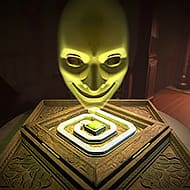
The game frames itself as recovered footage from a world that looks almost identical to ours, down to the streets and the static-laced television broadcasts, except for the entities that have started crossing over. The tone leans hard into the genre’s signature grain and distortion, and the game uses that visual noise as a gameplay tool as much as an aesthetic one — you’re often squinting through interference trying to tell whether something is actually there, or whether it’s just a tracking error in the tape. That ambiguity is deliberate, and it’s the mechanic the entire experience is built around: the game never lets you fully trust your own eyes.
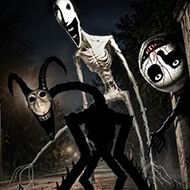
Two named threats define most encounters. The Stalker is tall, slender, and patient, tracking a target once it locks on and closing in whenever you’re isolated or the lighting drops. The Quadrupedal Stalker behaves very differently, appearing without warning almost anywhere around you, low to the ground and fast in a way that breaks the rhythm the Stalker establishes. The community consensus is blunt: if you’ve made eye contact with the Quadrupedal Stalker, you’ve already lost your window to react, and most first encounters with it happen precisely because a player was still scanning for the Stalker instead.
New players consistently underestimate how much sound design carries the tension in The Parallel. There’s rarely a clean jump scare; instead, dread builds through distorted audio cues — a pitch-shifted hum, static that thickens before it thins, a heartbeat buried under tape hiss — that hint at which entity is nearby before you see anything at all. Genre veterans who’ve followed analog horror since it crystallized as a recognizable style back around 2015 will recognize the lineage immediately, but The Parallel earns its place in that tradition rather than just borrowing the aesthetic.
Surviving Encounters in The Parallel
Beginners tend to make the same mistake early on: they treat the Stalker like a static hazard to avoid rather than an entity that adapts to how you move. Staying still too long in open sightlines is often worse than moving carefully, since prolonged exposure seems to be what draws its attention in the first place. Players who grew up on more traditional horror games often bring the instinct to hide and wait it out, and that habit gets punished here, because the Stalker’s patience outlasts most players’ nerve.
- Keep moving through open rooms rather than lingering near light sources, since standing still under a flickering bulb is one of the fastest ways to draw the Stalker’s attention in the first place.
- Break line of sight the moment you suspect the Quadrupedal Stalker has appeared nearby, because hesitating even a second to confirm what you saw is usually enough time for it to close the distance.
- Use environmental noise, not your own movement, to mask your position when possible, letting ambient sources like static-heavy television sets cover the sound of you repositioning.
Difficulty in The Parallel isn’t tied to a traditional level structure so much as escalating exposure — later segments layer both entities into the same sequence, forcing you to manage two very different threat behaviors at once. Players who’ve only dealt with the Stalker in isolation often get caught off guard the first time the Quadrupedal Stalker shows up mid-chase, since the instinct to freeze and reassess, which sometimes works against the Stalker, is exactly the wrong response once the Quadrupedal Stalker is involved. Speedrunning-minded players and lore-focused players tend to diverge sharply here: the former push through encounters as fast as possible to bank time, while the latter linger in rooms hunting for environmental detail, and the latter group runs into far more Quadrupedal Stalker encounters as a direct result.
What Divides Players About The Parallel
Not everyone agrees the mystery-first approach works. A recurring criticism in reaction videos and comment threads is that The Parallel leans so heavily on ambiguity that some viewers feel under-informed about what the entities actually want, or why the parallel world exists in the first place. Others argue that’s exactly the appeal — the genre thrives on withheld answers, and filling in every blank would undercut the dread the Stalker and Quadrupedal Stalker are built to create.
There’s also a smaller but persistent complaint about pacing between encounters. Some players feel the quieter stretches, where nothing is actively hunting you, run a little long compared to the intensity of the actual chase sequences, which can make the game feel uneven on a first playthrough even though repeat players tend to appreciate the breathing room more.
Community discussion around The Parallel often centers on interpreting environmental clues rather than min-maxing survival tactics, and terms like “static reads” — parsing distortion patterns for hints about which entity is nearby — have become common shorthand in comment sections and fan Discords built around the series.
Common questions about The Parallel
- What’s the difference between the Stalker and the Quadrupedal Stalker? The Stalker tracks a single target patiently and closes in during moments of isolation or darkness, favoring a slow, deliberate approach, while the Quadrupedal Stalker can appear suddenly almost anywhere and punishes direct eye contact far more harshly, moving in fast, low bursts rather than a steady stalk.
- Do you need to watch the analog horror series to understand the game? Not strictly, since the game establishes its own internal rules for the Stalker and Quadrupedal Stalker early on, but familiarity with the source series’ tone and recurring imagery makes the audio and visual cues land with more weight, especially the static patterns that longtime viewers already associate with danger.
- Is there a way to avoid the Quadrupedal Stalker once it appears? Players generally agree that breaking eye contact and putting an obstacle between yourself and it immediately is the only reliable response once it’s spotted, since standing your ground or trying to outrun it in the open rarely ends well once it has locked onto you.
The Parallel earns its reputation by trusting silence and static over spectacle, and once the Quadrupedal Stalker crosses your path for the first time, you understand exactly why players talk about this game in hushed, careful terms.