





















The Well Is Not Empty (Full Game)













You crank the generator, watch the room fill with weak yellow light, and start moving before the charge runs out. Somewhere behind you, in the dark you just left, something is already closing the distance. This is the rhythm at the center of The Well Is Not Empty, a game that strips horror down to one tool, one light source, and a clock you can feel but never quite see.
| Genre | Horror, Adventure |
| Platform | PC (Windows) |
| Core Tool | A single rusty spoon |
| Combat | None |
Descending Into The Well Is Not Empty
The premise is almost embarrassingly simple: a village well has run dry, and someone has to find out why. You’re handed a spoon — not a torch, not a knife, a spoon — and lowered into a network of collapsed tunnels underneath the well itself. From the first few minutes, the game makes clear that this isn’t a story about fighting your way out. There’s no weapon system, no inventory screen cluttered with junk items, no HUD tracking your health. You have the spoon, your surroundings, and whatever light you can scrape together.
That spoon does more work than its size suggests. You’ll use it to dig through rubble that blocks your path forward, and to swat rats aside when they’re guarding something worth picking up. It sounds almost comedic on paper, and in a way it is, but the game leans into that tension deliberately, letting brief moments of dark humor sit right next to genuine dread.
The tunnels themselves are the real antagonist. Collapsed sections force you to dig manually, one scrape at a time, and the game never lets that action feel automatic. You’re aware of every second spent digging, because every second is a second the darkness around you has to close in.
Light, Darkness, and the Hand-Crank Generator
The core system holding everything together is light management through hand-crank generators scattered across the tunnels. Cranking one restores illumination to a room and, more importantly, pushes back whatever is lurking nearby. The creatures in these tunnels aren’t stopped by darkness — they’re held off by light, which means a lit room isn’t safety, it’s a countdown. You get a window to move, and once the generator’s charge depletes, the room goes dark again and the creatures close in.
- Crank the generator to buy a lit window
- Move through the corridor before the charge runs out
- Dig through rubble blocking forward progress
- Use the spoon to clear rats guarding items
Beginners consistently make the same mistake early on: they treat the lit window as a safe zone to explore slowly. The game punishes that instinct fast. The smarter approach, and the one experienced players talk about in community threads, is committing to movement the second a generator kicks on rather than lingering to look around.
Chasms, Prison Bars, and Escalating Tension in The Well Is Not Empty
Past the early tunnels, the game introduces a chasm-crossing mechanic that asks you to lean left and right to keep your balance while crossing gaps, with creatures visible in the darkness below. It’s a small addition mechanically, but it changes the pacing — you’re no longer just managing light, you’re managing your own footing while something watches from underneath.
Later sections place you near prison bars where creatures can reach through if you get too close, triggering a quick-time escape sequence. These moments are short, but by the time you reach them the game has already trained you to move carefully, so the sudden shift into a fast reaction check catches most players off guard the first time.
There’s no way to overpower any of this. Patience matters more than speed for most of the run, and that pacing is exactly what some players find divisive — the digging loop can feel repetitive in stretches if you’re expecting more variety, though the atmosphere and sound design tend to carry it through the slower moments.
What Makes This Horror Game Distinct
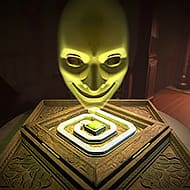
Visually, the game commits fully to a lo-fi PSX aesthetic — chunky low-poly character models, compressed textures, and limited draw distances that hide as much as they reveal. This style has driven a wider indie horror revival in recent years, but here it’s not just an aesthetic choice; the limited draw distance directly reinforces the light-and-darkness system, since you genuinely can’t see what’s coming until it’s close.
Players who enjoy slow-burn horror games without combat tend to get the most out of this one, since the tension comes entirely from restraint rather than confrontation. Others who prefer active threat responses may find the lack of any offensive option frustrating in the tenser sequences.
What happens when the hand-crank generator runs out mid-room?
The room goes dark and whatever creature was being held back by the light closes the distance immediately. You either reach the next lit point or the exit before that happens, or you’re caught in the dark with no way to fight back — your only option is to keep moving toward the next generator or a safe corridor.
Is there any combat or way to fight the creatures?
No. The Well Is Not Empty has no weapon system and no way to kill anything in the tunnels. The spoon is used only for digging through rubble and clearing rats, never for confronting the larger threats directly, and the prison bar sequences are handled through quick reaction escapes rather than fighting.
How long does it take to see everything in the tunnels?
Multiple players have noted they didn’t uncover everything on their first two playthroughs, since the tunnels hide optional details and rooms that aren’t required for reaching the end. If you’re aiming for full exploration rather than just escaping, expect to run through it more than once.
The Well Is Not Empty earned a 96% positive rating from its earliest reviewers, and that response tracks with what the design actually delivers: a small, focused horror game built around one spoon, one light source, and tunnels that never stop feeling like they’re trespassing on you rather than the other way around.