


















Voices Of The Void Alpha












You start your shift alone in a research station tucked into the mountains of Switzerland, playing as Dr. Kel, with a stack of unprocessed signals waiting and no one else around to help sort through them. That isolation is the entire foundation Voices Of The Void builds its tension on, long before anything actually strange shows up on your scanner.
The Signal Loop at the Center of Voices Of The Void
Your job in Voices Of The Void is straightforward on paper: gather signals from deep space, run them through analysis, and sell the processed results for points. Most of what comes in is mundane — dwarf planets, background stars, routine transmissions — but a portion of every day’s haul gets flagged as unusual, strange, or flatly unexplainable, and those are the signals that actually drive the game’s stranger content forward.
The triangulation system introduced in a recent update replaced the older single-ping method of locating signals, and it changed the pacing of a shift considerably. Instead of one static ping telling you roughly where to look, you’re now cross-referencing multiple readings to narrow down a source, which slows down the early game but makes locating rarer signals feel like actual detective work rather than trial and error. Long-time players who remember the older ping system describe the shift as trading convenience for immersion, and it’s a change the community is still split on even now.
Players chasing efficient point totals tend to prioritize the fastest-paying signal categories and treat the odder, unexplainable readings as a distraction from the grind, while players drawn to the game primarily for its horror and lore content go out of their way to chase every strange signal they can triangulate, regardless of payout. That split in priorities is one of the clearest ways to tell which type of player you’re talking to in any Voices Of The Void community thread, since the two approaches barely overlap once a save file gets a few in-game days deep.
Towers, Satellites, and Keeping the Base Running
Relay towers and satellite servers both need active maintenance, but they don’t fail the same way, and mixing them up is one of the more common mistakes newer players make. A satellite server going down can usually wait until daylight without much consequence. A tower going down cannot — it disrupts the entire signal-discovery loop for the day and demands immediate attention, which is a level of urgency that regularly interrupts whatever else you were doing at the time. Community discussion around Voices Of The Void frequently singles out how often towers fail relative to everything else as one of the more divisive balance points in the current alpha, with some players calling it an unfair chokehold on the main loop and others defending it as the exact source of pressure the game is supposed to create.
Getting around the surrounding area relies on a modular ATV, which can be outfitted with different upgrades depending on whether you’re prioritizing speed, cargo space, or durability for a longer excursion away from the base. Players who favor exploration over strict signal-farming tend to invest heavily here early, while players chasing efficient point totals often skip ATV upgrades entirely in favor of staying close to the towers, since every minute spent driving out to a distant anomaly is a minute not spent processing signals back at the station.
By the time a save file reaches its later in-game days, the base itself starts to feel less like the cutting-edge research outpost it was clearly meant to be and more like a place running on minimal staff and a shrinking budget — cracked walls, dim lighting, and a general sense that whoever built this place moved on a long time ago. That atmosphere is a deliberate contrast with the sense of discovery the signal-gathering loop is built around, and it’s a detail players frequently bring up when describing what makes the setting stick with them after a session ends.
Anomalies and What Actually Happens After Dark
Voices Of The Void keeps its horror elements irregular rather than constant, which is part of why they land. The Bad Sun is one of the more infamous events — triggered by digging at a specific spot on the map — and once active, exposure to daylight becomes actively dangerous rather than the harmless backdrop it normally is, with a visual censor effect covering the sun itself as a warning that something has changed. Players who’ve dug in the wrong place by accident describe the sudden shift from a normal day to hiding from sunlight as one of the sharpest tonal swings the game pulls off.
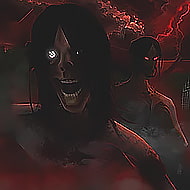
A separate entity resembling a Rorschach blot shifts shape unpredictably and appears to spawn under conditions nobody has fully pinned down yet, which is exactly the kind of unresolved mystery that keeps the game’s community actively theorizing rather than treating the wiki as a finished reference. The Red Void Orb, added in a more recent alpha update, glows ominously before its appearance is followed by an abrupt game crash, a mechanic so unusual that plenty of players assumed it was a bug before confirming it’s an intentional anomaly built into the update itself.
One transparent figure only becomes visible when caught directly in a flashlight beam, despite casting shadows from nearby light sources the rest of the time — a detail most players only discover by accident, usually while doing something unrelated like adjusting a tower at night. Elsewhere on the map, an out-of-place hollow log gives off a detectable signal reading and, if a player lingers near it too long, temporarily deafens them before relocating to a new random spot, forcing anyone curious about it to track it down all over again rather than studying it in place.
Player Questions Worth Answering
- What’s the difference between an unusual and a strange signal in Voices Of The Void? Unusual signals are typically a step above routine background noise and pay out more on sale, while strange or unexplainable signals are rarer, tied more directly to the game’s anomaly content like The Bad Sun and the Red Void Orb, and often require more careful analysis before they can be sold or fully understood.
- Why do the relay towers in Voices Of The Void go down so often? It’s an intentional pressure point in the current alpha — towers are central to the daily signal loop, so their failures are designed to force immediate interruptions rather than something you can put off until a more convenient time, unlike a satellite server outage.
- What triggers The Bad Sun event? It’s tied to digging at a specific location on the map; once triggered, continued exposure to daylight becomes hazardous for the remainder of that in-game day, and the sun itself is visually obscured as a signal that the event is active.
Between the triangulation-based signal hunting, a modular ATV for getting around the station’s surroundings, and anomalies like The Bad Sun and the Red Void Orb lurking behind ordinary-looking terrain, Voices Of The Void turns a fairly dry scientific premise into something considerably tenser than it first appears. Dr. Kel’s isolated shift only gets more demanding the longer a save file runs, and that slow accumulation of pressure is exactly what keeps the alpha’s community picking the game back up.