



















Where the Redwood Ends













What do you do when one of your six friends turns up dead before sunrise, inside a mansion with no way out, and the only certainty is that whoever did it is still in the room with you?
| Genre | Psychological horror, narrative mystery, walking simulator |
| Setting | An abandoned mansion in the Redwood Forest |
| Perspective | First-person |
| Core Mechanic | Exploration, conversation, and deduction to identify the killer |
Six Friends, One Mansion, and a Body Before Dawn
The setup is deliberately simple: six friends wake up inside an abandoned mansion deep in the forest and quickly discover that one of them has already been murdered. From that point on, the game’s entire structure revolves around a single ticking question — can the group figure out who’s responsible before the killer claims another victim? There’s no combat, no inventory management in the traditional sense, and no way to simply outrun the problem. You investigate, or you don’t survive the process.
That framing puts a lot of pressure on the writing, and it mostly earns it. The remaining five friends each have distinct reactions to the murder, and how the group’s dynamic shifts over the course of a single night becomes as much a part of the mystery as the physical clues scattered through the mansion.
Where the Redwood Ends and the Rules of the Redwood Forest
The forest itself isn’t just scenery — it’s treated as an active presence in Where the Redwood Ends, with an atmosphere that shifts noticeably depending on how far into the night the investigation has gone. Early sessions tend to keep the horror understated, leaning on quiet rooms and half-lit hallways rather than outright scares. By the time the group has confirmed the murder wasn’t an accident, that restraint starts to fall away.
Players who’ve spent time with the game note that the mansion’s layout rewards backtracking. A hallway that seemed empty on a first pass often has something different waiting once a new clue changes what you’re looking for.
Reading the Mansion: Exploration as Evidence
Exploration here isn’t about loot or collectibles — every room exists to either support or undercut a theory about who the killer is. Furniture placement, personal items left behind, and small environmental details all function as evidence, which means players who rush through rooms tend to reach the endgame with a much weaker case than players who slow down and actually look.
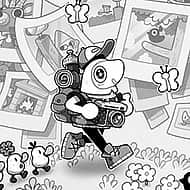
This is also where the hand-drawn art style earns its keep. The mansion’s rooms are detailed enough that a genuinely out-of-place object stands out visually without the game needing to highlight it for you.
Conversation Mechanics and the Weight of Every Choice
Talking to the other five friends is where most of the actual deduction work happens. Conversations aren’t just flavor text — the responses you choose can shift how much a character trusts you, which in turn affects what they’re willing to share later in the night. A friend who feels accused too early may close off entirely, cutting you off from information that could’ve cleared or implicated them.
This is the one section of the game best explained without a list: think of each conversation as a small trade. Pressure: pushing hard for answers can crack a nervous character but alienate a defensive one. Patience: holding back sometimes gets volunteered information you’d never get by asking directly. Reading which approach fits which friend is a skill the game expects you to build through trial and error rather than a tutorial.
Jump Scares, Quick-Time Events, and the Line Between Fear and Frustration
Where the Redwood Ends uses jump scares sparingly but deliberately, usually timed to land right after a quiet stretch of investigation lulls you into a false sense of safety. Quick-time events show up during the game’s more physically tense moments, and the controls stay simple enough that failure feels like a story beat rather than a skill check gone wrong.
That simplicity is a point of some disagreement among players. Horror fans who prefer high-agency survival mechanics sometimes find the QTEs too forgiving, while players focused on the mystery tend to appreciate that the game never lets reflex-based sequences overshadow the deduction work.
Voice Acting and Lip Syncing: Why the Cast Feels Real
Full voice acting with character lip syncing does a lot of work in selling the group’s dynamic, especially during the tenser conversation scenes. Hearing genuine hesitation or defensiveness in a character’s voice lands differently than reading the same line as text, and it makes the moments where someone’s story doesn’t quite add up far easier to catch on a first playthrough.
Deduction: Piecing Together Who the Killer Is
The deduction system rewards players who treat every conversation and every room as part of the same case file rather than isolated content. Alibis that seemed solid early on can start contradicting each other once a new piece of physical evidence surfaces, and the game is built around that gradual unraveling rather than a single dramatic reveal dumped at the end.
Advanced players tend to revisit specific friends after major discoveries, since responses to the same question can change once a character knows you’ve found something new.
What Where the Redwood Ends Asks You to Notice
More than most narrative horror games, this one asks players to slow down and actually notice small inconsistencies — a detail in how a friend describes their whereabouts, an object in the mansion that doesn’t match the story someone told about a room. It’s less about precise puzzle logic and more about pattern recognition across a full night of scattered information.
The Divisive Case Against the Pacing
The most common criticism aimed at Where the Redwood Ends is pacing. The deliberate, conversation-heavy middle stretch that makes the mystery work can feel slow to players expecting a more traditional horror game with constant tension. It’s a fair critique — the game is upfront about being a walking simulator first and a horror game second, and that ordering won’t suit everyone’s expectations going in. Players willing to meet it on those terms tend to describe the eventual payoff as worth the patience; players hoping for sustained dread from start to finish are more likely to come away disappointed, even if they still finish it.
Where the Redwood Ends succeeds because it treats its central mystery as something earned through attention rather than reflexes — by the time the six friends’ night in the mansion reaches its final confrontation, the identity of the killer feels like a conclusion you built yourself, one conversation and one overlooked detail at a time.