











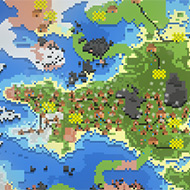
WorldBox




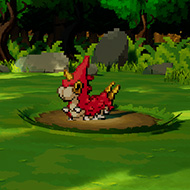


WorldBox hands you a blank procedurally generated planet and a god’s toolkit, and what you do with that combination says more about you than the game itself — some players spend hours nurturing a single dwarven kingdom into a sprawling empire, while others drop a meteor on turn one just to watch the fallout ripple across three continents.
| Genre | God Simulation / Sandbox |
| Platform | Browser / PC / Mobile |
| Core Loop | Spawn civilizations, intervene with god powers |
| Simulation Depth | Nations, wars, and natural disasters run independently |
Spawning Civilizations: The Foundation of WorldBox
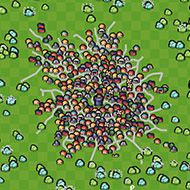
Every WorldBox world starts empty, and the first real decision is which races to seed it with. Humans, elves, dwarves, orcs, and goblins each carry different aggression and expansion tendencies, and dropping several races onto the same landmass almost guarantees conflict within a few in-game years as kingdoms compete for territory. Undead factions behave differently still, since necromancers can raise the dead from battlefields, turning a single decisive war into a snowballing zombie outbreak if left unchecked.
Terrain matters more than new players expect. A kingdom boxed in by mountains grows slowly but defensibly, while one on open plains expands fast and gets invaded just as fast. Watching how a civilization’s starting terrain shapes its whole history is one of the quieter pleasures of playing WorldBox rather than constantly intervening.
God Powers: Where WorldBox Turns From Sim to Sandbox
The powers panel is what separates WorldBox from a pure city-builder. Meteors, lightning strikes, earthquakes, and full-scale nukes let a player end a kingdom’s story in seconds, while gentler tools like healing rain or resource boosts can just as easily save a struggling civilization from collapse. The interesting tension here is that neither approach is “correct” — the game supports both a hands-off historian playstyle and an active, disaster-god playstyle equally well.
Chaos mode strips away restraint entirely, spawning stronger monsters and more frequent disasters automatically, and it’s the setting players reach for specifically when they want to watch civilizations struggle to survive rather than steadily expand.
Giant Monsters and the Moments Only WorldBox Players Recognize
Nothing resets a stable world faster than a kaiju-scale monster wandering into a capital city. Watching a fully developed kingdom’s walls, farms, and population get erased in a few in-game months by something you spawned deliberately — or that appeared naturally in a harder difficulty setting — is one of those specific WorldBox moments that’s hard to describe to someone who hasn’t played it themselves.
What Beginners Get Wrong in WorldBox
New players tend to over-intervene, using powers constantly instead of letting the simulation run and observing what emerges naturally. WorldBox’s AI kingdoms are genuinely capable of building complex, multi-generational history on their own, and players who never step back miss most of that emergent storytelling in favor of constant manual disasters.
The other common mistake is ignoring diplomacy entirely. Kingdoms in WorldBox can form alliances or rivalries independently, and a war that looks random from the outside often traces back to a border dispute that started dozens of turns earlier.
Community Vocabulary and What Divides WorldBox Players
Long-time players talk about “world seeds” the way other communities talk about game saves, sharing particularly chaotic or historically rich worlds with each other. The most common point of disagreement is difficulty balance — some players want the AI kingdoms to be more resilient against natural disasters, while others enjoy exactly how fragile a civilization can be against a single well-placed volcano.
Can civilizations in WorldBox actually go extinct permanently?
Yes — if every member of a race dies without surviving offspring or a protected settlement, that race is gone for the rest of that world, which is part of why some players play cautiously around vulnerable early kingdoms.
Does WorldBox keep simulating if I don’t touch any powers?
Yes — kingdoms in WorldBox expand, go to war, and even collapse from internal pressures without any player intervention, which is what makes the hands-off “just observe” playstyle viable alongside the more active disaster-god approach.
What’s the difference between regular play and Chaos mode in WorldBox?
Chaos mode increases the frequency of natural disasters and spawns stronger monsters automatically, creating a harsher survival scenario for civilizations compared to the steadier pace of standard settings.
The game works because it never forces a single way to play — the same meteor button that ends one player’s careful centuries-long kingdom is the exact tool another player opens the game specifically to use. Whether you’re nudging a fragile dwarven settlement toward survival or watching Chaos mode tear through three continents at once, the appeal comes from how much of WorldBox’s history is genuinely yours to shape.