


















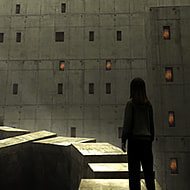





Airport Contraband












What happens when the passenger you just cleared through Caldora Airport turns out to have been the one thing your scanner missed? Airport Contraband builds its entire tension around that question, putting you behind an X-ray screen where a single lazy glance costs more than a missed bag.
| Genre | Roguelike simulation |
| Setting | Caldora Airport, daily customs shifts |
| Tools | X-ray scanner, chemical analyzer, UV lamp, knives, hammers, crowbars |
Reading the Scanner in Airport Contraband
The X-ray scanner is the first line of defense, revealing hidden compartments inside luggage that a visual inspection alone would never catch. Chemical analyzers add a second layer, flagging substances that don’t show up as shapes on a scan, and UV lamps round out the toolkit by exposing forged documents or concealed markings that only show under the right light. Layering all three correctly, rather than relying on any single tool, is what separates a clean shift at Caldora Airport from one where something slips through.
New players tend to lean on the scanner alone and skip the chemical and UV checks once a bag looks visually clean, which is exactly the habit the game is built to punish — the passengers most worth worrying about are the ones who pass the first check specifically because they expect it to be the only one.
When the Tools Aren’t Enough
Knives, hammers, and crowbars exist for the moments scanning alone can’t resolve — prying open a suspicious panel, forcing a compartment a passenger won’t open voluntarily. And when a situation escalates past inspection entirely, tasers and handcuffs become the last resort, forcing a real-time decision about neutralizing a threat without endangering the travelers still waiting in line behind them.
Why Airport Contraband’s Roguelike Structure Changes Everything
Each shift at Caldora Airport resets, but the consequences of the previous one don’t disappear with it. Missing a smuggling attempt one day means facing heavier scrutiny requirements the next, while a clean shift can unlock better equipment going forward. That structure turns Airport Contraband into a game about compounding judgment rather than isolated encounters — a bad call on day one is still shaping how hard day five feels.
The Bribe You Don’t Have to Take
Underneath the straightforward customs-officer premise sits a genuine moral choice system. Accepting a bribe from the local cartel, waving through a smuggling attempt, or ignoring a suspicious passenger for a quick payout are all available options, and the game never punishes you mechanically for choosing them in the short term — which is precisely what makes the choice uncomfortable rather than trivial.
Players are split on how far to lean into that corruption path. Some treat every shift as a strict by-the-book run, while others explicitly play Airport Contraband as a slow slide into complicity, and both approaches get roughly equal attention in community discussion of how the roguelike progression actually plays out over a longer run.
Does missing contraband early actually matter later?
Yes — the roguelike structure carries consequences forward, so a missed package on an early shift tends to raise scrutiny requirements on subsequent days rather than resetting cleanly.
Is taking a bribe ever the “correct” choice mechanically?
The game doesn’t frame it that way. Bribes and smuggling cooperation are available without an immediate penalty, which is what makes the decision a genuine moral one rather than a disguised trap.
Whether you play it strictly by the book or start quietly pocketing cartel money, Airport Contraband keeps the pressure in the same place — one scanner, one lazy glance, and Caldora Airport’s next shift already shaped by whatever you let through today.