

















Bloody Bastards

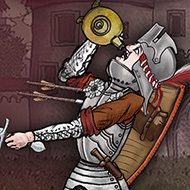







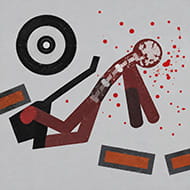
What happens when you throw a punch in Bloody Bastards and your own ragdoll arm swings a half-second too late to connect? That delay is the entire point. The game runs on floppy physics-based combat where every hit, block, and stumble is simulated rather than animated, and it turns a simple bar-fight premise into something much harder to predict than a normal fighting game.
| Genre | Physics Fighting |
| Platform | Mobile / Browser |
| Core Mechanic | Ragdoll combat |
Reading Ragdoll Momentum in Bloody Bastards
Standard fighting games reward memorized combos. Bloody Bastards punishes that instinct almost immediately, because your character’s limbs carry momentum independently of your input. A haymaker that connects cleanly can spin your own fighter off balance for the next second, leaving you open exactly when you’d expect to be pressing an advantage. Players who come in expecting tight, animation-locked combat usually lose their first few fights to opponents who understand that overcommitting to one swing is often worse than a weaker, better-timed hit.
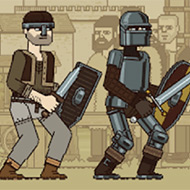
Weapons change the physics rather than just the damage numbers. A bat or pipe swings with real weight behind it, which means a miss leaves you dramatically more exposed than a bare-fisted miss would. Bloody Bastards players talk about “weapon commitment” as its own skill — knowing when the extra reach and damage of a weapon is worth the recovery time if it doesn’t land.
Multiplayer Brawls and Community Habits Around Bloody Bastards
The multiplayer mode is where Bloody Bastards earns its reputation. All-out brawls against real opponents expose the gap between players who’ve internalized the physics and players still fighting the controls, and that gap shows up fast — a floppy, uncoordinated beginner’s fighter versus someone chaining balanced, momentum-aware hits looks almost like two different games running side by side.
Community discussion around the game leans heavily on clips: ragdoll physics produce constant unscripted, screenshot-worthy moments, from double knockouts to a fighter tripping over a dropped weapon mid-combo. That chaos is part of the appeal rather than a flaw players tolerate. It’s also why matches rarely feel repetitive even though the arenas and weapon set are limited.
Why does timing matter more than combos in Bloody Bastards?
Because ragdoll physics mean a queued-up combo can be interrupted by your own character’s momentum, players who bait a single overcommitted swing and punish the recovery window consistently beat players relying on scripted attack strings.
Do weapons make Bloody Bastards easier or harder to control?
Weapons add reach and damage but also increase how far your fighter gets pulled off balance on a miss, so they raise the skill ceiling rather than simply making fights easier — new players often do better bare-fisted until they learn recovery timing.
Bloody Bastards works because it refuses to let players fall back on muscle memory from other fighting games — every match with real opponents becomes a fresh negotiation with physics that don’t care how confident your last swing looked. That unpredictability, more than the bat-and-fist violence on the surface, is what keeps the multiplayer lobbies active.