















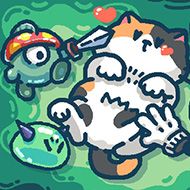
Pet the Cat

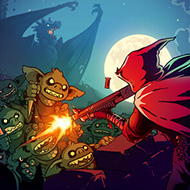


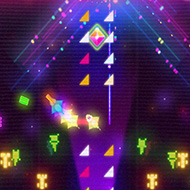




Pet the Cat looks like a soft, harmless clicker about scratching behind an animal’s ears, but it plays like a full bullet-hell survival shooter with waves that don’t slow down for anyone. That contrast is the entire hook: the same mouse motion that would relax a player in a different app is the exact input used here to unleash attacks and clear a screen full of danger.
| Genre | Bullet-Hell Roguelite |
| Platform | PC |
| Perspective | Top-down arena shooter |
| Core Loop | Petting-based attacks, wave survival, run-based builds |
The Petting Mechanic in Pet the Cat
Most bullet-hell games ask for a trigger finger. Pet the Cat asks for something closer to a rhythm — moving the mouse across the cat in the right direction, at the right pace, to fire off attacks while dodging incoming fire at the same time. Petting against the grain doesn’t work the way players expect the first time they try it, and that single detail trips up a lot of new arrivals in their first few runs.
Because the attack and the dodge share the same short window of attention, players have to split focus constantly, which is part of why the genre tag “bullet hell” holds up even with such a cozy premise on the surface. The learning curve isn’t about memorizing patterns so much as building the muscle memory to pet accurately under pressure.
Speedrun-minded players lean into short, aggressive petting bursts to stack damage fast, while players who came for the aesthetic tend to slow down and let waves build before reacting, and both approaches are viable depending on the build drawn that run.
Controller support isn’t the focus here; the mouse-driven petting motion is built specifically around the fine-grained control a trackpad or mouse gives, and community threads generally agree the game loses some of its texture on anything else. It’s a deliberate tradeoff — a slower, more tactile input in exchange for a mechanic nothing else in the genre quite replicates.
Building a Loadout From Food, Items, and Weapons
Between waves, Pet the Cat opens a selection screen offering food, items, and weapons, and what gets picked here defines the run more than anything that happens during combat itself. Food choices tend to shape survivability, items modify how petting-triggered attacks behave, and weapons add new attack types layered on top of the core mechanic.
Beginners often grab whatever looks flashiest on this screen instead of reading how a pick interacts with what they already hold, which is one of the fastest ways to end a run early. A weapon that looks strong in isolation can actively work against a food-heavy build that was leaning on healing instead of raw output.
- Early runs: prioritize survivability items since the cat’s base health pool is thin at the start
- Mid run: weapon picks start mattering more once wave density increases
- Late run: talent tree synergies decide whether a build spikes or plateaus
Talent Tree Choices That Change a Run
The Talent Tree sits above individual runs and slowly reshapes what future loadouts are capable of. Early talent points tend to go toward stretching survivability, but by the time a player has cleared several runs, the tree opens options that change how petting itself behaves — faster charge windows, wider hit detection, that kind of shift.
Advanced players talk about “build-locking” — committing hard to one talent branch and drafting food, items, and weapons specifically to support it rather than picking generically strong options each wave. It’s a technique most players miss on their first dozen runs because the early game doesn’t punish generalist picks as harshly as the later waves do.
One acknowledgment worth being upfront about: the difficulty spike between early and late waves is something the community debates openly, with some players finding the jump exciting and others feeling it arrives a little abruptly once enemy density ramps up.
Talent points don’t reset between runs, which means even a run that ends in the first few waves still contributes something permanent. That structure softens the sting of an early loss and is one of the reasons players describe the loop as relaxing despite the genre it sits in.
Endless Waves and the Leaderboard Climb in Pet the Cat
Once a player has a build they trust, the endless wave structure becomes less about survival and more about score. The Global Leaderboard tracks how far a run goes, and competitive players treat every wave past their previous best as the actual test, not the earlier waves that already felt comfortable.
Early in the game, waves feel forgiving enough that petting mistakes barely register. By the time a run reaches its higher wave counts, though, a single missed pet — a stroke that goes against the grain at the wrong second — can be the difference between climbing the board and restarting from scratch.
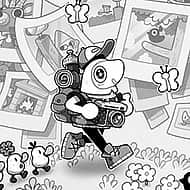
The hand-drawn art style stays charming even as the screen fills with projectiles, which is a detail regulars mention often: the tone never shifts into something grim even when the difficulty clearly has.
- What’s the fastest way to build survivability early in Pet the Cat? Prioritize food picks in the first few wave breaks, since the cat’s starting health pool is low and item or weapon synergies matter far less if a run ends before wave five.
- How does the Talent Tree affect petting itself? Certain talent branches widen the window for a successful pet or shorten the charge time between attacks, meaning a talent-heavy account can noticeably change how forgiving the core mechanic feels compared to a fresh save.
- Why do runs fall apart in the later waves of Pet the Cat? Wave density increases faster than most beginner builds scale, so a loadout that felt strong early can stop keeping pace once enemy count and projectile speed both climb at the same time.
Pet the Cat earns its bullet-hell tag honestly, even with a mechanic as disarming as stroking a cartoon cat’s fur, and the gap between that surface and the Global Leaderboard grind underneath is exactly what keeps players coming back for another run.