

























Chop Chop Inc.



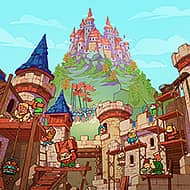




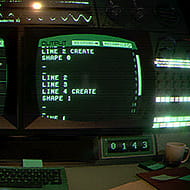



Chop Chop Inc. looks like a cozy woodcutting game about swinging an axe at trees, but it plays like a full production empire built out of spite for a company that fired you over a coffee cup.
| Genre | First-person woodcutting and crafting simulation |
| Platform | PC |
| Setting | A handcrafted world built around Furnox Corp’s territory |
| Core Mechanic | Resource gathering, crafting, and production automation |
From Furnox Corp Cubicle to Independent Woodcutter
You start the game as a nobody at Furnox Corp, the furniture giant that dominates every part of this world, doing paperwork at a desk until a layoff notice arrives and a cartoonish catapult launches you out of the building entirely. It’s a ridiculous opening, and it sets the tone for everything that follows.
You land at an abandoned campsite with nothing but an axe and a grudge, and a strange box left behind by whoever camped there before hands you your first real objective. From there, the game stops explaining itself and just lets you start chopping.
That early framing matters more than it seems to at first. Every system you unlock afterward is framed as a small act of revenge against your former employer, which gives an otherwise standard resource loop a surprising amount of personality.
Chopping Trees and Processing Wood Into Planks
The core loop starts simple: cut down trees, collect raw wood, and process it into planks that feed everything else you’ll build. Different tree types yield different materials, and learning which ones are worth prioritizing early is one of the first things new players get wrong.
Beginners tend to chop indiscriminately without thinking about what they’re actually going to build, which leaves them with piles of the wrong material and none of what a specific furniture blueprint needs.
Once you’ve got a rhythm going, the manual chopping stops being the bottleneck and processing capacity becomes the real constraint — which is exactly where the game wants to nudge you toward machines instead of raw effort.
Machines, Upgrades, and the Push Toward Automation
Automation is the word that comes up constantly in player discussions of Chop Chop Inc., and for good reason — the game’s entire back half is built around the shift from manual labor to optimized production lines. Unlocking new machines changes how you interact with almost every earlier system.
Better axes speed up the initial chopping stage, and they’re earned by reinvesting profit from sold furniture rather than found lying around, which keeps the economy grounded in the loop you’re already running. New distribution methods reduce the manual hauling that eats up time early on.
By the time you reach the mid-game, a well-optimized setup runs itself well enough that you’re mostly checking in to restock and upgrade rather than personally swinging an axe at every tree in sight.
Crafting the Wooden PC and Other Absurd Furniture
Furniture crafting is where the game’s humor is most visible. Blueprints range from practical chairs and tables to deliberately unnecessary items like a wooden PC, which exists purely because the game wanted to see how far the wood theme could stretch.
Crafting community members frequently compare notes on which blueprints sell best versus which ones are just fun to make, and the two lists rarely overlap. That tension between profit and novelty is part of what keeps players experimenting instead of settling into one efficient build order.
Higher-tier furniture sets grant bonus payouts when sold as complete sets rather than individual pieces, rewarding players who plan their crafting queue instead of building whatever’s convenient in the moment.
Strength, Stamina, and the Meals That Fuel Your Empire
Your character has strength and stamina stats that directly affect chopping speed and how long you can work before needing a break, and both can be improved through exercise equipment scattered around your camp — including a wooden weight bench, because of course it’s wooden.
Meals cooked from processed resources boost these stats temporarily, turning food into an active strategic layer instead of a background flavor system. Planning a meal before a big chopping session is something regulars mention constantly when discussing efficient runs.
New players often ignore both systems for the first few hours, treating them as optional flavor, until they hit a wall where manual chopping starts feeling noticeably slower than it should.
Shipping Furniture to the City and Growing Profit
Once furniture is built, it gets shipped to a nearby city to sell for cash, which funds every upgrade from better axes to expanded automation. Early shipments are small and manual, but the loop scales fast once processing capacity catches up to what you’re able to chop.
Reaching new customers in the city unlocks additional demand for specific furniture types, which subtly steers what’s worth crafting at any given stage rather than leaving it entirely up to player preference.
This is also where the revenge narrative pays off mechanically — every sale is framed as one more dent in Furnox Corp’s dominance, which keeps the profit loop feeling motivated instead of purely numerical.
What Keeps Players Coming Back to Chop Chop Inc.
Chop Chop Inc. earns its charm from taking a familiar chop-and-craft formula and refusing to treat it as mundane, whether that’s through the wooden PC blueprint, a weight bench that somehow improves your woodworking, or the ongoing joke of building an empire specifically to spite Furnox Corp. The systems underneath are solid on their own, but it’s that specific mix of automation depth and unapologetic silliness that makes people stick around long after the first tree falls.