






















The Message From Deep Space











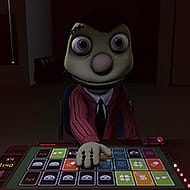
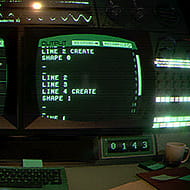
You sit at a glowing retro terminal in 1973, a meteorite hums on the radio, and all you can do is send back a pattern and wait to see whether it answers. That is the first hour of The Message from Deep Space, a puzzle game about translating an alien language from nothing, using math and science as your only common ground.
| Genre | Puzzle, investigation, sci-fi |
| Platform | PC (Windows and macOS) |
| Players | Single-player |
| Setting | A 1973 mission to decode a meteorite’s radio waves |
| Playtime | 30+ hours according to the store page |
Decoding the Meteorite’s Radio Waves in The Message from Deep Space
The scenario is simple and strange. A meteorite lands on Earth and broadcasts radio waves, and you play the mission’s Translator, responsible for designing responses to its transmissions. If a response is correct, the meteorite sends a new message back, and that exchange is how patterns, words, syntax and meaning slowly take shape.
Nothing is explained for you. Beginners usually try to guess meanings too quickly and end up sending nonsense, while patient players treat each transmission as evidence and look for repeated patterns before they commit to a reply.
The question that drives the whole game is the one it asks directly: what is it the aliens want to say?
The Retro Computer, the Dictionary and Frequency Design
You work through a retro computer interface, and the tools are the center of the game. You manage a user-driven dictionary, so the meanings you record are your own conclusions, and you design radio transmissions by frequency when it is time to reply. Early on, a small dictionary and a few simple replies are enough, but by the time the messages grow complex, your notes decide whether you move forward.
- Translate an alien language from the ground up.
- Learn about an alien civilization as the messages become clearer.
- Manage a user-driven dictionary of everything you decode.
- Design radio transmissions by frequency.
Players who like organizing information will enjoy keeping the dictionary tidy. Players who dislike note-taking will struggle, because the game expects you to build your own system.
The Scientists Who Answer Back
You are not alone at the terminal. A scrappy group of scientists works with you, including a meticulous linguist, a single-minded computer programmer and an affable astronomer, and they respond to your actions rather than reading from a fixed script. With more than 1,000 dialogues in the game, their reactions give the long decoding sessions a human rhythm.
That matters because puzzle games can feel cold when you work alone with symbols. Here, the team’s personalities add warmth, and the linguist in particular gives the decoding a sense of direction when you are stuck.
Language fans will enjoy the grammar side of the work, while science lovers will enjoy watching the astronomer and programmer bring their own views to each problem.
Real Math and Science Behind the Message
The game is inspired by the Golden Record aboard the Voyager I space probe and takes a realistic approach to deciphering an interstellar message. It begins with the limited universal constants that a technologically advanced civilization could share, then expands into a range of real-world fields of math and science. That grounding is what makes the puzzles feel earned instead of arbitrary.
You do not need a degree to play. The store page describes the challenge as fit for anyone with curiosity and perseverance, and those two traits matter more than prior knowledge. Players with a science background will recognize some ideas faster, but the game teaches through the messages themselves.
There is also a soundtrack of more than 30 minutes, which supports the retro, late-night mood of the mission.
Where the Long Road Gets Tough
The game is long, with more than 30 hours of play, and that length is both its strength and its main risk. Reviews are overwhelmingly positive, with about 96% of 1,685 reviews favorable, but the pace is not for everyone. Players who want quick answers may feel stuck when the dictionary has gaps, and the open-ended style means some puzzles require patience instead of cleverness.
Text is available in English only, and the interface is deliberately retro, so some players will find it less friendly than a modern puzzle game. The tradeoff is atmosphere: the old computer and the slow dialogue with the meteorite are central to the experience.
If you enjoy deductive puzzles that treat you as intelligent, the difficulty is a feature. If you prefer guidance, expect to pause often.
Questions Players Ask About The Message from Deep Space
Do I need a science background to play?
No. The game starts from a small set of universal constants and builds up, so each message teaches what you need for the next. Curiosity and perseverance matter more than formal knowledge, and the linguist, programmer and astronomer help guide your thinking.
What do I actually do at the terminal?
You study the meteorite’s transmissions, record your findings in the dictionary and design replies by frequency. When a reply is correct, the meteorite sends a new message, and the cycle repeats as the language grows more complex.
How long does it take to finish?
The store page lists more than 30 hours of gameplay. Your own pace depends on how carefully you keep your dictionary and how often you test replies, so rushing tends to cost more time than it saves.
The Message from Deep Space is at its best late in the mission, when your dictionary is full, the Translator’s replies are getting through, and a meteorite broadcasting from 1973 finally seems to be saying something you understand.