

















Wanderburg











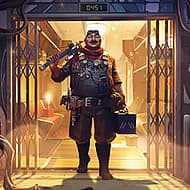
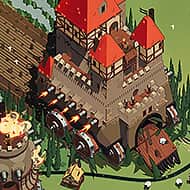
You slam into a rival stronghold at full speed, your cannons already swinging into range before the collision animation even finishes, and for a second you have no idea whether your Castle on Wheels is about to eat that fortress or get flattened trying. That uncertainty is basically the entire pitch of Wanderburg, a roguelike built around driving a lumbering, top-heavy fortress across open ground and hoping your last upgrade run was smarter than the one before it.
| Genre | Action Roguelike |
| Setting | Medieval world of roaming fortresses |
| Core Mechanic | Drive, devour, and upgrade a mobile castle |
| Structure | Runs across procedurally generated biomes |
Steering a Castle on Wheels in Wanderburg
The first thing every new player learns the hard way is that a Castle on Wheels does not handle like a normal vehicle. It leans, it drags, and weapons mounted on the sides or rear fire relative to where the whole structure is facing rather than where you are looking. Turning wide to line up a shot with a side-mounted mortar while still dodging incoming fire is the kind of skill that only clicks after a handful of failed runs.
Nitro is the other half of the equation. Punching the boost at the wrong moment sends a fortress careening past a village it should have flattened, while using it too early leaves nothing in reserve when a rival stronghold closes in. Wanderburg rewards players who treat momentum as a resource to be spent, not a button to mash.
Because the castle grows heavier and taller as a run continues, the driving model quietly shifts under you. A frame that felt nimble in the opening minutes starts to feel like steering a cathedral by the time turrets and armor plating pile up on every side.
Assembling Your Modular Arsenal
Every run starts with three core parts: a frame, a commander, and a set of mounted weapons, and the choices made here shape how the rest of the build wants to play. Some frames favor a swarm of light cannons, others lean into a single devastating mortar backed by mines dropped in the enemy’s path.
- Cannons for consistent, spread-out damage across multiple lanes of approach
- Mortars for arcing shots that punish stationary strongholds
- Mines for controlling the ground behind a retreating castle
Artifacts earned from crushed strongholds add multiplicative or transformative effects on top of the base loadout, and stacking the right combination is where Wanderburg stops being a driving game and starts being a build-crafting one. Players who ignore artifact synergy in favor of raw firepower tend to hit a wall once tougher biomes introduce armored villages.
Crossing the No Man’s Land
Between major encounters lies a stretch of no man’s land, a deadly buffer zone scattered with high-value resources and targets that most castles cannot safely reach without committing to a risky detour. Early in the game it barely matters, since a modest frame can dart in and out before anything notices.
By the time a run reaches its later biomes, no man’s land becomes a genuine decision point. Grabbing that extra artifact might fund the next upgrade tier, but it also exposes flanks that a rival castle can exploit while you’re distracted.
Completionist-minded players tend to sweep every corner of no man’s land regardless of risk, while more cautious players treat it as optional loot they’ll only chase when the build is already strong enough to absorb a mistake.
Where New Wanderburg Runs Fall Apart
The most common early failure isn’t a bad fight, it’s a bad frame choice that locks a player into a driving style they don’t enjoy. Committing to a heavy, slow frame while trying to play reactively around fast rival castles usually ends with a fortress getting surrounded before its weapons can rotate to face the threat.
Overextending into a village raid without checking what’s chasing from behind is the second big killer, since Wanderburg rarely gives a clean warning before a stronger stronghold arrives.
Players who survive longest tend to be the ones willing to break the game’s early balance in their favor, stacking artifacts around a single strong weapon type rather than spreading upgrades thin across everything available.
Do you need to fully upgrade a Castle on Wheels before fighting other strongholds?
No. Wanderburg is built around escalating fights as you grow, and waiting too long to engage a rival stronghold usually means facing a bigger, better-armed castle later with a weaker build than you could have had.
What causes a Castle on Wheels to lose control while turning?
Top-heavy builds with too much weight mounted high or to one side make a castle harder to steer, especially at speed. Balancing mounted weapons across the frame keeps handling predictable during nitro boosts.
Is it worth detouring into no man’s land for extra artifacts?
Only once a build can handle the exposure. Early runs are usually better served skipping it entirely, while stronger, later-game castles can use the resources there to push into tougher biomes.
Wanderburg keeps circling back to the same tension between greed and control, whether that’s a nitro boost fired a second too early or one more artifact grabbed from no man’s land before the next stronghold arrives, and that tension is exactly why a single run can swing from a modest fortress to an unstoppable war machine without ever feeling scripted.