
















Beautiful Light Demo







Beautiful Light Demo looks, from a trailer, like another moody tactical shooter with a horror coat of paint. Play a raid, and it demands full squad coordination, patient rotations, and the constant assumption that something in the dark is already tracking your team.
| Genre | PvPvPvE tactical extraction shooter |
| Squad Size | 3 operators per squad, 6 squads per raid |
| Perspective | First person |
| Core Loop | Enter, secure an artifact, extract |
Entering Ground Zero in Beautiful Light Demo
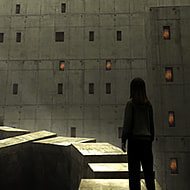
Six squads of three operators drop into the same hostile map at once, each hunting the same objective: locate and extract an artifact before anyone else does, or before it kills you trying. Ground Zero is one of the maps included in the current build, and its layout was reworked after early testing showed the original objective flow played too repetitively.
That kind of mid-development pivot is common in this game’s roadmap, and it’s part of why community feedback threads stay active between builds rather than going quiet after launch hype fades. Players who’ve followed the alpha and closed testing phases tend to describe Ground Zero as noticeably tighter now than it was even a few months ago.
Beautiful Light draws an obvious lineage from Hunt: Showdown, but the addition of player-controlled monsters on top of rival squads makes every encounter less predictable than a straightforward PvP extraction loop. Eighteen operators, spread across six squads, all converging on one contested objective is a lot of moving parts for a single map to hold together, and that density is exactly what most raid stories end up being about.
Squads of Three and the Quick Reaction Force
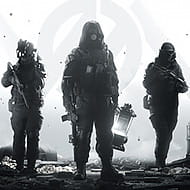
Playing as part of the Quick Reaction Force puts you on the human side of the raid, geared up with weapons, armor, and gadgets before you land. Coordination between three operators matters more here than raw aim, since split squads get picked apart by both rival teams and anomalies waiting for exactly that mistake.
Newer squads consistently underestimate how much noise discipline affects a raid, moving as a loud group instead of staggering positions the way experienced Quick Reaction Force players do. A squad that clears a building silently often walks past a fight entirely, while a loud one announces itself to every other team on Ground Zero within seconds.
Loadout choices inside the Quick Reaction Force also shape how a squad plays a given raid. Some teams commit to a stealth-first approach, avoiding gunfights unless cornered, while others gear up heavy specifically to force fights early and control key parts of the map before rivals arrive.
Securing an Artifact Without Getting Wiped
Each artifact has its own properties worth exploiting, and knowing what a specific artifact does before committing to secure it saves squads from walking into a fight they can’t win. Communication-focused players who call out artifact behavior early tend to keep their squad alive longer than players who grab first and ask questions later.
Securing the objective is rarely the hard part. Holding it long enough to walk to extraction while other squads and anomalies converge on the noise you just made is where most raids actually fall apart.
Player-Controlled Anomalies Change Every Raid
Instead of scripted monsters, some matches put a real player in control of a monstrous anomaly hunting both squads. That single design choice is why no two raids in Beautiful Light Demo feel alike, since a human anomaly adapts to squad movement the way a bot never could.
Aggressive squad leaders tend to treat anomaly encounters as another fight to win outright, while more cautious operators would rather disengage and let another squad take the hit instead. A third type, the objective-runner, tries to avoid both fights entirely and simply out-rotate everyone to extraction.
Facing a scripted monster is one kind of pressure. Facing an anomaly controlled by someone actively trying to outthink your squad’s exact positioning is a different, sharper kind, and it’s the feature players bring up first when describing why a raid went wrong.
Gear Loss and Why Extraction Feels So Tense
Full loot risk: everything your operator is carrying stays on you until you either die or successfully extract, at which point it’s either banked for good or lost entirely. That single rule is why the walk toward an extraction point, gear in hand, tends to be the tensest stretch of any raid, more so than the fight over the artifact itself.
The developers have been open that matchmaking currently avoids skill-based matchmaking entirely, a decision players are still split on, since it means new squads can land against far more experienced ones with no buffer. Some see it as true to the extraction genre’s roots; others see it as a barrier that pushes newer players out of Beautiful Light Demo before they’ve learned the map.
What the Beautiful Light Demo Doesn’t Show Yet
Persistent storage, a full progression system, and additional maps beyond Ground Zero are still being layered in as development continues, so the current demo build represents an early slice rather than the finished loop. A dedicated audio system and AI-driven opponents have already been added on top of the base loop, filling out raids even when human squad counts run low.
Wishlist numbers on Steam have climbed past the hundreds of thousands, which says more about anticipation than about how complete the current build actually is. Treat the demo as a preview of the raid structure rather than a finished picture of everything Beautiful Light is eventually meant to include.
Beautiful Light Demo already nails the tension of walking loot out of Ground Zero while another squad, or worse, a player-controlled anomaly, closes in from somewhere you can’t see. It’s early, it’s rough around the edges, but the core PvPvPvE loop the Quick Reaction Force fights inside is exactly as unpredictable as it was designed to be.