








Nate Hand Gesture



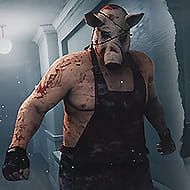



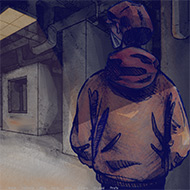
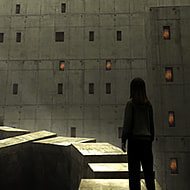
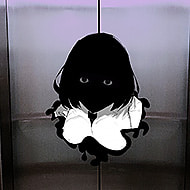
In Nate Hand Gesture you start with almost nothing — no weapon, no map, no way to leave — just a locked room, a flickering elevator, and an entity named Nate who wants to play a hand game before she decides what happens to you next. That starting condition matters because everything else in the game builds on it: you are never in control of the encounter itself, only of how well you read the person sitting across from you.
| Genre | Psychological horror visual novel |
| Platforms | Windows and Android demo; Steam page live, full release pending |
| Players | Single player |
| Current content | One main route, three death endings, several additional endings |
Reading Nate’s Mood Instead of the Odds
The surface-level mechanic in Nate Hand Gesture is rock-paper-scissors, but treating it like a coin flip is the fastest way to lose. Nate’s mood, not your throw, decides most outcomes, so a mathematically correct counter can still fail if she’s irritated by something you said two lines earlier. Players in the demo’s comment sections describe this as “reading her mood” rather than reading her hand, and that phrase has stuck because it’s the actual skill the game is testing.
It’s a small twist, but it changes how every exchange feels.
Dialogue choices feed directly into that mood system. Early in the game you have almost no information about what pleases or annoys Nate, so the first loop is mostly guesswork. By the second or third attempt, players start noticing which lines make her giggle and which ones shift her tone colder — and that pattern recognition matters more than any hand you throw.
The Three Death Endings Players Find First
The current build contains one main route, three distinct death endings, and several additional outcomes beyond those, all shaped by how the hand game and the conversation intersect. Most new players hit one of the three death endings inside their first attempt, usually because they play the rock-paper-scissors portion in isolation and ignore the dialogue happening around it.
That’s the trap the game sets on purpose.
Completionist-minded players tend to treat the death endings as a checklist, deliberately provoking Nate to see each failure state before chasing the harder-to-reach outcomes. Because the ending you get depends on cumulative information gathered across previous attempts rather than a single clean choice, replaying the loop with a different tone each time is the only reliable way to see everything the demo currently offers.
Why Nate Hand Gesture Doesn’t Play Fair
One detail that surprises first-time players: Nate can simply decide who wins a hand, independent of what was thrown. This isn’t a bug or a balance oversight — it’s stated outright as part of the premise, and it’s one of the more debated aspects of the demo among players who came in expecting a straightforward strategy game. Some find the rigged outcomes thematically appropriate given who Nate is; others find it frustrating when a run ends on a technically correct counter.
Either way, it forces a different mindset.
Instead of optimizing for the “correct” hand, advanced players watch for small tells in Nate’s dialogue pacing right before a match starts, treating the hand game as a secondary confirmation of a read they’ve already made. That approach lines up with what the game seems to want: it’s built around social reading, not probability.
The Close-Window Moment That Catches New Players
There’s a joke built into the downloadable version of Nate Hand Gesture where trying to quit mid-session triggers an in-fiction reaction, since Nate interprets closing the window as an attempt to get rid of her. The standard Alt+F4 shortcut doesn’t work here, and players unfamiliar with the trick have reported minutes of genuine panic before finding a workaround through Windows’ Task View to force-close the process.
It’s a small piece of environmental storytelling that plenty of players only discover by accident, which is part of why it gets brought up so often in discussion threads.
The tone around this moment is also where the demo’s more divisive quality shows up: Nate Hand Gesture mixes real dread with dark comedy and a deliberately uncomfortable, suggestive character presentation, and that combination doesn’t land the same way for every player. Some appreciate the tonal whiplash as part of Nate’s character; others feel it undercuts the horror.
Branching Routes Nate Hand Gesture Promises Next
The planned full release expands well beyond the current single route, with branching endings, hidden content, dating-sim-adjacent mechanics, and new playable victims introduced episodically rather than all at once. Players who prefer slower relationship-building systems over pure horror loops are likely to find that structure more to their taste once it arrives.
None of that is playable yet.
What’s confirmed so far comes directly from the developer’s own description of the expanded scope, and it suggests the current demo — as tense as it already is — represents a fraction of what the full version is aiming for.
How do you actually win in Nate Hand Gesture?
Winning depends more on managing Nate’s mood through dialogue than on picking the statistically correct hand. Players who focus purely on rock-paper-scissors logic tend to lose faster than those paying attention to her tone between exchanges.
Does closing the game get you out of a bad run?
No. Attempting to close the window triggers an in-story reaction instead of quitting normally. On Windows 11, players typically use Task View to send the window to a separate desktop before force-closing it through Task Manager.
Is Nate Hand Gesture available as a full release on Steam yet?
Not yet. The playable demo is distributed through itch.io for Windows and Android, and while the Steam store page is live, the full version’s release date hasn’t been announced.
Nate Hand Gesture works because it keeps its scope small and its rules deliberately unstable — a locked room, a girl who isn’t a girl, and a hand game that was never going to be fair to begin with. Whether you’re chasing all three death endings or just trying to survive one clean loop, the moment that sticks with most players is the same one: realizing Nate decided the outcome before you ever threw your hand.