












Talaka FULL DEMO





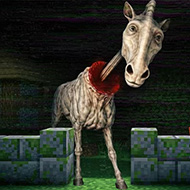
You dodge under a Mapinguari’s swing, burn your last dash on instinct instead of information, and get clipped anyway — that’s the lesson Talaka hands you in its opening minutes, with no tutorial popup to soften it. The demo doesn’t explain its systems so much as let you fail into understanding them, which is fairly typical of the genre it’s borrowing from, but the world wrapped around that failure is not typical at all.
Talaka’s Watercolor World and What Frame-by-Frame Animation Buys It
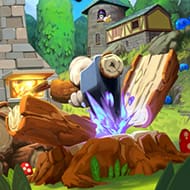
Every frame in Talaka is hand-animated rather than generated or filtered, and that production choice is immediately visible in how creatures move — nothing has the slightly mechanical repetition you get from procedural animation rigs. It’s a slower, more labor-intensive way to build a roguelite, and it shows in how distinct each enemy silhouette feels even mid-combat.
That visual identity isn’t decoration.
The game leans on its watercolor aesthetic to differentiate creatures from Brazilian folklore that most international players have never seen represented before, which matters for a genre where enemy recognition under pressure is a core skill. Players who’ve spent hundreds of hours in similar action roguelites still describe having to relearn their reflexes here, simply because the shapes on screen don’t map to familiar genre archetypes.
Facing the Mapinguari, Velho do Saco, and Other Folklore Enemies
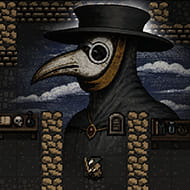
The current demo’s bestiary draws directly from real Brazilian folklore, fauna, and regional legend rather than generic fantasy templates. The Mapinguari, a hulking one-eyed beast from Amazonian legend, anchors the early encounters, while the Velho do Saco and a creature known among players as the Bathroom Blonde round out the roster players actually run into during the demo’s first world.
- Mapinguari — slow, heavy hits that punish players who don’t respect its wind-up
- Velho do Saco — faster, more erratic movement that rewards reading its pattern over memorizing it
- Bathroom Blonde — an enemy players frequently mention for how it subverts expectations on first encounter
Every one of these has an in-game bestiary entry explaining its folkloric origin, which is unusual detail for a demo covering only a single world.
Spending Ashe Between Runs in Talaka
Ashe is the run-to-run currency players earn during combat and spend on permanent upgrades once a run ends, covering things like health, dodge distance, and healing capacity. It’s a familiar meta-progression loop for anyone who’s played Dead Cells or Hades, but Talaka ties the specific upgrades to the mythology rather than treating them as generic stat sliders.
Beginners tend to spend Ashe too evenly across categories instead of committing to a build.
Players optimizing for consistency generally push dodge distance first, since Talaka’s hit windows are tighter than they initially appear, while players chasing damage output tend to prioritize whatever weapon-tied skill combination they found most reliable in their last run — and with 150-plus weapon and skill combinations already present, there’s enough variety that two players’ “reliable build” rarely looks the same.
Dodge, Parry, and the Combat Loop Beginners Get Wrong
The core combat loop in Talaka rewards commitment: dodging early rather than reactively, and parrying only when you’ve actually read an attack’s tell rather than mashing the input defensively. New players tend to over-rely on dodge rolling because it feels safer, but that habit burns stamina that’s needed for the parry windows against tougher enemies later in a run.
It’s a genre-standard trade-off, executed with unusually tight timing.
By the time you reach the demo’s boss encounter, the difference between a player who’s internalized parry timing and one who hasn’t becomes obvious — the fight is built to punish panic-dodging specifically, which is a deliberate difficulty spike rather than an accident of enemy design.
Talaka’s Difficulty Curve Across the First World
Talaka includes a system that observes player performance and suggests an appropriate difficulty level, alongside dedicated accessibility toggles for infinite health and one-hit kills for players who want full manual control instead. That’s a notable design decision for a genre that often prides itself on unforgiving difficulty as a badge of honor, and it’s already generated some debate among players who feel adaptive difficulty undercuts the roguelite identity.
Others see it as simply removing an unnecessary barrier to experiencing the story and world.
Either way, the demo doesn’t hide the option — it’s presented plainly in the settings rather than buried, which suggests the eventual full release will keep treating it as a core feature rather than an apology.
Consulting Iemanjá, Ogum, Oba, and Eshu
Between combat encounters, Talaka lets players seek guidance from Orishas — Iemanjá, Ogum, Oba, and Eshu among them — each offering distinct blessings that shape a given run’s build. These aren’t cosmetic dialogue detours; the blessings tie directly into the run’s available upgrades, giving each Orisha a mechanical identity alongside their narrative one.
Players interested in the mythology itself tend to read every available bit of dialogue with these characters, since the game treats the Orishas’ real cultural context as part of the reward rather than an afterthought.
What the Demo’s Boss Fight Reveals About Full Release Talaka
The demo’s first world ends in a full boss encounter rather than stopping short of one, giving players a genuine sense of how the eventual full game escalates its combat design. That boss fight is where the difficulty-suggestion system and the accessibility toggles both get their real test, since it’s the first point in the demo where raw reflexes stop being sufficient on their own.
It’s also the clearest signal of scope: if one world already contains this much folklore-specific detail, the full release covering multiple worlds represents a considerably larger undertaking.
- How many worlds does the Talaka demo cover? The current demo includes the game’s first world in full, ending with a complete boss encounter rather than a partial preview.
- What do the accessibility options actually change? Toggling infinite health or one-hit kills removes the run-ending stakes of combat entirely, letting players focus on exploring the world and story instead of surviving encounters.
- Is Talaka based on real mythology or an invented setting? It draws directly from Afro-Brazilian religious traditions including Candomblé and Umbanda, using real Orishas like Iemanjá and Ogum alongside genuine Brazilian folklore creatures such as the Mapinguari.
What makes Talaka worth tracking ahead of its full release isn’t just the combat loop, which is competent but familiar — it’s watching a creature like the Mapinguari rendered frame by frame in a genre usually built on procedural shortcuts, and realizing the mythology behind every Orisha blessing is doing real narrative work instead of just flavoring a stat boost.