




A Few Quick Matches

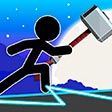
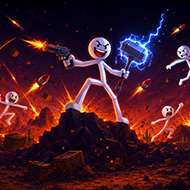
A Few Quick Matches looks like a doodle come to life — thin stick-figure limbs, flat backgrounds, the kind of visual you’d expect from a decade-old Flash portal — but the moment two players start trading hits, it plays like a fighting game built by people who actually understand frame data and combo routing.
| Genre | Platform Fighter, Action |
| Players | 1–4, local and online |
| Roster at Launch | 3 fighters, expanded post-launch |
| Netcode | Rollback |
Stick Figures With Real Depth
The premise of A Few Quick Matches is deliberately simple: bring back the feeling of stick-figure battle animations that used to circulate online, except now you’re the one controlling the fight. Underneath that throwback presentation sits a genuinely technical platform fighter, and the gap between how the game looks and how it plays is the first thing almost every new player mentions.
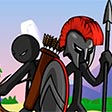
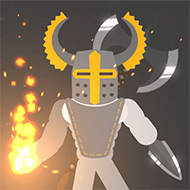
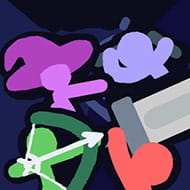
Fighters like Eureka, Knockt, and Rend each play according to distinct philosophies rather than being reskins of the same moveset. Eureka is built around speed and aerial pressure, Knockt leans into zoning with a controllable projectile and a placeable bomb, and Rend hits harder but struggles to close distance — a design tension players still argue about, since his lack of quick options can leave him outpaced entirely.
Cancels, Air Dashes, and the Combo Game in A Few Quick Matches
The system that defines A Few Quick Matches at a high level is the cancel game: most successful hits can be canceled into an air dash, opening up follow-up routes that rarely dead-end. Community shorthand for this includes “jab canceling,” a term that shows up constantly in the game’s own discussion boards from players trying to squeeze extra damage out of their fastest normal.
You don’t need to touch any of this to enjoy local matches with friends. But once a player starts digging into cancel routes, the ceiling opens up fast, and matches between players who’ve put in the hours start looking closer to something out of a traditional fighting game than a casual party brawler.
- Land a hit that connects cleanly
- Cancel the recovery into an air dash before your opponent can punish
- Chain into another attack to extend the combo further
Beginners typically get wrecked early because they don’t respect edgeguarding — the practice of intercepting an opponent before they recover back to stage — which several of the stronger characters in A Few Quick Matches can execute with very little risk to themselves.
Stages, Rollback, and Fighting Anyone Online
Matches take place across stages such as Ithaca, Tower, Woods, Arena, and Castle, each changing the geometry enough to shift how edgeguarding and zoning play out. The game runs on rollback netcode, which keeps online matches feeling close to local play even against opponents a continent away, though some players have reported occasional hiccups depending on connection quality.
By the time you’ve spent a few hours in quickplay, you start noticing which stages favor which fighters — Knockt’s projectile game gets significantly stronger on stages with more horizontal space to work with, for instance.
How many characters are in A Few Quick Matches?
The game launched with three fighters — Eureka, Knockt, and Rend — and has since added Ninja and Sarissae, with the developer continuing to expand the roster after release rather than locking it at launch.
Is A Few Quick Matches good for online play?
Yes — the game specifically built around rollback netcode so that online matches feel comparable to playing locally, and quickplay matches you against opponents in your region rather than a blind global pool.
What is jab canceling in A Few Quick Matches?
It’s a community term for canceling a fast normal attack’s recovery into an air dash to extend pressure, a technique players actively discuss and troubleshoot on the game’s own forums when trying to optimize a character like Knockt.
A Few Quick Matches earns its spot among platform fighters by refusing to let its stick-figure presentation undersell what’s actually happening in a match between two players who’ve learned to weave cancels and air dashes together. Whether you’re button-mashing with Rend for a laugh or grinding Knockt’s zoning game against a friend, the game keeps finding new depth the longer you stay with it.