




















Probably Stolen







What happens when a customer slides a crate across your counter and won’t say where it came from? In Probably Stolen, that’s not a rhetorical question, it’s Tuesday. You’re running a storefront on a space station where rent climbs whether business is good or not, and every item you stock carries a story you’re not always allowed to ask about.
| Genre | Cyberpunk Shopkeeper Sim |
| Developer | Questing Goose Studio |
| Publisher | tinyBuild |
| Setting | Dystopian space station |
| Perspective | Top-down pixel art |
Starting a Shop in Probably Stolen
You begin as a former scavenger who landed a storefront through a loan and some questionable timing. From there, the game hands you a choice that shapes the entire run: gunsmith, chemist, water merchant, fence, hydroponic farmer, or organ dealer, plus an option to start from absolute rock bottom with nothing.
Each product line comes with its own profit curve and its own way of ruining you. Weapons invite inspections. Chemicals demand guarded recipes and bring addiction into the story. Water requires constant testing and filtering, and any slip becomes a liability you didn’t budget for.
What makes this decision matter is that it isn’t cosmetic. The game changes which factions notice you, which customers walk through your door, and which risks you’re forced to manage first, long before rent even becomes a pressing issue.
Appraising Goods Nobody Will Vouch For
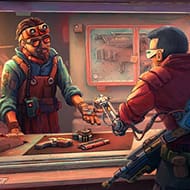
The counter is where Probably Stolen earns its name. Cigarette packs need a visual check before resale. Rare items need proper appraisal or you’ll overpay a supplier who’s counting on you not knowing better. Weapons need permits and modifications before they’re worth anything on a legal shelf.
You can also cut product quality, relabel counterfeit goods as genuine, or fence stolen merchandise outright if you’re confident Security isn’t watching that particular corner of the station. None of it comes free of risk, and misjudging an item means you absorb the loss personally.
Suppliers overstate value more often than not, and customers push their luck constantly, so trusting your own read on a deal becomes the actual skill the game is testing, not just your spreadsheet math.
Who Walks Through the Door
Every customer in the game is a small gamble dressed as a transaction. A security fisher might be collecting evidence against you. A revolutionary might be looking for leverage against a faction you’ve quietly been supplying. A fallen elite might be testing whether you’re useful enough to keep around.
- Approve the sale and take the profit along with whatever risk comes attached
- Refuse and protect your reputation with whichever faction is watching
- Report the customer and curry favor with the authorities running the station
- Look away entirely and hope nobody was keeping notes on that one
Someone is always taking notes in Probably Stolen, and reputation cuts both ways: it buys access and protection from the right factions, but it also paints a target on your back the moment the wrong faction starts paying attention to your storefront.
Augs, Rent, and the Slow Squeeze
A rogue AI chip runs through the game’s late-run tension, taking over hosts that look identical to everyone else on the station until something gives them away. Every faction agrees on how to handle Augs when they’re spotted, and you’re armed and expected to enforce that policy, but misreading the signs carries a cost of its own.
Rent rises steadily no matter how well a given week went, and falling behind has a visible effect: your storefront loses appeal, fewer customers walk in, and revenue drops in a way that’s hard to climb back out of without taking on riskier deals than you’d normally accept.
Early in a run, cautious players tend to play it safe with legal stock and slow, steady margins. Players chasing the underground market instead lean into contraband and counterfeits from the start, betting that faster cash covers the risk of a raid. A third type splits the difference, using legitimate trade as cover while quietly building connections in the gray zones once rent pressure starts to bite.
Building Toward the Underground Market
Advanced licenses unlock access to the underground market, where margins improve dramatically but so does the attention from Security. Managing machines and production chains lets you craft valuable artifacts from raw materials instead of just flipping whatever walks in the door, which shifts the game from pure trading into something closer to a small manufacturing operation.
Navigating faction politics becomes essential once you’re operating in these gray zones. Building the right connections opens exclusive deals that simply aren’t available to a shopkeeper playing it completely straight, but those same connections come with obligations you can’t easily walk away from later.
By the time you’ve unlocked a couple of these licenses, the original question, buy out your shop before rent forces your hand, starts to feel less like a simple savings goal and more like a race against the version of yourself that keeps taking bigger risks for bigger payouts.
What happens if Security catches you selling stolen goods?
Frequently Asked
- Can I run a fully legal shop the entire game? You can lean heavily into legal product lines like water or hydroponics, but rising rent tends to push most players toward at least occasional gray-zone deals to keep the storefront afloat.
- Do faction choices lock me out of other storylines? Building strong ties with one faction can close doors with rivals, since reputation and protection in Probably Stolen are shown as a trade-off rather than something you stack freely across every faction at once.
- What’s the fastest way to afford buying out the shop? Combining a production chain, like crafting artifacts from raw materials, with selective underground licenses tends to outpace pure retail trading, though it also raises the stakes if a deal goes wrong.
Whether you play it straight as a water merchant or dive headfirst into fencing stolen goods for the underground market, Probably Stolen keeps circling back to the same pressure: rent doesn’t care about your morals, and neither does the customer standing at your counter right now.