











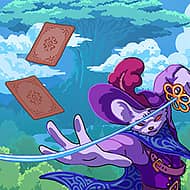
Grail
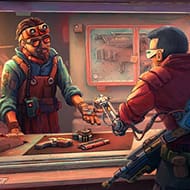



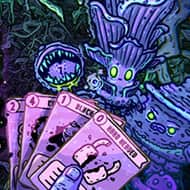





You draw your opening hand, drop four energy into a card’s pips, and watch it resolve on its own — no targeting, no clicking, just the deck doing what you built it to do. That’s the loop at the center of Grail, and it’s the first thing that throws new players: this is a deckbuilder where you don’t actually play the cards yourself.
| Genre | Auto Battler / Deckbuilding / Strategy |
| Developer | Sokpop Collective |
| Platforms | Windows, macOS, Steam Deck |
| Modes | Singleplayer, PvE, Asynchronous PvP |
How Cards Resolve Without Your Input
Every run in Grail starts with four energy, and you gain one more at the end of any turn where you draw a card. Cards cost energy shown as pips along the bottom edge, and on your turn you draw, fill those pips with whatever energy you have, and either play the card once it’s fully paid for or discard it if you’re short. You never choose the order cards come out in — that’s the whole point of the game. It forces you to think about deck composition rather than moment-to-moment decisions, which is a strange feeling if you’ve played any other card game before.
Once your deck runs dry, you don’t just reshuffle instantly. You lose two turns shuffling your discard pile back in, which is a real cost and shapes how thin or wide players build their decks. A tight, focused deck cycles fast and hits hard, but it also empties faster and eats that shuffle penalty more often. A wider deck avoids the penalty but usually needs more setup to pay off.
Selling cards outside of battle gives you gold, and this single rule quietly pushes the whole community toward thin, aggressive builds. There are ways to make a wide deck competitive, but they take more deliberate planning and rarely outperform a well-tuned thin deck except on specific high-roll runs.
Stickers and Card Customization in Grail
Each card can carry exactly one sticker, and this is where the game opens up. Stickers can make a card critical more often for double effect, let it play twice in a row, or force it back to the bottom of your deck once per shuffle so you can manipulate draw order despite the game’s normally random sequencing. Stacking the right sticker on the right card is how veteran players start bending the deck’s randomness back in their favor.
- Critical stickers reward decks built around a small number of high-impact cards
- Return-to-bottom stickers let you delay a card until a specific point in the shuffle
- Double-play stickers favor cheap, low-pip cards that combo well with themselves
Augmenting is a separate system that boosts a card’s base stats and looks visually identical to the unmodified version, which means an enemy card on the board might be stronger than its printed numbers suggest. You’ll see this most in shops and certain events, and it’s one of the details that trips up players who assume every copy of a card behaves the same.
Status Effects: Sleep, Burn, Shock, Poison, and Bleed
Grail’s five status effects each punish a different action instead of just ticking down damage over time. Sleep stops a target from drawing on their turn, though they still generate energy. Burn triggers damage whenever the target plays or discards a card from their deck, but shuffle turns dodge it entirely. Shock punishes energy generation itself, including the bonus energy from end-of-turn gain. Poison hits during shuffle turns specifically, so it tends to stack in larger amounts since it’s harder to trigger. Bleed amplifies any other damage the target takes, making it the effect players fear stacking against them the most.
Learning which status counters which archetype is a big part of climbing in Grail. A deck leaning on frequent shuffles is far more vulnerable to Poison than one that never runs dry.
Trainers, Locations, and Hidden Events
Certain locations you encounter during a run, like the Fencer location, hide extra interactions the game never explains outright. Holding specific cards such as Vertical Cut or Vital Strike can trigger a hidden Legacy event tucked inside that location, but nothing on the tooltip tells you this — you either stumble into it or hear about it from other players.
This is where Grail splits its audience a bit. Some players enjoy the discovery and treat hidden triggers as part of the fun. Others find it frustrating that community wikis and Discord discussion are effectively required to know half the game’s systems, since the in-game compendium only records cards you’ve personally seen or drafted.
Grace is another mechanic tied to these hidden events, connected to the game’s lighter narrative layer around “good” and “bad” endings when you finish a run. If you’re not chasing that thread, you can safely ignore Grace entirely and just click Finish Run after each win.
Ranked Play and the Trophy Grind
New characters like the Mouse Musketeer, Bunny Bartender, and Squirrel Sciencer used to cost 200 trophies to unlock, which felt steep at launch. That cost has since been reduced to 100, easing the early grind considerably for anyone starting fresh.
Matchmaking in Grail leans toward making players feel good rather than pure competitive parity — you won’t face opponents ranked above you, and lower ranks see a higher share of simple bot boards. It’s a deliberate design choice, and whether you see it as welcoming or as padding your winrate artificially is something the community still argues about openly.
What Beginners Get Wrong Early
New players tend to hoard cards instead of selling them, missing out on the gold that funds a thinner, faster deck. They also frequently ignore sticker synergy entirely, treating stickers as a minor bonus instead of the core lever that turns a mediocre card into a run-defining one.
Why Deity Point Climbing Feels Different
Deity point climbing is the one ranking track that doesn’t carry over between seasons the way trophies mostly do, so it’s the fairest measure of current skill if you’re chasing a genuine ladder position rather than a head start from an earlier demo period.
Frequently Asked Questions
Why can’t I control which card gets played next in Grail?
That’s intentional — cards are drawn and resolved automatically once their pips are filled, and the entire deckbuilding layer exists to shape that automatic order rather than override it directly. Stickers with return-to-bottom or double-play effects are the closest thing to manual sequencing the game offers.
What triggers the hidden Legacy event at the Fencer location?
Holding a card like Vertical Cut or Vital Strike in your deck when you reach that location gives the event a chance to appear, though the game never states this requirement anywhere in its interface.
Is a thin deck always better than a wide deck in Grail?
Not always, but thin decks are generally stronger because selling extra cards for gold and avoiding the two-turn shuffle penalty both favor a focused card pool; wide decks can work but need more deliberate synergy to justify the extra shuffle risk.
Grail rewards the kind of player who wants to reverse-engineer a system rather than react to one turn at a time, and once you’ve lost a run to your own Bleed stacking against you, you start building differently. Between the sticker economy, the Fencer location’s buried Legacy event, and a status system that punishes very specific behaviors, Grail keeps enough half-hidden beneath the surface that even a hundred hours in, you’ll still be adjusting your deck around something you just learned.