




















Prototype N



You slide under a spinning saw blade, plant a shot from your arm cannon into a robot’s chestplate, and scoop up a Gem before the screen even finishes scrolling. That opening rush is basically the pitch for Prototype N, a side-scrolling shooting platformer built around momentum, weapon variety, and old-school stage design that rewards players who keep moving.
| Genre | Side-scrolling shooting platformer |
| Platforms | Windows, macOS, Linux |
| Protagonist | Nadine, a prototype android |
| Setting | Turquoise Island |
| Demo content | 8 levels across 3 worlds plus boss fights |
Nadine’s Arm Cannon and the Core Combat Loop
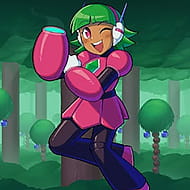
Prototype N puts you in control of Nadine, a robot girl defending her home after Turquoise Island is invaded by a wave of hostile machines. Her default tool is a plasma-firing arm cannon, but the game constantly hands you alternatives scattered through the levels, each with different range, spread, and interaction with the environment. Some weapons chew through armored enemies, others are better for clearing groups or triggering environmental switches, and figuring out which gun actually solves which room is a big part of what the game is testing you on.
What separates the combat from a straight Mega Man clone is the slide. Nadine’s slide isn’t just a dodge — it deals contact damage, and several early encounters are built specifically to teach you that fact. Players who ignore it and try to out-shoot everything tend to get stuck on enemies positioned low to the ground, since Prototype N has no crouch button and expects you to use the slide instead. It’s a small mechanical choice, but it shapes how every low-clearance room in the game is designed.
Speedrunners and casual explorers end up playing very different versions of the same stage here. One type of player is sprinting and sliding through rooms chaining kills for momentum, while a more methodical player is stopping to check every branching path for the collectables hidden off the main route. Both approaches work, which is part of why the level layouts hold up on repeat runs.
Turquoise Island’s World Map and Shop System
Between stages, Prototype N drops you onto a world map that ties Turquoise Island’s zones together and doubles as the hub for spending your collected Gems. Shops scattered across the map sell weapons and Shields, meaning progression isn’t purely about reflexes — it’s also about deciding what to prioritize buying before you commit to a harder stage.
This resource loop adds a layer most side-scrolling shooters skip entirely. Instead of finding every upgrade guaranteed along the critical path, you have to weigh whether to save Gems for a Shield you’ll need in a lava-heavy level or spend them immediately on a weapon that trivializes the boss you’re stuck on. It’s a light system, but it changes the pacing of a playthrough noticeably by the time you reach the later stages.
Shields: Basic, Metal, and the Upcoming Fire Shield
Shields are Nadine’s main defensive layer against sustained damage, and the current build includes two of them. The Basic Shield absorbs a set number of hits before breaking, while the Metal Shield does the same but also pulls nearby items toward Nadine, effectively acting as a magnet for pickups within a certain radius. A third option, the Fire Shield, is planned but not yet in the demo — once it arrives it’s meant to specifically counter fire-based attacks and survive several hits from lava contact before wearing out.
Shields protect against roughly two hits under normal circumstances, though certain hazards chip away at them differently, which means players constantly have to judge whether their current Shield can survive the next room or whether it’s time to fall back to the shop.
Gems, DataChips, and the Data Base
Every stage in the game is layered with things to collect beyond the obvious health and ammo pickups.
- Gems, the game’s currency, fund weapon and Shield purchases in shops.
- DataChips are permanent collectables — three hidden per stage, with boss levels rewarding one automatically on defeat.
- The Data Base, accessible from the main menu, unlocks lore entries about enemies, locations, and weapons as DataChips are found.
The DataChip hunt gives backtracking a purpose once you’re comfortable enough with a stage’s layout to start looking past the critical path. It’s the kind of side objective that completionist players gravitate toward once the initial difficulty curve of a level stops being the main obstacle.
Molten Factory and the Late-Demo Difficulty Spike
By the time you reach Molten Factory, the demo’s difficulty tightens considerably. Lava hazards, tighter platforming windows, and enemy placement that punishes careless shield use all show up here, and it’s the point where players who breezed through the earlier worlds tend to slow down. The developer has confirmed the current demo intentionally stops after Molten Factory’s first boss round, treating everything beyond that as content reserved for the eventual full release.
One detail longtime players bring up is that neither lava nor spikes are instant-kill hazards in Prototype N, which is a deliberate departure from the genre convention it’s riffing on. It softens the punishment for mistakes without removing the tension of those sections entirely.
Clara, Selena, and the Story Behind the Invasion
The narrative frame is kept light but present. Clara runs the shop and is Nadine’s human girlfriend — she and her sister Selena found Nadine inactive before the events of the game and brought her back online. Selena, the more mechanically minded of the two, is responsible for the weapons and Shields available in the shops, meaning the gameplay systems and the story are tied together rather than treated as separate layers.
None of this is delivered through heavy exposition. It surfaces in short cutscene bits between stages, which keeps the pacing focused on Nadine’s fight to figure out who built her and why the island is suddenly under attack.
Community Reactions to the Mega Man Comparisons
Ask around in comment sections and the Mega Man comparison comes up constantly, and the developer has been upfront that the influence is intentional while insisting the mechanics — the slide-as-attack, the Shield economy, the Gem shop loop — are meant to set Prototype N apart rather than copy the formula wholesale. It’s a comparison the community treats as a compliment more often than a criticism, though a few players have pushed back on control customization limits, noting that movement is currently locked to both D-pad and analog stick simultaneously rather than letting you choose one.
How many levels are in the Prototype N demo?
The current demo contains 8 levels spread across 3 worlds, ending after the first boss round of Molten Factory. The developer has stated the demo will not expand with additional levels beyond that point — further content will arrive only with the paid full release.
Does Prototype N have a crouch button?
No. Nadine has no dedicated crouch, and low encounters are instead handled through her slide, which also deals contact damage to enemies. The first level is built to teach this mechanic directly.
Is Prototype N inspired by Mega Man?
Yes, openly so. The developer has acknowledged the inspiration while pointing to mechanics like the damaging slide and the Shield-and-Gem economy as ways the game tries to differentiate itself from a straight tribute.
Nadine’s fight across Turquoise Island is still an unfinished story — the demo cuts off deliberately at Molten Factory — but what’s already playable in Prototype N gives a clear sense of what the full game is chasing: tight platforming, a slide that actually matters, and a Shield economy that makes every shop visit a real decision.