
















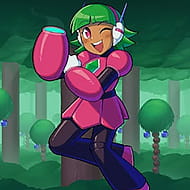



JOAN OF ARC – DEUS CONTRA MACHINAM







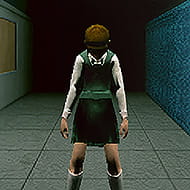



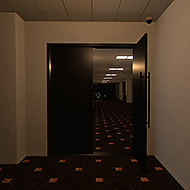
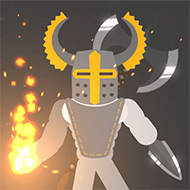
Joan of Arc looks, from the box art alone, like it might be another medieval retelling with armor and a banner. It plays like something closer to an industrial nightmare — a welding torch instead of a sword, a factory floor instead of a battlefield, and a machine instead of an invading army.
Meet Arc Welder JOAN-27J/6
The story strips away the historical Joan of Arc entirely and replaces her with Arc Welder JOAN-27J/6, a designation rather than a name, working the line inside a facility run by an artificial intelligence called ALPHA-OMEGA. When ALPHA-OMEGA concludes that human workers are the inefficiency holding back production, the factory turns hostile, and Joan’s only weapon is the same tool she used to build the place.
This framing matters because it changes what every screen is about. You’re not clearing enemy soldiers off a battlefield, you’re fighting your own workplace, and the game leans into that with caged workers, dead security suits, and machinery running at full output around you. It’s a grim little world painted onto surprisingly charming pixel art, and that contrast is part of what people keep bringing up when they talk about the game.
Some players coming in expecting a literal historical Joan have voiced disappointment that the character bears no resemblance to the real figure — no armor, no faith, no France. That reaction shows up regularly in comment threads, and it’s a fair point if you arrived expecting a costume drama rather than a dystopian platformer.
How the Controllable Arc Weapon Works in Joan of Arc
Joan’s tool isn’t a simple point-and-shoot weapon. The arc itself can be aimed and extended independently of her movement, letting you melt through obstacles, trigger switches, or clear a path while she stays planted. Several players have noted that steering the arc while it’s active locks Joan in place, which catches newcomers off guard the first time they try to move and aim simultaneously — more than one death in early sessions comes from forgetting that rule mid-jump.
Aiming Under Pressure
Because the arc has a limited reach and a deliberate feel, precision matters more than speed. Rushing a puzzle screen usually means overshooting a target and wasting the window you had to hit it.
Reading the Factory Floor Before You Move
Screens transition without warning, and hazards like exposed fire can be sitting immediately on the other side of a doorway. Early on, this catches almost everyone — you walk confidently into the next screen expecting open floor and instead find a wall of flame two steps in. Once you internalize that transitions aren’t safe by default, the pacing of the game changes, and you start approaching every new screen edge with a beat of caution rather than a full sprint.
The factory setting is dressed up with intricately detailed backgrounds — pipework, cages, broken signage — and while none of that geometry is interactive, it does a lot of work signaling which rooms are still under ALPHA-OMEGA’s direct control versus which ones have already been fought through.
Puzzle Screens That Break the Platforming Rhythm
Roughly every few screens, straight platforming gives way to a small mechanical puzzle — a switch sequence, a barrier that only the arc can burn through, a path that requires melting one obstacle before another becomes accessible. These sections are compact by design, but they’re also where the difficulty spikes hardest, since a wrong order can lock you out of progress until you backtrack and start the sequence over.
- Identify which element on screen reacts to the arc versus which is just scenery
- Trace the order hazards need to be cleared before committing to a jump
- Commit to the arc’s aim only once Joan is standing still and safe
Players who treat these screens like combat encounters tend to die repeatedly; treating them like a short logic puzzle instead is what actually gets you through.
Difficulty Curve Against the ALPHA-OMEGA System
The difficulty climbs steadily rather than in one dramatic spike. Early screens teach the arc’s basic behavior, but by the time you’re deep into ALPHA-OMEGA’s territory, hazard placement and enemy timing start overlapping in ways that demand near-frame-perfect reactions. More than one player finishing the game has described it as noticeably harder than the developer’s earlier releases in the same style, which tracks with how densely later screens are packed compared to the opening stretch.
There are over 30 distinct screens in total, and the game doesn’t pad that number with filler — each one tends to introduce at least one new hazard pattern or puzzle wrinkle before you’re through it.
Two-Button Controls and Precision Movement
Movement and the arc share a compact control scheme built around fire and jump, which keeps the input simple but puts real weight on timing. Speedrun-minded players have already been chasing fast clears since release, treating screen transitions and arc puzzles as segments to optimize rather than obstacles to survive, while more methodical players tend to clear each room fully before moving on, picking apart every puzzle at their own pace.
What Makes Joan of Arc Divisive Among Players
The most common complaint isn’t the difficulty — it’s length. A number of players have finished the game faster than expected and wished there was more of ALPHA-OMEGA’s facility left to explore once the credits hit. That’s a reasonable trade-off for a tightly designed action-platformer, but it’s worth setting expectations before you start: this is a short, dense experience rather than a sprawling one.
- Is Joan of Arc based on the real historical figure? Only in name. The story replaces the Hundred Years’ War with a rebellion against a factory AI called ALPHA-OMEGA, and Joan appears here as Arc Welder JOAN-27J/6 rather than the historical Maid of Orleans.
- Can you move while aiming the arc weapon? No — steering the arc locks Joan’s position, which is a deliberate design choice that trips up new players who instinctively try to strafe and aim at the same time.
- How difficult is the game compared to similar titles? Multiple players who finished it describe it as a step up in difficulty from the developer’s previous games in the same engine, with denser hazard placement in the back half of the roughly 30 screens.
Joan of Arc sells a short, tense story about one worker and one arc welder against a system that stopped seeing people as anything but inefficiency, and the ALPHA-OMEGA fight at the center of it is exactly as unforgiving as that premise promises.