

















Print I Love U







Print I Love U opens with a note that was not written for you. It says the game was made for someone named Alice, and the person presenting it claims not to know who Alice is either. That framing — a found object with an unresolved dedication — sets the tone for everything that follows in this short visual novel, and it’s rare enough as an opening move that it’s a big part of why the game gets talked about at all.
| Genre | Visual Novel / Indie |
| Length | Around 15 minutes to reach an ending |
| Structure | Three short mini-games woven into the story |
| Endings | Multiple, not all clearly conclusive |
| Reception | Very Positive player reviews |
The Note for Alice and What Print I Love U Builds Around It
Rather than opening on a character or a setting, the game opens on a message that reads like it was left behind by accident. It asks whoever is playing to find Alice, or to say something if they think they know her. Players who go in expecting a conventional romance story tend to be thrown by this — Print I Love U is less interested in telling you about its characters upfront than in making you feel like you stumbled onto something that was not meant to be public.
That discovery framing does real work. It reframes the hand-drawn art and the original soundtrack as evidence rather than decoration, and it means small details — a name, a phrase, a repeated image — land with more weight than they would in a game that simply introduces its cast normally.
Newcomers to visual novels sometimes assume “short” means “slight,” but the compression here is intentional; every scene is doing more than one job, and very little in the fifteen-minute runtime is filler.
Three Mini-Games Inside a Fifteen-Minute Story
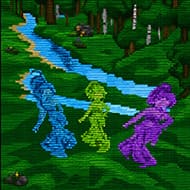
Print I Love U is not a pure text-and-choices visual novel. It breaks its runtime up with three small interactive sequences that slow the pace down at specific moments rather than existing as a separate gameplay layer. They are simple by design, closer to punctuation than challenge, and players who try to rush through them tend to miss small details that later scenes reference back to.
The soundtrack carries a lot of the emotional weight across these sections. Several players mention specific tracks staying with them well after finishing, which is unusual praise for a game this short, and it’s a big part of why people revisit it even after reaching an ending.
Story-focused readers tend to treat the mini-games as a pace-breaker to get through quickly, while players drawn in by the mystery framing often replay them deliberately, looking for details they might have skipped the first time.
How the Hand-Drawn Art Style Supports the Mystery
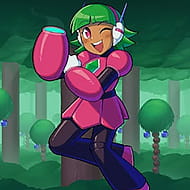
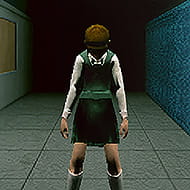
The character art is hand-drawn rather than built from stock assets or templated sprites, and it changes subtly depending on which scenes you reach — a detail easy to miss on a first playthrough but noticeable on a second one. Because the whole game is framed as something found rather than made, the inconsistencies in the art read less like limitations and more like clues, whether or not that was the intent.
This is where the found-laptop framing pays off best: a visual novel with a slicker, more uniform art style would not sell the illusion of stumbling onto someone else’s unfinished project nearly as well.
Multiple Endings, and Why Some Do Not Feel Like Endings
Reaching a conclusion in Print I Love U does not guarantee closure. Some of the game’s endings are described by players as feeling deliberately incomplete, as if the story stopped rather than resolved. That is a divisive choice — some players find it frustrating on a first playthrough, while others consider it the entire point, since the framing device never promised a tidy answer about who Alice actually is.
Replaying with different choices is common once players realize the first ending they hit may not be the “full” one, and discussion around the game leans heavily on comparing which ending people landed on and what order they reached the three mini-games in.
The lack of a single canonical ending is the most argued-over part of the game.
Why Print I Love U Spread as a Mystery
Part of what pushed the game beyond a small visual novel audience is that the pitch itself doubles as an invitation to participate — players are asked directly to help identify Alice, which blurs the line between playing the game and discussing it afterward. That’s an unusual marketing hook for a fifteen-minute indie game, and it’s clearly worked, given how consistently the reviews reference the mystery rather than just the art or writing.
Who is Alice in Print I Love U?
The game never confirms this directly. Alice is presented as the intended recipient of the note that opens the story, and her identity is left as an open question the player is invited to sit with rather than solve outright.
How long does it take to finish Print I Love U?
Most players reach an ending in roughly fifteen minutes, though slower, more exploratory playthroughs that linger on the three mini-games and the art details run a bit longer.
How many endings does Print I Love U have?
There is more than one, and they are not equal in tone — some read as resolutions, while others are intentionally left open, which is part of what keeps players discussing the game after finishing it.
What makes Print I Love U stick is how little it explains. You finish not entirely sure whether you helped find Alice or just read someone else’s unfinished letter, and that uncertainty — built on a fifteen-minute runtime and three small mini-games — is exactly what the game is banking on.