






















Woodo





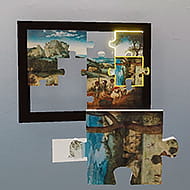




You rotate a small wooden diorama, spot a tiny piece hiding behind a fence, and drop it into place with a click that feels almost physical. Woodo builds everything around that moment: a puzzle where each correct placement fills the scene with color and sets off a small, funny animation. It is closer to assembling a toy than solving a riddle.
| Genre | Cozy 3D diorama puzzle |
| Players | Single-player |
| Protagonists | Foxy and Ben the frog |
| Core mechanic | Assemble wooden scenes piece by piece |
| Mood | Relaxing, nostalgic, narrated |
Assembling a Wooden Diorama Piece by Piece in Woodo
Every level is an unfinished wooden diorama waiting to be completed. You find the pieces, place each object in its correct spot, and the scene gradually gains color and life. The effect feels like a 3D coloring book you can touch, which is how the game pitches itself, and it works because each placement visibly changes the world.
- Look over the unfinished diorama and spot the empty gaps.
- Rotate the scene to find pieces that are not visible from the front.
- Place each object where it belongs and watch how the scene reacts.
- Finish the diorama and move on to the next moment in the story.
Pieces click into place with a tactile sensation, as if you were handling a real toy. Beginners often approach the puzzles like a jigsaw and study only shapes, but the design is not a flat jigsaw, and thinking about what each object does in the scene works better.
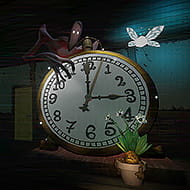
Placing an object correctly can activate animations and reveal new interactions. The reward for solving a puzzle is watching the environment respond, which is far more satisfying than a plain completion message.
Turning the Scene: Hidden Pieces and 3D Thinking
Assembly is not linear. You turn and explore the 3D space to reveal hidden pieces, so the same diorama looks different from every angle. Players who love hidden-object games will feel at home, since the Steam tags list hidden object and point-and-click alongside the puzzle label.
Early in the game, staring at the front of a scene costs time. Once you rotate the diorama before placing anything, pieces tend to show up in places you did not expect.
- Rotate the diorama to see every side.
- Look behind and beneath larger objects.
- Watch for animations after a placement, since they can reveal new interactions.
Controller support appears among the Steam tags, and a relaxed, lean-back puzzle like this suits a gamepad well.
Foxy, Ben the Frog, and One Summer in the Countryside
The story follows Foxy, a young girl spending the summer in a remote village with her distant relative, Ben the frog. Foxy is used to a digital life and struggles with her new surroundings at first. Ben encourages her to step outside and takes her on an adventure to a place that matters to him, and through that trip she discovers the joy of creativity.
Each diorama represents a cherished moment of Foxy’s summer, so the scenes read less like levels and more like pages from a picture book. Players who enjoy gentle coming-of-age stories will find a warm arc here.
Funny, charming characters and silly animations keep the mood light. The story is deliberately simple, and that simplicity is part of the charm instead of a weakness.
The Narrator Who Keeps You Company
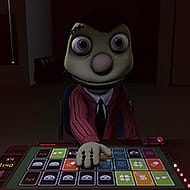
A friendly narrator accompanies you through every diorama, and the voice works like a close friend sitting beside you. English is fully voiced, which matters, because the narration carries much of the emotional weight. The tone recalls a time when days were long, spent outdoors, and the simplest things felt surprising.
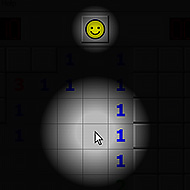
Gameplay shifts to match the narration, so the way a scene plays changes with what the story is describing. That small design choice keeps the puzzles from feeling repetitive.
Cozy and wholesome are the words players use most for the mood, and the narrator is the main reason. It is the kind of comfort game you open on a rainy evening to feel better.
How Woodo Handles Difficulty and Hints
The game adapts to your pace and offers help when you linger too long without progress. Beginners can lean on that assistance without feeling punished, which fits a puzzle built for relaxing instead of testing. The emphasis is on exploring each diorama and understanding how its pieces fit, not on racing.
That gentleness is also the most common point of friction. Veterans of tough puzzlers may find the challenge light, and a hint system that steps in on its own can feel like it takes away a small piece of discovery.
Mistakes carry little weight, so the real risk is boredom rather than failure. For most players that is a fair trade, because the animations and the narrator give each completed scene a payoff beyond difficulty.
Why Woodo Earned Its Reputation
Reception has been strong. Roughly 98% of more than a thousand Steam reviews are positive at the time of writing, and reviewers have called it one of the best relaxing puzzlers of the year.
It has also collected a Gameswelt Design Award and appeared in showcases for women-led games and for cozy, family-friendly games. Those honors fit the handcrafted wooden look, which is the visual identity people remember first.
What it asks for is time and attention rather than dexterity. That is why it sits comfortably next to other cozy puzzlers without feeling like a copy of any of them.
Woodo hands you a wooden diorama, a narrator who sounds like an old friend, and a summer with Foxy and Ben the frog to rebuild piece by piece. Rotate the scene, place the last piece, and watch the color arrive.