



















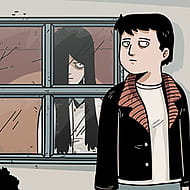
The Girl in the Window


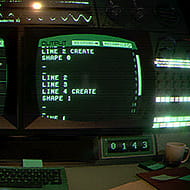



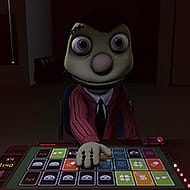




You reach for the drawer handle and the floorboard behind you creaks — except no one else is supposed to be in the house. That’s the moment The Girl in the Window stops feeling like a puzzle box and starts feeling like something is watching you solve it.
| Genre | Point-and-click escape puzzle, horror mystery |
| Setting | An abandoned house in Hidden Town |
| Protagonist | Dan |
| Core Mechanic | Examine, combine, and use objects to solve room-based puzzles |
Dan, Mia, and the Secrets of Hidden Town
You play as Dan, a curious visitor who wanders into a house that’s supposedly been empty for twenty years and gets locked inside for his trouble. The premise is simple, but the setting does a lot of the heavy lifting — Hidden Town has a reputation among its residents for strange sightings, and the house Dan wanders into is the specific one where locals claim to have seen a girl staring out from an upstairs window.
Mia is introduced as the other half of this particular corner of the Hidden Town universe, and while her presence in this first chapter is limited, she’s clearly being set up as more than a background detail. Players who’ve followed the wider series know these two characters recur, which gives even small object descriptions in this entry a bit more weight than they’d otherwise carry.
It’s a short cast for a reason: the game wants you focused on the room, not the roster.
The Girl in the Window and the Logic Behind Every Puzzle
Every puzzle in The Girl in the Window follows a fairly consistent internal logic once you catch on to it: examine an object closely, note anything that looks out of place, and expect that object to be relevant to something else in the same room or an adjoining one. Codes are rarely presented in isolation — a number scratched into a windowsill usually corresponds to a lock somewhere else entirely, and drawers frequently hide the second half of a clue whose first half was sitting in plain sight.
What separates this from a generic escape room is the environmental storytelling layered underneath the mechanics. Objects don’t just unlock progress; they hint at what happened to the girl in the window before the story confirms anything directly.
Drawers, Codes, and the Objects That Move by Themselves
Part of what makes the house feel wrong rather than just “puzzle-y” is that some objects don’t stay where you left them. A drawer you’ve already emptied might rattle again later, or an item glimpsed in the background of one room reappears somewhere it shouldn’t be able to reach. None of this changes the core puzzle logic, but it does mean players get in the habit of re-checking rooms rather than treating each space as fully “solved” the moment its obvious puzzle is cleared.
This is also where the game leans hardest into its horror mystery identity rather than pure puzzle-box mechanics — the unease comes from small inconsistencies, not jump scares stacked on top of each other.
When the Hint System Should (and Shouldn’t) Save You
The Girl in the Window includes a full hint system, and it’s genuinely useful for players who get stuck on a code or miss a small interactive object tucked into a cluttered room. That said, players who lean on it too early tend to miss the environmental clues that make the later reveal land properly.
A reasonable approach: try a room fully on your own first, and only pull up a hint once you’ve exhausted the obvious combinations. The system is there for genuine walls, not for impatience.
Beginners’ Mistakes Inside the Abandoned House
New players most commonly make two mistakes. First, they treat each room as a closed puzzle instead of checking whether an item found in one space unlocks something two rooms over — a habit that costs a lot of backtracking once you realize the house is more interconnected than it first appears. Second, they skip re-examining objects after a story beat triggers, missing that some drawers and containers only reveal their contents once a specific earlier code has been solved.
Patient players — the type who’d rather comb every corner of a room than move on — tend to have a noticeably smoother time here than players used to faster-paced adventure games.
Why The Girl in the Window Keeps Players Arguing About the Twist
The ending is genuinely the most divisive part of the experience. Without spoiling specifics, the reveal reframes a decent amount of what came before it, and player reaction splits fairly evenly between people who found it a satisfying payoff and people who felt it needed one more room’s worth of setup to fully land. Both camps agree it’s memorable, which is arguably the more important outcome for a first entry meant to launch an entire connected series.
Who is Mia in The Girl in the Window?
Mia is one of the two central recurring characters introduced in this entry alongside Dan, and while her role here is smaller than his, she’s positioned as a key figure in the wider Hidden Town storyline that later chapters build on.
Is there a time limit on the puzzles in The Girl in the Window?
No — the game lets you examine drawers, codes, and objects at your own pace, which fits its slower, environmental-storytelling approach better than a countdown timer would.
What does the Premium Version add to The Girl in the Window?
The Premium Version unlocks an additional side story tied to the Hidden Town universe, complete with its own extra riddles and puzzles beyond what Dan encounters in the base house.
The Girl in the Window works because it never lets you forget that Hidden Town has more going on than one locked house explains — every drawer Dan opens and every code he cracks feels like it’s answering a smaller question inside a much bigger one involving Mia and whatever’s actually looking out of that window.