























Tiny Logic


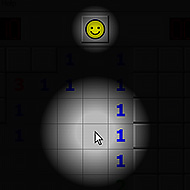










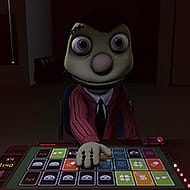
What happens when a battery and an LED are all you are handed, and the goal is a working computer? Tiny Logic answers by teaching you to wire transistors into gates, gates into larger circuits, and those circuits into a CPU that runs your own code. Every gate is simulated, so a computer you build actually computes.
| Genre | Simulation and educational sandbox |
| Mode | Single-player |
| Lessons | 30 in the full game, 15 in the demo |
| Goal | Build a CPU from transistors and run real programs on it |
Starting Tiny Logic with One Battery and One LED
The first lessons are small on purpose. You place a battery, connect an LED, and then add transistors that act as switches, which is the same building block every real processor is made from. Early in the game, the satisfaction comes from tiny confirmations: the LED lights up, a switch flips the way you expected, and the circuit behaves exactly as wired.
Nothing here requires a background in electronics. The lessons begin at the very bottom, and the demo covers 15 lessons before you commit to the full set of 30. Progress from the demo carries into the full game, so early experiments are not wasted.
Students who just met logic gates in a class will find a visible version of the textbook diagrams, and that is where the game earns its keep. Seeing a gate respond to your own wiring sticks better than a truth table on paper.
Vocabulary You Need Before the CPU Lessons
Gates are circuits that take inputs and produce an output according to a simple rule, and in Tiny Logic they are built from transistors you place yourself. The lessons show how a handful of basic gates combine into everything larger, which is why wiring discipline matters so early.
Latches are circuits that hold a value after the input goes away. They are the first point where a build stops being a pure calculator and starts to remember something, and players who come from programming tend to recognize the idea right away as variables made of hardware.
The clock is the steady pulse that steps a computer from one operation to the next. Once a clock is driving your circuit, timing errors become a real failure source, and a build that looked correct on paper can still output the wrong value at the wrong moment.
Pacing and the Wall Before the CPU
The journey runs across 30 lessons, from a single LED to a 32-bit CPU. By the time you reach the CPU lessons, a build is no longer something you finish in a few minutes, and the larger circuits ask more of your machine too. A computer with several cores helps once the big builds start running.
The honest rough edge is that the game is still in development, and some Windows setups flag the build as a false positive. The cause is the engine compiling your circuit into machine code while you play, which looks unusual to a security scanner. It is worth knowing before the first launch, and it is the kind of thing players discuss in the community.
The real difficulty is patience rather than reflexes. Wiring mistakes are quiet, and a circuit that looks right can still give a wrong result. Programmers who know code but not hardware often hit this wall first, because debugging a gate-level circuit asks for a slower, more careful kind of reading.
Running DOOM on TINY-32 Built Inside Tiny Logic
TINY-32 is the headline build: a full 32-bit computer made of 93,338 transistors. There is no emulator underneath it, which means the CPU you assemble is the CPU doing the work. That is the difference between a toy and a simulator that takes your wiring seriously.
Once TINY-32 is running, it handles real programs. DOOM runs at full speed, and the same kind of computer can also run a Minecraft-style world and a chess engine. Seeing a famous shooter appear on a machine you wired from single transistors is the moment the whole climb makes sense.
Tinkerers who want to understand how a computer really works get the most from this stretch, because every program is a test of the hardware you built. If a program misbehaves, the fault is somewhere in your own gates.
Tiny Logic is a long walk from a single LED to TINY-32 running DOOM, and the walk is the point. Each latch, clock pulse and transistor you place is a piece of the computer you can point to when it finally boots.