








Slice & Dice







What happens when your entire party is five dice and one bad roll can end the whole run? In Slice & Dice the answer is not panic but arithmetic, because every hero is a die, every die has faces you can read, and each fight is decided by how well you spend the numbers you are handed. That tension is what pulls players back for run after run.
How Slice & Dice Turns Five Heroes Into Five Dice
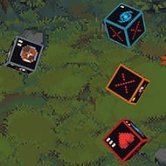
You lead a party of 5 heroes, and each one is represented by a single die with its own faces. A Wizard die might lean on spells where a Berserker die offers raw damage, a Thief die carries tricks, and a Guardian die protects the party. Instead of reading a stat sheet you read faces, and the game quietly teaches you to match the best face to the best target every turn.
Beginners tend to assign dice quickly and move on, then lose a hero to a monster they could have handled by acting in a different order. Slowing down is the first real skill. Fans of tactical RPGs pick this up within a couple of fights, because the dice behave like a hand of cards you can read at a glance.
Monsters Roll First, and You Respond
Every round, the monsters roll first and decide what they will do. Then you roll, which means you see their plan before you commit yours. That is the biggest difference from games that hide their randomness: here the dice tell you what is coming and ask what you plan to do about it. It keeps losses feeling earned even when the roll was unkind. Players talk about RNG constantly, yet experienced ones usually point to action order as the real skill.
Because losing a single fight sends you back to the start, careful sequencing is not optional. Every run is a chain of fights where one misread roll can undo twenty levels of work.
Rerolls, Undo and Reading the Board
You can reroll dice before choosing how to spend them, and a limited number of rerolls each turn turns every round into a small puzzle. Undo is another mercy, letting you step back from a misclick or test a line of play before locking it in. That makes the whole thing feel more like a puzzle with dice in it than a pure gamble.
A common beginner mistake is burning every reroll chasing a perfect result. A good roll is usually the one that removes the right monster first, not the one with the biggest numbers. Players who like deliberate, think-it-through combat will spend most of their time here, rerolling and testing orders before they commit.
Hero Classes and the Search for Synergy in Slice & Dice
There are 128 hero classes, and the real appeal is how they combine. Each hero upgrades along a different branch, from a Ranger to the strangely named Lazy class, and the branch you pick changes what that die can do for the rest of the run. Community talk is full of the word synergy for a reason: the strongest parties are built around two or three heroes whose dice feed each other.
A few patterns come up in almost every strong party:
- Dice that refresh other dice, so one powerful face gets used more than once.
- Heroes that protect the party while another builds up damage.
- Items that replace a weak face with something that fits your plan.
Collectors who enjoy unlocking everything will find enough branches that no two runs end with the same party. Every branch also changes how the other four heroes are best played.
Items That Rewrite Dice Faces
Items modify the faces of a hero’s die, upgrading them or replacing them with brand new effects, and with 473 items in the pool, finding the pairing that clicks is half the fun. A weak face on a strong hero can become the best face in your party after one lucky reward.
Curses add an almost endless layer of difficulty tweaks. Players who have cleared the standard modes often chase them next, which gives the late game a second life.
Climbing Through 20 Levels Without a Safety Net
A run is 20 levels of monsters, ending at a final boss. Early in the run the fights are forgiving enough to experiment with new dice, but by the time you reach the later levels every wasted action counts, because there are no checkpoints to fall back on.
A typical fight follows the same loop:
- Read what the monsters rolled and what they plan to do.
- Roll your own dice, then reroll or undo to improve the result.
- Spend each die on the target where it matters most.
- Collect your reward, a new item or a hero upgrade, and move to the next level.
The pixel art and sparse sound are plain, and some players say the presentation undersells how deep the tactics go. Most of the appeal lives in the tactics rather than the spectacle.
Facing the Hand
One possible final boss is the Hand, who hits hard but carries a passive called handicap that boosts all of your heroes’ dice. It is a rare case of a boss helping you, and it changes how you plan the last few levels.
Difficulty Modes From Heaven to Hell
There are seven difficulty levels ranging from Heaven to Hell, so the same party of heroes plays very differently depending on where you set the dial. Beginners should start at the gentle end and learn how monster rolls telegraph their plans before moving up.
Hell is where synergy builds get tested hardest, and many players treat a clear there as a badge of mastery. Raid mode offers a different puzzle altogether, handing you 10 heroes but asking you to take on twice as many monsters, which makes it a natural next step once the normal modes wear thin.
Slice & Dice rewards players who treat a bad roll as information instead of an insult. Whether you are building around a Ranger, saving a refresh for the Hand, or testing Heaven before Hell, every run starts with five dice and the same question about what to do with them.