























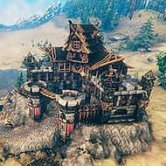
Valheim Base Defense













In Valheim Base Defense you start with a bare clearing, a hammer and a freshly placed workbench, which matters because the game decides what counts as a base long before you feel safe. Raids tie themselves to your progress and to the place you call home, so the way you build your first walls shapes every fight that follows.
How Raids Choose Your Base in Valheim Base Defense
Raids are timed attacks that scale with the bosses you have killed, and the small warning text that appears on screen is your cue to get ready. The early one, The forest is moving, drops a crowd of enemies around your base, and plenty of players are caught inside their wooden house with no plan. Forum veterans repeat the same advice: step outside or set up proper traps.
Standard raids only trigger when you are near an eligible base, so an empty settlement is generally left alone while you explore. You still cannot run from the problem, since wandering mobs and raid enemies from the wrong biome can show up wherever you build.
Players commonly say a raid lasts about two minutes, and that number changes how you plan. You do not need to kill everything; you need to survive and protect the structures that matter until it ends.
Earth Walls, Moats and Choosing Your Ground
Terrain defends before any wall does. Raise the ground around the base with the hoe to make a steep earth wall, then dig a trench outside it once you have the antler pick, because most ground enemies struggle to cross a moat. Veterans like a trench about four meters wide and at least as deep, with straight sides.
- Pick a hill or a shoreline for the base.
- Raise earth walls with the hoe.
- Dig the moat with the antler pick.
- Add stone walls and an archer tower as materials allow.
Mobs head for the easiest way in, so the main job of a wall is breaking line of sight; creatures that cannot see you or your structures tend to wander around alerted outside. Many players make perimeter walls three tiles thick so they can hide workbenches and stonecutters inside.
Island bases are the community’s favorite shortcut, and many players report that land raids lose their spawn points there. Purists argue that skips the point of the game, while others call it simply good use of terrain.
Stakes, Stone and What Trolls Do to Both
Stake walls are the classic early defense, and sharp stakes damage attackers and slow them while you fight. Trolls are the problem: forum players report that trolls break stake walls and flatten sharp stakes in a hit, so a wooden fence that stopped greydwarfs will not stop a troll raid.
Stone walls go much further, and double stone is common, though even those can lose to a big enough troll raid. Players disagree on whether stakes are worth the effort once trolls arrive, which is one of the most argued parts of the whole base-building scene.
A trick veterans swear by is to step outside and let the trolls aggro on you instead of your walls, then kite them away from the base. Fighters who love combat treat troll raids as an event rather than a threat.
Flying Raiders and Ranged Attackers
Walls are useless against seekers, bats and drakes, which simply fly over them. Players say airborne and ranged attackers become a real problem after the third boss, and forum veterans also warn about Fuling and Seeker raids that punish a base with no ranged answer.
An archer tower with clear angles is the standard fix: it handles Ice Drakes, Deathsquitos and Skeleton or Draugr archers without leaving shelter. Keep a cover wall two to three meters high behind the outer perimeter to block ranged fire, which is the defense in depth idea.
Tamed wolves add another layer, and one forum player lets a pack of one and two star wolves guard a base completely. Players who enjoy taming will love that approach, and it frees your hands for fighting raiders.
Wards, Workbenches and Spawn Control
Workbenches stop enemies from spawning inside their radius, so a base dotted with workbenches and torches keeps wandering mobs from appearing in the yard. A low stone piece around the whole base also stops wanderers from strolling in, and wards help detect ranged attacks on items near the perimeter.
Some players want a more deliberate fight than vanilla raids offer, so they install the Base Defense Ward mod. You build it with the hammer from the Misc tab, a countdown starts, and a wave spawns around your base and goes for the ward. Hold it and rewards drop at the ward; lose it and the challenge ends, with bigger waves each time.
Compared with vanilla raids, which follow your boss progress on the game’s own schedule, the mod lets you pick the moment of the fight. The trade-off is the usual one with mods: they can clash with other add-ons, and some players prefer the unscripted tension of the base game.
Questions Valheim Base Defense Players Keep Asking
Can raids hit your base while you are away?
Standard raids trigger when a player is close to an eligible base, so an empty settlement is generally not attacked while you explore. Wandering mobs can still wreck a poorly protected outpost, which is why small camps without walls tend to suffer.
Do stake walls stop troll raids?
No, trolls smash stake walls and shrug off sharp stakes, so players move to stone walls, a wide moat and a plan to draw trolls away. Fighting outside the wall is still the cheapest solution.
Which defenses stop drakes, seekers and bats?
Walls do nothing against flyers, so you need an archer tower, cover walls placed in depth and the willingness to step out and shoot. Tamed wolves and spaced workbenches help with the ground game but not the sky.
Valheim Base Defense comes down to reading the raid, choosing your ground and respecting what trolls and drakes can do to a lazy wall. Raise the earth, dig the moat, stand an archer tower where The forest is moving will send its first wave, and keep a ward glowing at the center of it all.