






















Agefield High: Rock the School





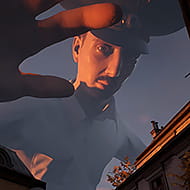


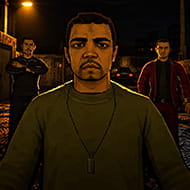
Agefield High: Rock the School looks like a nostalgic teen comedy simulator on the surface, but underneath the letterman jackets and mixtapes it plays like an open-world game that never quite finished proving itself. You take control of Sam, a new kid dropped into a small town just months before graduation, and the gap between what the premise promises and what the systems deliver becomes obvious fast.
| Genre | Open-world coming-of-age action |
| Platform | PC |
| Setting | The small early-2000s town of Agefield |
| Core Mechanic | Class attendance balanced against open-world exploration |
Sam’s First Day at Agefield High
Sam arrives in Agefield with graduation on the horizon and no established friend group, which the game uses as a quick excuse to drop you into the middle of a scheme almost immediately. There’s no long tutorial stretch here — you’re expected to start making choices about class attendance and social standing within your first session.
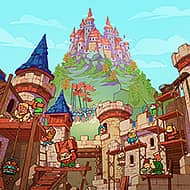
The town itself is small by open-world standards, but it’s dense enough that exploring it feels worthwhile rather than padded. Neighborhoods, a town center, and countryside roads all sit within easy reach of the school campus, and the game leans on that compactness rather than apologizing for it.
Players coming in expecting an expansive sandbox will need to recalibrate. Agefield High: Rock the School is closer to a focused story with room to wander than a true open-world game in the modern sense.
The Time and School System Nobody Warned You About
What separates this game from a straightforward story-driven adventure is a school attendance system that ties Sam’s schedule to actual class hours. Skip too much school and you’ll deal with consequences beyond a scolding — this mechanic is treated as a real constraint, not flavor text.
Explorers tend to bristle against this system the most, since it caps how freely they can wander the countryside on any given weekday morning. Story-focused players adapt faster, since the missions themselves are structured around the same clock.
By the time you’ve missed your second or third class, you start understanding exactly how much the game wants you to balance rebellion against consequence, which is arguably the whole thematic point.
Five Classes: English, Math, Geography, German, and Music
- English — dialogue-heavy lessons tied loosely to the game’s writing
- Math — the class most players describe as the least engaging
- Geography — occasionally ties into locations you’ll actually visit around town
- German — a language-flavored class that leans into the setting’s European undertones
- Music — connects most directly to Axel’s rockstar ambitions
None of these five classes function as full minigames in their own right, and that’s one of the more common criticisms leveled at the game — the classroom side of the school system feels thinner than the attendance mechanic built around it.
Kale, Axel, and the Rock the School Plan
The actual plot centers on Kale’s plan to leave a lasting mark before graduation, with Axel — a self-proclaimed rockstar — recruited to help pull it off. Sam gets pulled into executing the plan almost by accident, which gives the story a reactive, along-for-the-ride energy in its opening stretch.
Thirty-two main missions carry that plan forward, supplemented by fifteen side missions and activities scattered around town for players who want a break from the central storyline.
Kale’s ambition and Axel’s music-driven confidence give the two supporting characters distinct enough personalities that the “Rock the School” plan feels like it belongs to them as much as it belongs to Sam.
Customizing Sam Through Outfits, Hairstyles, and Tattoos
Shops around Agefield sell bikes, clothes, hairstyles, tattoos, and accessories, letting you shape Sam’s appearance well beyond the default look. It’s a lighter system than the mission structure, but it gives the open-world sections a reason to exist beyond pure exploration.
Customization here isn’t cosmetic filler tacked onto a linear game — it’s tied to how you present Sam socially, which matters given how much of the story revolves around reputation among classmates.
Players who enjoy dressing their character tend to spend real time browsing these shops between missions, even when the underlying systems around them show their rough edges.
Two Endings and the Weight of the Prom Sequence
- The prom sequence arrives as a genuine story decision rather than a scripted cutscene, shaped by choices made earlier in the playthrough.
- One ending leans into the rebellious plan reaching its full conclusion.
- The other ending reflects a more restrained version of Sam’s senior year, depending on how much class time you actually attended.
Two different endings give the roughly eight-to-ten-hour main story a real reason for a second playthrough, especially for players curious how differently the prom sequence plays out under different choices.
Where Agefield High Falls Short of Its Ambitions
- How long does it take to complete Agefield High: Rock the School? The main story runs roughly eight to ten hours, with the thirty-two main missions and fifteen side missions filling most of that time.
- How many endings does Agefield High: Rock the School have? There are two distinct endings, both shaped by choices made throughout the story and finalized at the prom sequence.
- Is Agefield High: Rock the School similar to Bully? The comparison comes up constantly in community discussion because of the shared school-rebellion premise, though the execution here leans more heavily on its early-2000s teen comedy tone than on structured open-world systems.
Between broken missions, technical rough patches, and a school system that promises more depth than the five available classes actually deliver, Agefield High: Rock the School is an honest example of a good concept outrunning its execution — but Sam’s walk to the prom still lands as the moment the game’s ambition briefly catches up with itself.