




















Aniimo

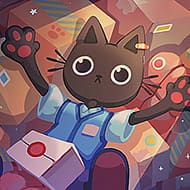




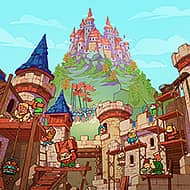




Aniimo looks like a cozy, pastel-colored creature-collector from its marketing alone, but it plays like a full open-world survival RPG where the real trick isn’t catching companions — it’s becoming one yourself.
| Genre | Open-world creature-collector RPG |
| Setting | The continent of Idyll |
| Core mechanic | Catching Aniimo and Twining with them |
| Player role | Pathfinder |
Catching Companions With Aniipods
Catching in Aniimo runs through a tool called an Aniipod, and the process leans more on timing and observation than blind luck. Aniimo species spawn according to environment, weather, time of day, and in-world phenomena, so a creature that shows up during a storm near the coast might never appear on a clear afternoon inland. Setting traps and timing the throw correctly is where the tension actually lives — miss the window and the target bolts.
Exploration-focused players tend to treat this system as the main draw, mapping which conditions trigger which spawns rather than grinding a single zone on repeat. That habit becomes second nature fairly quickly, since the game rewards paying attention to the environment over brute-forcing encounters.
Most Aniimo can evolve once caught, which adds a second layer on top of catching: deciding which companions are worth investing time in long-term versus which are useful only for a specific early hurdle.
How Twining Works in Aniimo
Twining is the mechanic that separates Aniimo from a standard collector formula. Instead of only commanding your companions from the outside, you can Twine directly with an Aniimo you’ve caught and essentially become it — using its specific abilities to solve environmental puzzles, clear combat encounters, or simply move through the world differently, whether that means gliding, diving, or burrowing.
This is also where the game’s early difficulty curve actually lives. Many beginners in Aniimo try to push forward using only their starting companion’s abilities, not realizing that certain terrain and puzzle types are gated behind Twining with a completely different Aniimo type. Once you reach areas that demand burrowing or diving traversal, the run stalls out fast if your collection is too narrow.
Twining effectively turns your whole roster into a toolkit rather than a battle lineup, which reframes how you think about which Aniimo are worth catching in the first place.
Building a Life in Homeland Between Runs
Every Pathfinder gets a personal RV parked at a campsite in the open world, and returning to it opens up Homeland — a customizable space where you can plant crops, place decorations, and arrange things freely. It’s a slower, low-stakes counterpart to everything happening out on Idyll.
Builder-minded players gravitate toward this loop hard, sometimes spending more time arranging Homeland than actually exploring. It’s a deliberate pacing valve, and it works well as a break between the more demanding traversal and battle sections.
The Egg Heist Mode and Real-Time Stakes
Egg Heist is Aniimo’s real-time PvEvP mode, dropping a three-player team into the Lost Isles to search and battle simultaneously against both the environment and rival teams. It’s the sharpest contrast to the relaxed Homeland loop in the entire game — coordination and quick decisions matter far more than collection completeness.
Competitive players treat Egg Heist runs as the actual endgame test, since success depends on team composition and reaction speed rather than simply having caught more species than the next player.
Community discussion around this mode tends to split sharply: some Pathfinders find the real-time PvEvP tension thrilling, while others feel it clashes with the otherwise gentle exploration tone the rest of Aniimo sets up, and that divide shows up constantly in player discussion around the mode.
What Beginners Get Wrong Early in Aniimo
Beyond the Twining traversal gate mentioned earlier, new players commonly underestimate how much spawn conditions matter. Camping in one spot waiting for a specific Aniimo to appear rarely works if the weather or time-of-day trigger isn’t right — moving to chase the right conditions is usually faster than waiting them out.
By the time you reach the sky-floating metropolis later in the world, having a varied Twining toolkit stops being optional. That’s usually the point where players who focused narrowly on one or two favorite companions have to backtrack and diversify.
Evolution, Spawn Conditions, and the Grind
Evolution in Aniimo isn’t automatic on a level threshold the way some genre entries handle it — it ties back into the same environmental logic as catching, which keeps the grind from feeling like pure repetition. As of writing, the game carries all 64 of its Steam achievements tied to milestones across catching, evolving, and Egg Heist performance, giving completionist players a fairly long list to chase.
Reception so far sits at just over eight thousand English-language reviews, with roughly three in four landing positive — solid for a free-to-play launch, though in-game purchases tied to cosmetic Homeland decorations are one of the more common friction points players raise, an honest wrinkle in an otherwise well-received open world.
Questions Pathfinders Ask About Aniimo
- How do you evolve Aniimo? Evolution depends on the same environmental and conditional triggers that govern catching rather than a flat level number, so raising a specific companion often means deliberately seeking out the conditions tied to its next stage.
- How does Twining actually work? Twining lets you merge with a caught Aniimo and use its specific traversal or combat abilities directly, which is required progress-gating for reaching burrowing, diving, or gliding-locked areas later in Idyll.
- What is Egg Heist mode? Egg Heist is a real-time three-player PvEvP mode set in the Lost Isles, combining searching and battling against both the environment and rival teams rather than the slower single-player exploration found elsewhere.
Aniimo earns its “next-gen” label less through raw graphics and more through small, strange moments like Twining into a companion mid-puzzle to solve something your human form never could, and that kind of moment is exactly what keeps Pathfinders coming back to Idyll long after their first badge.