




















Bloody Painter Dating Sim








Helen Otis was bullied at school years before he became the character now known across horror communities as the Bloody Painter, and that backstory is exactly why Bloody Painter Dating Sim frames its entire premise around getting close enough to him to survive.
| Genre | Romantic horror visual novel, otome |
| Setting | Captivity, seven-day survival window |
| Main character | Helen Otis, the Bloody Painter |
| Endings | 6 bad endings, 4 good endings |
| Length | About 40 minutes for a good ending |
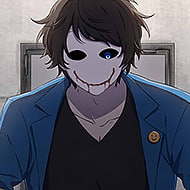
Helen Otis, the Man Behind the Bloody Painter
Bloody Painter Dating Sim is built around Helen Otis, a character who predates this specific release by years as a well-known creepypasta figure. The game is an official spin-off celebrating a decade of the character’s existence, and it leans into his established backstory of childhood bullying that eventually pushed him toward violence rather than inventing a new origin from scratch.
That history matters mechanically, not just narratively. Dialogue choices throughout the seven days repeatedly circle back to how Helen was treated before he became who he is now, and players who lean into sympathy for that backstory tend to unlock noticeably different reactions from him than players who play it cold and detached.
Fans already familiar with the character from years of fan animation and community art tend to read these callbacks immediately, while newcomers pick up the emotional throughline naturally enough even without that prior context.
Surviving Seven Days in Bloody Painter Dating Sim
The core structure is straightforward: you’ve been captured, and your choices across seven in-game days determine how Helen treats you and which of the ten possible endings you land on. Early days establish the baseline dynamic, while later days are where the divergence between the bad-ending paths and good-ending paths becomes obvious.
One thing the community brings up often is how quickly small early choices compound. A dismissive early response can lock a player onto a harsher path well before day seven, which rewards players who go back and experiment with different tones from the very start rather than trying to course-correct late.
Ten Endings, and What Actually Separates Them
The six bad endings and four good endings aren’t just tonal variations — they represent meaningfully different outcomes for the relationship between the player and Helen, ranging from outcomes where the danger never resolves to ones where something closer to genuine connection survives the seven days.
- Bad endings generally reflect choices that escalate Helen’s suspicion or aggression.
- Good endings require consistent choices that build trust across multiple days rather than a single decisive moment.
- Replaying for different endings is expected — a single playthrough runs about 40 minutes for a good ending, short enough to revisit easily.
The Paintbrush Knife and Other Details From His Past
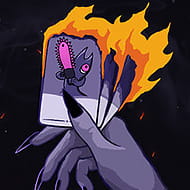
Helen’s signature weapon, a paintbrush knife, ties directly back to his identity as an artist before he became a killer — a detail longtime fans of the character recognize immediately and one the game leans on visually throughout. His notebook, another carryover from his original backstory, shows up as a recurring symbol of the drawings that got him bullied by classmates named Judy and Ben in the character’s earlier stories.
These aren’t incidental props. They’re the through-line connecting this dating sim spin-off back to the character’s original creepypasta roots, and removing them would make Helen feel like a generic horror antagonist rather than the specific, well-established figure players are choosing to romance.
Fourteen CGs and What They’re Actually Used For
Fourteen CG illustrations are spread across the game’s routes, generally reserved for emotionally significant beats rather than scattered evenly through every scene. Combined with full voice acting, the presentation leans hard into making Helen feel like an actual character reacting to the player rather than a static horror figure standing in for a jump scare.
How many endings does Bloody Painter Dating Sim have?
Ten total — six bad endings and four good endings — with the specific outcome determined by the cumulative tone of choices made across all seven in-game days rather than any single decision.
How long does it take to get a good ending?
Roughly 40 minutes for a single good ending playthrough, though reaching all ten endings naturally takes longer since several of the bad endings can trigger earlier than day seven depending on choices made.
Is the Bloody Painter a real creepypasta character?
Yes. Helen Otis, known as the Bloody Painter, is an established creepypasta figure with a history predating this game by roughly a decade, and this release is specifically framed as an anniversary spin-off built around his existing backstory rather than a new, unrelated character.
Whether players end up on one of the four good endings or find themselves cut short by one of the six bad ones, Bloody Painter Dating Sim treats Helen Otis’s paintbrush knife and his notebook as more than set dressing — they’re the emotional anchor the whole seven-day survival premise is built around.