

















BrokenLore: DON’T LIE


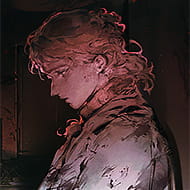




You are halfway through a Fantasy Boy level on your console when the doorbell cuts in, and the peephole shows a man in a rabbit mask talking in riddles. That moment in BrokenLore: DON’T LIE sets the terms for everything that follows: Junko’s apartment is small, the world beyond her door is unfriendly, and her own mind is the least reliable room in the building. It is a first-person horror story about a hikikomori who lies to everyone, herself included.
| Genre | First-person psychological horror |
| Protagonist | Junko, a reclusive hikikomori |
| Main locations | Junko’s apartment and warped liminal spaces |
| Core activities | Exploration, light puzzles, stealth and short chases |
| Typical length | Around 90 minutes |
Inside Junko’s Apartment in BrokenLore: DON’T LIE
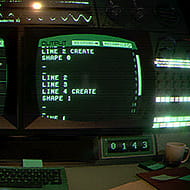
The flat is the anchor of the story, a compact Japanese apartment rebuilt with the dull, believable detail that makes a place feel lived in. Early in the game you spend most of your time there, reading documents on Junko’s laptop, listening to her voiceover and working out how badly she is coping. Because Junko is a hikikomori, nearly everything the story cares about happens within a few metres of her bed and her console.
The opening is short and strictly ordered, which is why players remember it so clearly. Everything you need to know about Junko’s state of mind arrives in four beats.
- The doorbell interrupts your Fantasy Boy session.
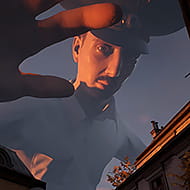
- You look through the peephole and see the rabbit-mask man, who speaks cryptically and eventually leaves.
- Junko phones Hideo, an old friend from the clinic, who wants nothing to do with her.
- Her body starts to itch and she runs to the bathroom for her pills.
Once Junko swallows those pills, the flat stops being a flat. The cramped rooms give way to a wooden Japanese interior full of childhood narration, and the game slides into the liminal spaces that make up much of the rest of the story. Slow-burn horror fans will find that first transformation the most memorable moment, because nothing lunges at you; the walls simply stop being honest.
Fantasy Boy: The Platformer That Leaks Into Junko’s Reality
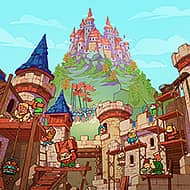
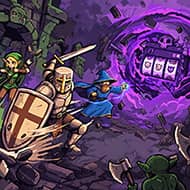
Fantasy Boy is a side-scrolling platformer that Junko plays on her console, and you control it yourself. It reads as a nod to Wonder Boy, and it shows what Junko does when she wants to be anywhere else. As her mental state fractures, its rules and monsters seep into the real world around her.
Even the sword follows her out of the screen.
That sword becomes your weapon against oversized mushrooms and other 2D creatures that turn up as 3D constructs, and the fights are basic rather than a full combat system. A subway stop full of video game characters is one of the strangest spaces in the game, and it works precisely because it stays quiet. Platformer fans will enjoy the mash-up, but players who came for pure dread may find the sword fights slightly out of tune with the mood.
Pills, Grids and Boxes: The Trials That Divide Players
Junko’s medicine is not only a story beat, it is also a hazard. In one sequence giant medicine pills rain from the sky, and in another you cross a coloured grid where one colour suddenly disappears and forces you to move fast. These are the moments where the game stops being a pure walking sim and asks for reflexes.
- Falling medicine pills: a single hit ends the attempt.
- Coloured grid: one colour vanishes suddenly, so you need a safe tile quickly.
- Coloured wires: one of the two prominent puzzles, solved by following each wire.
- Moving boxes: the second prominent puzzle, set inside a liminal space.
The wires are straightforward. The boxes are where arguments start.
Reviewers single out the moving-boxes room as the low point, because it punishes imprecise footing in a game that otherwise never asks for precision. The puzzles overall are basic, so anyone wanting a real challenge will feel underfed. Completionists get a list of 18 achievements, including one called What Is This Place?, which suits those rooms rather well.
Covering Your Eyes: Surviving the Stalker Chases
The main source of tension is a stalker that tracks your behaviour, so the safest habit is to move carefully and stay out of sight. In the chase sequences you deliberately cover your eyes to avoid looking at the stalker, a neat inversion of standard horror where you usually want to see what is coming. Stealth fans will recognise the rhythm immediately, since hiding and waiting matter more than running.
The rule is simple, and it works.
Reviewers do point out that these chases mostly come down to following one strict rule, so stealth veterans may feel underused. The chases also arrive in short bursts rather than long hunts, which keeps the pacing tight but leaves the horror thinner than in earlier chapters of the anthology. That is the most honest complaint series regulars bring up: fewer new monsters and fewer tense set pieces than they hoped for.
Junko’s Lies, Hideo and the Chatbot: Reading the Story
Lying is the central theme. Junko was taught from a young age that when she tells the truth nobody listens, so more often than not she does not. She also leans on an AI companion who tells her that lying for attention is fine, and in a horror story that voice slowly stops sounding comforting.
Hideo does not want to hear from her. Junko cannot see it.
The narrative hides most of its answers in small details rather than spelling them out, and it sits inside a wider anthology, so lore hunters will find hooks that tie back to earlier chapters. Junko is the girl who texted Shinji in an earlier chapter to warn him about monsters, but you do not need that background to follow her story. Story-first players who enjoy decoding what is real and what is not will get the most from it, while anyone wanting every thread resolved may leave with one large mystery still open.
Questions Players Ask About BrokenLore: DON’T LIE
How long does a full playthrough of Junko’s story take?
Most reviewers report roughly 90 minutes, which is enough to see the apartment, the liminal spaces and the Fantasy Boy sections once. With 18 achievements on the list, a second pass to catch the ones you missed is realistic. Do not expect a sprawling adventure; it is a compact, story-driven run.
Do I need to play the earlier chapters first?
No. Junko’s story stands on its own, and nothing in the flat or the liminal spaces requires prior knowledge. Knowing that Junko once texted Shinji to warn him about monsters adds context, but it is a bonus rather than a requirement.
Is it actually scary, and can Junko fight back?
The dread comes from isolation, the rabbit-mask man at the door and the stalker you avoid by covering your eyes, rather than from constant jump scares. Junko can fight, since the sword from Fantasy Boy lets you hit oversized mushrooms and similar monsters, but the fights are basic and the real tension lives in staying out of sight.
BrokenLore: DON’T LIE works best when you treat Junko’s flat as a place you are afraid to leave and afraid to stay in. Carry the rabbit-mask man, the Fantasy Boy sword and the memory of those falling pills into the final liminal rooms, and the story’s central question of who is lying to whom lands hard. Play it in one sitting, keep the lights low and let the strange, quiet spaces do their work.