



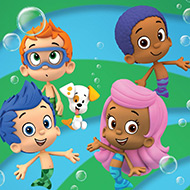
Bubble Guppies Classroom


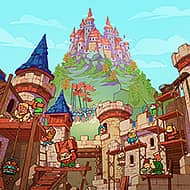



You click in and the tank-glass doors of the classroom swing open, and Molly is already waving from her cubby while Gil paddles past with a stack of counting cards. This is the first thing that stands out about Bubble Guppies Classroom: it drops you straight into a scene instead of a menu, and within a few seconds a toddler or a young preschooler is expected to tap, drag, or point rather than read a rulebook.
| Setting | An underwater preschool classroom |
| Cast | Molly, Gil, Oona, Deema, Goby, Nonny, and Bubble Puppy |
| Core Skills | Early literacy, counting, colors, and shape matching |
| Best For | Toddlers and young preschoolers, often with a parent nearby |
Getting to Know the Bubbletucky Crew
Every activity in Bubble Guppies Classroom is hosted by one of six familiar faces, and the game leans hard on that recognition. Molly tends to introduce number-based tasks, Gil shows up for movement and rhythm segments, and Oona, Deema, Goby, and Nonny rotate through smaller supporting roles depending on which room a young player wanders into. Mr. Grouper, the teacher figure from the source cartoon, appears at transition points to nudge the pace along without ever feeling like a strict instructor.
What a parent notices faster than a child does is how deliberately paced the game is. There’s no failure state that ends an activity abruptly — if a shape gets dragged to the wrong outline, the piece simply bounces back, and the character on screen offers another try instead of a buzzer or a red X. That single design choice does more to keep a three-year-old at the screen than any scoring system would.
Bubble Puppy, the class pet, is used almost like a reward mascot. He barks, does a little spin, or fetches a bubble whenever a task is finished, and very young players quickly start associating that animation with “I did it,” which is exactly the kind of positive reinforcement loop this genre depends on.
Shapes, Colors, and Counting Inside Bubble Guppies Classroom
The learning content itself is unremarkable on paper — matching colors, counting objects up to a small number, tracing simple shapes — but Bubble Guppies Classroom earns some credit for how it dresses those tasks up in the underwater classroom setting rather than presenting them as flashcards. A counting exercise might involve helping Gil hand out snack cups to classmates instead of tapping a static row of dots, which keeps the activity feeling like part of a story rather than a worksheet.
Parents who let their kids play multiple sessions in a row tend to notice the content doesn’t expand much once the early tasks are cleared. This is one of the more honest criticisms raised by families comparing preschool apps: Bubble Guppies Classroom is built for a narrow age band, and a child who’s already comfortable counting to ten will likely outgrow it within a few weeks of regular play.
What Beginners Get Wrong
The main misstep isn’t really a beginner’s mistake so much as a parent’s expectation — treating this as an app the child should navigate solo from the start. The interface uses big, bright drag targets, but very young children still benefit from someone sitting alongside them for the first few sessions to model tapping and dragging before letting go entirely.
Why Bubble Guppies Classroom Feels Different From Other Preschool Games
Compared to generic shape-matching apps, the character continuity is the differentiator. A returning player who liked Oona’s segment yesterday can often find her again today, and that consistency builds a small sense of familiarity that keeps toddlers coming back to the same classroom rather than a randomized activity screen.
Bubble Puppy, Rewards, and Repeat Visits
There’s no scoring ladder to chase, no leaderboard, nothing an older sibling would care about — and that’s by design. The entire loop rewards completion over competition, with Bubble Puppy’s animations and Mr. Grouper’s encouragement standing in for point totals. For the intended audience, that’s the right trade-off, even if it means the game has almost nothing to offer once a child ages out of it.
Bubble Guppies Classroom isn’t trying to be a game in the way older siblings might use that word — there’s no failing, no replay value beyond repetition, and no hidden depth to unlock. What it does well is keep Molly, Gil, Bubble Puppy, and the rest of the Bubbletucky classroom consistent enough that a toddler recognizes the place they’re coming back to, which for this age group is most of the job done.