






















Eulogy
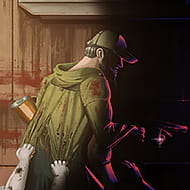









Eulogy tells you almost nothing about its ending in the opening minutes, and that restraint is deliberate: this is a game about walking through someone’s house after they’re gone, not about being warned in advance what you’re going to find.
Content note: Eulogy deals directly with themes of suicidal ideation, and the developers include their own content warning before you start. This piece discusses the game’s structure and themes without detailing its darkest specifics.
Whose House You’re Actually Walking Through
You play as the sister of Ashley, moving through a childhood home where every object seems to hold a memory. The framing device is simple: interact with the items scattered around the house, and each one unlocks a piece of Ashley’s story, gradually assembling a picture of who she was and what led to her final moments. Eulogy doesn’t rush this — the average session runs about half an hour, and the pacing is built around letting each memory land before moving to the next.
The point-and-click structure keeps mechanical friction low on purpose. There’s no failure state in the traditional sense, no combat, no timer pressuring you forward. The entire design is oriented around attention — did you actually look at the sticky notes, the portrait on the wall, the objects that seem incidental until they’re not.
What stands out about Eulogy compared to other short narrative games in this space is how specific the household details are. A broken phone description, a portrait showing a graduation date, a dog that’s mentioned but never directly present — these small, concrete touches are what players in the comments keep returning to, often citing one particular object description as the moment the story actually hit them.
The House Won’t Let Go Until You’ve Seen Everything
Eulogy is structured so the ending only becomes accessible once every interactable item in the house has been engaged with — the game genuinely can’t be finished early, even if you want to skip ahead to the diary or the door. A book icon in the interface, added in a later update, lets you check what you’ve already interacted with, which was a direct response to players getting stuck without realizing they’d missed something.
Two locked items — a laptop and a diary — sit at the center of the mystery-solving layer, each requiring a code you piece together from details elsewhere in the house rather than through any conventional puzzle-solving mechanic. It’s less a puzzle in the traditional sense and more an extension of the same close-reading the rest of the game asks for: pay attention to what’s on the walls, and the answers are there.
Reaching the diary requires having interacted with every other item first, which means the game withholds its most direct emotional material until you’ve already spent time with the smaller, quieter details — the sticky notes, the objects, the portrait — making the diary land differently than it would if it were available from the start.
Why the Ending Hits the Way It Does
The final action in Eulogy — clicking the front door’s doorknob — only becomes available after finishing the diary, and it functions less as a puzzle solution and more as a deliberate closing beat. Comment sections are full of players describing the ending as unexpectedly heavy; several have said they went in expecting something lighter and were caught off guard by how directly the game commits to its subject matter.
That said, not every reaction has been uncritical. Some players in the community have described the diary’s content as more sentimental than analytical, wishing the writing pushed further into the specifics of grief rather than staying impressionistic — a reasonable point of disagreement for a game built in the compressed timeframe of a jam submission rather than a full production cycle.
Eulogy was built for DevelUP Public Game Jam 2026 by a six-person team working under the name VC Studios, and that jam-scale scope shows in both directions — it’s tightly focused because of it, but also leaves some players wanting a longer version with more room to build the family’s story.
- Do I need to find a walkthrough to finish Eulogy? Not necessarily — every code and password in the game is discoverable by paying close attention to the objects and notes scattered through the house, including the portrait and sticky notes in Ashley’s bedroom, though some players do look up hints once they’ve explored thoroughly and still feel stuck.
- Why can’t I access the diary yet? The diary only unlocks in Ashley’s bedroom drawer after you’ve interacted with every other item in the house — it’s a deliberate gate, not a bug, and it’s the main reason players sometimes feel like they’re missing content early on.
- Is Eulogy appropriate for someone who’s struggling personally right now? The developers flag the suicidal ideation content directly before you start, and several players in the comments have noted it hit close to home. If you’re currently going through something difficult yourself, it’s worth reading the content warning seriously before deciding whether this is the right time to play.
Eulogy doesn’t try to resolve grief neatly, and it doesn’t need combat or complex systems to make its point — it just asks you to slow down and actually look at what Ashley left behind, one object at a time, until the whole house has told you who she was.