














Hello Neighbor ANALOG HORROR








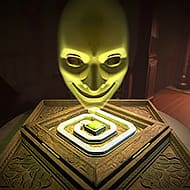
Hello Neighbor ANALOG HORROR looks, at a glance, like a nostalgia play — familiar house, familiar neighbor, familiar sneaking-through-windows loop. It plays like something else entirely once the VHS static kicks in and the game starts treating every room like found footage nobody was supposed to record.
Nicky Roth Returns to a House That Isn’t the Same
You’re back in Nicky Roth’s shoes, but the framing has changed completely. Instead of the bright, almost cartoonish stealth game longtime fans remember, everything is filtered through degraded analog tape aesthetics — tracking lines, sudden cuts, timestamps that don’t quite make sense. The familiar goal of sneaking into the neighbor’s basement is still there, but it’s wrapped in a presentation style that makes the whole thing feel like evidence rather than gameplay.
That shift matters more than it might sound. Analog horror as a genre leans on the idea that you’re watching something you weren’t meant to see, and applying that lens to a game players already know intimately creates a specific kind of unease. You know the layout. You don’t trust it anymore.
Longtime followers of the original games notice the difference within the first couple of minutes — the opening shots alone signal that this isn’t a straightforward remaster, and forum discussions about the fan game consistently mention that initial disorientation as the hook that keeps people watching.
Theodore Peterson’s New Behavior in the Analog Horror Version
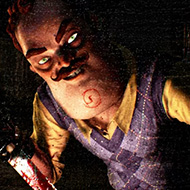
Theodore Peterson, the neighbor himself, doesn’t patrol the way players remember. The original game’s AI adapted to your mistakes over repeated attempts — setting traps where you’d been caught before, locking doors you’d used as shortcuts. This version keeps that adaptive spine but reframes his presence through the analog horror lens, so his appearances feel less like a stealth-game antagonist reacting to your play and more like something glimpsed on tape that shouldn’t be moving at all.
Players who’ve spent real time with the fan game describe Theodore as noticeably more aggressive in short bursts, punishing hesitation harder than the base game ever did. Whether that’s a deliberate difficulty shift or just the analog horror presentation making every encounter feel scarier is something the community still debates.
Sound design carries a lot of that tension. Distorted audio cues, sudden silence, tape-hiss swelling right before Theodore appears — these are the tools doing the actual scaring, more than any single jump moment.
Gibbons Estate as a Setting Within the Game
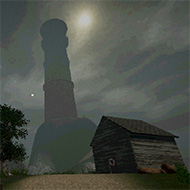
The house itself, referred to among players as Gibbons Estate, gets reworked room by room. Familiar spaces from the original game reappear but with details shifted just enough to feel wrong — furniture in slightly different positions, hallways that loop back on themselves, static bleeding into corners of rooms that used to feel safe.
Exploration-focused players tend to linger in these reworked spaces looking for environmental storytelling clues, while horror-focused players push through as fast as possible just to escape the discomfort of lingering too long in any one room.
- Basement access remains the central long-term goal, same as the base game
- Upstairs rooms carry more analog horror set-dressing than downstairs areas
- Certain rooms trigger tape-distortion effects tied to proximity rather than scripted triggers
Stealth Fundamentals Carried Over From the Base Formula
Underneath the horror presentation, the stealth fundamentals are recognizably intact. Line of sight still matters. Noise still draws attention. Hiding spots still work, mostly, provided you’re not sloppy about when you use them.
Where the fan game diverges is pacing — because the analog horror framing constantly threatens to cut away or glitch, players report feeling less safe even in objectively safe moments, which changes how cautiously people play compared to the original.
Speedrunners have started timing basement-access routes specifically within this version, treating the analog horror sequences as obstacles to route around rather than content to sit through.
Community Reception and Ongoing Debate
Reaction has been largely enthusiastic, though not universal. Some players feel the analog horror aesthetic occasionally overshadows the stealth-puzzle core that made the original game worth playing in the first place, arguing the presentation does more work than the mechanics underneath it.
Others counter that reusing a beloved game’s structure while completely reframing its tone is exactly what makes fan games worth making at all, and that the tension between nostalgia and dread is the entire point.
Is this connected to the original Hello Neighbor story? It borrows Nicky Roth, Theodore Peterson, and the core basement-infiltration premise directly from the base games, but reframes them through analog horror presentation rather than continuing the established canon in a strict sense.
Whatever side of that debate you land on, Hello Neighbor ANALOG HORROR succeeds at making Gibbons Estate feel unfamiliar again, and watching Theodore Peterson move through static-choked hallways is enough to unsettle even players who’ve mapped the original house from memory.