













Legend of Saha



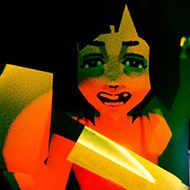




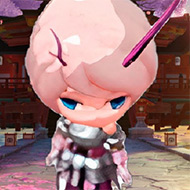
Thirteen scattered pieces of a soul don’t sound like something a simple jump button should be able to fix, but that’s exactly the task Legend of Saha hands you from the opening screen — an isometric world built entirely around collecting what Misei Nanatsuki lost.
| Genre | Isometric Platformer |
| Protagonist | Misei Nanatsuki |
| Setting | The Heavens |
| Core Goal | Recover 13 Soul Fragments |
Reading Isometric Space in Legend of Saha
The isometric perspective is the first real obstacle Legend of Saha throws at new players — depth is deceptive, and a platform that looks reachable from one angle can be a fatal misjudgment from another. What beginners get wrong almost immediately is jumping based on where a platform looks like it sits rather than tracking its actual position relative to Misei Nanatsuki’s shadow.
Switches scattered across the Heavens complicate this further, since flipping one often rearranges nearby platforms rather than simply opening a door. Early levels teach this pattern gently, but by the midgame, chaining switch activations correctly in sequence becomes the difference between a clean run and falling back to a checkpoint.
How Legend of Saha Paces Misei Nanatsuki’s Thirteen Fragments
Each of the thirteen soul pieces sits at the end of a distinct platforming challenge, and Legend of Saha rarely repeats the same obstacle pattern twice between them. Players who’ve finished the game often point to the later fragments as a noticeable difficulty spike compared to the earlier ones — a deliberate escalation that rewards the precision built up across the run rather than introducing entirely new mechanics late.
Do the switches in Legend of Saha always affect nearby platforms?
Usually, though a handful of switches trigger effects further away in the level, which is part of what makes blind switch-flipping risky in the later stages.
Is precise timing more important than exploration?
Both matter — some soul fragments are hidden off the main path entirely, rewarding players willing to explore dead ends instead of beelining for the obvious route.
Legend of Saha never explains why Misei Nanatsuki’s soul fractured into exactly thirteen pieces, and it doesn’t need to — every switch flipped and every fragment recovered says more about her journey through the Heavens than any dialogue box could, and that restraint is part of why the isometric platforming still holds up as a genuine puzzle rather than a simple obstacle course.