
















Lootbound
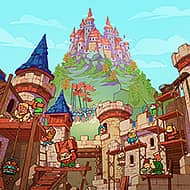




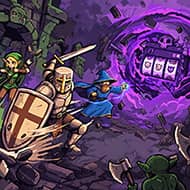



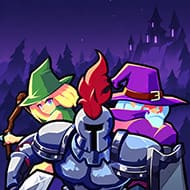

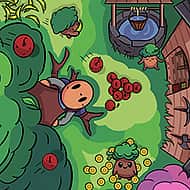
What happens when the item synergy you built your entire run around suddenly stops working three biomes into Lootbound? Usually it’s not a bug — it’s a single cell you moved without thinking, because in this game, position matters just as much as what you’re carrying.
| Genre | Tactical roguelite with turn-based combat |
| Players | Single player |
| Structure | Biome-based runs ending in a final boss encounter |
| Core loop | Route selection, loot collection, party building, turn-based fights |
Why Every Cell in Lootbound’s Inventory Grid Matters
Items in Lootbound aren’t just stat sticks sitting in a backpack — many carry auras that buff whatever’s placed in adjacent cells, which means the strength of a build depends as much on layout as on the raw gear itself. Sliding a single item one space over can quietly break or unlock an entire synergy chain without any obvious warning.
That’s easy to miss the first few runs through.
Players who’ve put serious hours in describe experimenting with grid arrangement as its own mini-puzzle layered on top of the combat, and it’s one of the more frequently discussed systems on Lootbound’s community boards precisely because it rewards a kind of optimization the genre doesn’t always bother with.
Recruiting Companions Who Fight Without Your Input
You start every expedition alone, but companions join as you move across the branching map, and once recruited they act entirely on their own during combat — you only directly control the main hero. That autonomy is a deliberate design choice, and it changes how you think about party building compared to games where every unit takes direct orders.
Beginners tend to treat companions like disposable extra damage and ignore how their AI actually behaves in a fight.
Players focused on min-maxing damage output learn to read each companion’s behavior pattern before investing gear into them, since equipping a companion whose autonomous decisions don’t match your build’s damage type in Lootbound can waste resources that would matter more elsewhere.
Building Around Armor Penetration, Exhaustion, and Direct Damage
Combat in Lootbound revolves around a handful of distinct damage types — armor penetration, exhaustion, armor destruction, and direct damage — each interacting differently with enemy defenses. Committing to one type rather than spreading gear evenly tends to produce a noticeably stronger build by the mid-run point.
It’s a small system, but it has real depth.
Exhaustion-focused builds, for instance, reward patience against heavily armored enemies that direct-damage builds struggle to burn down quickly, while armor-penetration setups shine against exactly the encounters exhaustion builds find slow. Recognizing which damage type a given biome’s enemies are weak to, early in the game, saves a lot of wasted turns later.
Choosing Boss Parts for Lootbound’s Final Guardian
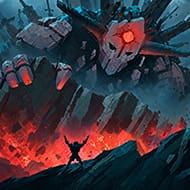
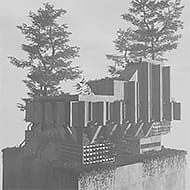
At the end of each biome, you pick one of two available boss parts, and those choices accumulate into the appearance and power of the Guardian you eventually face. It’s an unusual structure — rather than a fixed final boss, the game quietly builds your endgame challenge out of decisions you made hours earlier without necessarily realizing their weight.
Story-focused players tend to pick parts based on flavor text, while build-optimizing players pick based on which resulting Guardian ability they’d rather face.
By the time you reach the final confrontation, the version of the Guardian standing in front of you is effectively a record of every biome-ending choice across the run, which gives repeat playthroughs of Lootbound a different final fight almost every time.
Dice Rolls, Risk Rooms, and How Reward Scales With Danger
Special rooms offer a choice between a guaranteed common reward or a dice roll for something considerably better, with the odds of success dropping as the potential reward increases. This risk-reward system is one of the more debated parts of the current build — some players enjoy the tension, while others have flagged the randomness as a frustration point in community feedback.
That criticism didn’t go unanswered.
Recent updates reworked item selection specifically to make outcomes feel more predictable, letting players lean toward safer common rewards more reliably instead of feeling forced into a bad roll, which shows the risk system is still being actively tuned based on how players actually respond to it.
What Beginners Get Wrong About Route Selection
The branching map asks you to weigh risk against reward before you even reach a fight, and new players often default to whichever route promises the best loot without accounting for how depleted their resources already are.
That’s a fast way to arrive at a fight underprepared.
More experienced players treat route selection as a resource-management decision first and a loot decision second, checking their current build’s weaknesses against what a biome is likely to demand before committing to the riskier path.
How Lootbound’s Difficulty Shifted After Community Feedback
Since launch, balance passes have specifically targeted difficulty and randomness complaints raised by the community, adjusting how rewards are distributed and how forgiving early encounters feel. It’s a live example of a roguelite adjusting its core risk system in direct response to player reaction rather than leaving it untouched.
Whether that makes Lootbound easier or just fairer is something players still argue about, and both sides have a point.
- How does inventory placement actually affect your build? Many items carry auras that boost whatever occupies neighboring cells, so where an item sits in the grid can matter as much as which item it is — moving one piece can change an entire build’s effectiveness.
- Do companions follow your commands in combat? No. You only directly control the main hero; recruited companions act autonomously using their own abilities, so their behavior pattern needs to be accounted for rather than micromanaged.
- How is the final boss determined? The Guardian is assembled from boss parts chosen at the end of each biome, meaning its final appearance and abilities are a direct result of choices made throughout that specific run.
Lootbound rewards the kind of player who treats a loot grid like a puzzle rather than a checklist, and nowhere is that clearer than watching the Guardian take shape from choices made biomes earlier — by the time you’re staring down the final fight, you’re really just staring at the sum of every route you picked to get there.