









MOXIE // Graffiti Burst

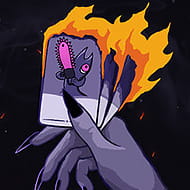


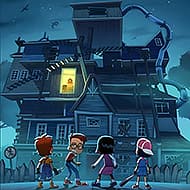

You drop into a rail with Veve mid-stride, boost meter half full, and the wall ahead is still blank. One clean grind, one B-tap to slap a tag across the brick, and the run either flows into an S-Rank or falls apart the second a cop cruiser rounds the corner. That tension between style and speed is the whole pitch of MOXIE // Graffiti Burst, and it never really lets up.
| Genre | Platformer, skate-n-tag |
| Setting | Mischievous South |
| Main character | Veve |
| Session length | About an hour |
Veve, MOXIE, and the Mischievous South
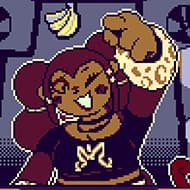
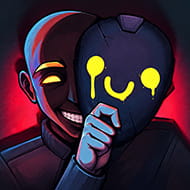
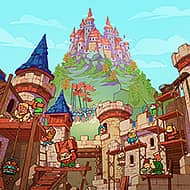
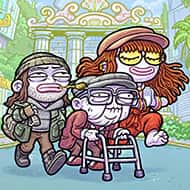
Veve is a deer with a chip on her shoulder and a spray can she refuses to put down. She’s trying to win an illegal skateboarding tournament, but the game frames that goal as something bigger: earning a spot as the new ruler of a gritty urban sprawl called the Mischievous South. Around her she gathers MOXIE, a crew of colourful misfits who each have their own reasons for backing her run, and together they push against DAZE, the rival crew currently holding the underground scene.
What makes this setup work in the actual game is how lightly it’s delivered. You’re not sitting through cutscenes between every level; the story rides alongside short, replayable stages, so a piece of MOXIE’s world drops in right before you’re back on the rail chasing a new grade. Skaters who care about lore get fed steadily, and players who just want to grind get out of the dialogue fast.
DAZE isn’t drawn as a faceless obstacle either. They’re the established crew, the ones with the reputation Veve has to dismantle, and that rivalry gives every tagged wall a bit more weight than pure score-chasing usually carries.
Grinding, Tagging, and Chaining Combos in MOXIE
The core loop is simple to describe and harder to execute cleanly: grind rails, chain tricks, tag big spots with B, and keep your flow unbroken long enough to land a high grade. Movement uses WASD or arrow keys, A jumps, and holding up while grinding triggers a trick, which is where most of your score actually comes from. Dropping through platforms with S or the down arrow becomes second nature by the second stage, since a lot of routes hide shortcuts underneath the obvious path.
Grades run from C-Rank up to S-Rank, and the jump between them isn’t just about finishing a level — it’s about how much of the level you touched without breaking your combo. New players tend to treat tagging as a side objective and movement as the main one, when really the two are meant to be woven together. Missing a tag spot to save two seconds almost always costs more points than it saves.
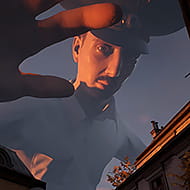
Where the game gets genuinely tricky is in the back half, once Peckington enters the picture. He’s the city’s president, a hare whose grip on order starts slipping the more Veve escapes the authorities, and his response is to send in Gina, the Hound Killer. She shows up armed with a rifle and a helicopter, and suddenly a level that used to be about clean lines and tag timing becomes about survival too.
- Speedrunners chase S-Rank on every level rather than just clearing them
- Completionists replay stages to unlock every piece of artwork
- Casual players tend to stick to lower grades and enjoy the story beats between runs
Facing Down Gina and the Hound Killer Sequences
By the time Gina appears, the game has already taught you its grammar, and it asks you to apply it under pressure. Her helicopter changes sightlines mid-run, which means routes you’d memorised suddenly need a different read. This is the point where a lot of players say the difficulty spike feels sudden rather than gradual, and it’s a fair criticism — the earlier stages ease you in gently, then Gina shows up and the margin for error tightens fast.
Still, most players who push through describe it as the moment the game clicks. Once you start treating her helicopter as another obstacle to route around, rather than a random threat, the whole thing starts to feel less like chaos and more like a puzzle with a timer.
Combos, Style Points, and What the Community Talks About
Forums and comment sections around MOXIE // Graffiti Burst tend to circle the same few things: the GB Studio presentation, the tightness of the grind controls, and how short-but-replayable the levels are. Players use terms like “clean runs” and “tag chains” when comparing scores, and there’s a small but steady conversation about which stage has the best flow once you know its shortcuts.
The full release also unlocks .gbc, .cia, and .pocket files, so a chunk of the community plays it on actual handheld hardware rather than in browser, which adds its own layer of discussion about frame pacing and button feel on original devices versus emulators.
What Beginners Usually Get Wrong
New players almost always undervalue tagging early on, treating it as optional flavour instead of core scoring. They also tend to bail out of grinds too early, worried about falling, when the actual risk of a clean grind is lower than it looks once you’ve learned the rail geometry.
Does MOXIE // Graffiti Burst Get Harder as You Go?
Yes, noticeably. Early stages are built to teach movement and tagging separately; later ones, especially anything involving Gina, demand both at once while adding environmental pressure like her helicopter’s sightlines.
What’s the Fastest Way to Improve Your Rank?
Prioritise unbroken combo chains over raw speed. A slower run that never drops its combo consistently outscores a fast one that resets its multiplier halfway through.
Is There Post-Game Content Once You Beat the Story?
Levels are built to be replayed for higher grades and unlockable artwork, so most of the replay value comes from chasing S-Rank on stages you’ve already cleared rather than new areas.
Veve’s story wraps up tightly, but the appeal of MOXIE // Graffiti Burst was never really about length — it’s about how good a single clean line through the Mischievous South feels once you’ve learned where Gina’s helicopter likes to circle.