









OBLIVION 2666

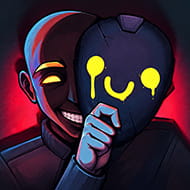
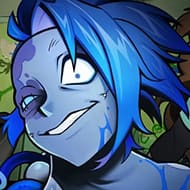
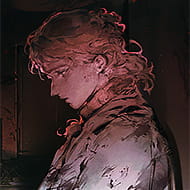

What happens when a visual novel stops trusting its own photographs? That’s the question OBLIVION 2666 keeps circling back to, presenting a city that no longer matches the images taken of it, and asking you to sit with that mismatch instead of resolving it.
| Genre | Visual Novel |
| Status | In development, opening act available |
| Main characters | Rill, Ruby |
| Rating | 5.0 out of 5 (36 ratings) |
Rill, Ruby, and a City That Doesn’t Match Its Photographs
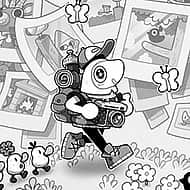
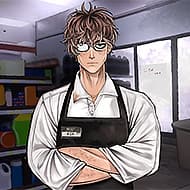
OBLIVION 2666 follows Rill, an outsider carrying a borrowed camera, as she moves through a sprawling, decaying urban mass filled with train stations, switchboards, and offices that have clearly outlived their original purpose. Rill’s relationship with Ruby sits at the emotional centre of the story, and the demo doesn’t rush it — there’s a quiet, pointed scene where the two discuss Rill’s full name, and the way Ruby responds to it says more about the gap between them than any exposition could.
That gap matters because the game is upfront about it never fully closing. Rill notices, at one point, that people outside the city aren’t like Ruby, and the writing lets that observation sit without resolving into reassurance. It’s an unusually honest choice for a story this early in its own telling.
A character named Rain also appears in connection with the city’s stranger elements, referred to in early impressions as “the shapeless,” though OBLIVION 2666 keeps most of that explanation for later chapters rather than the opening act.
Presentation Techniques That Define OBLIVION 2666
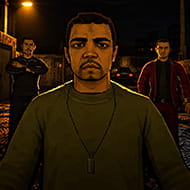
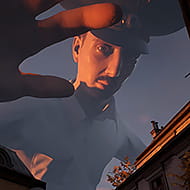
This is a game that treats its interface as part of the storytelling. Shot-reverse-shot framing between Rill and Ruby mimics live-action film grammar, textures shift with the emotional register of a scene, and even the pause menu has been redesigned to match the visual novel’s tone rather than sitting outside it as a generic system screen.
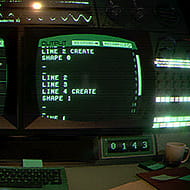
Built in Ren’Py, the game has become something of a talking point specifically because of how far it pushes that engine. Community discussion frequently mentions the shaders playing with opacity, the way segments are “documented” like found footage, and a widely-referenced television segment that blends nostalgia with dread in a way most visual novels don’t attempt.
None of this is decoration for its own sake — the framing device of the demo positions the whole thing as compiled footage “for eligible individuals only,” with deliberate absences the game insists are original to the source material rather than technical errors. That choice shapes how players read every visual glitch or missing frame from the very first scene.
- Readers who love literary prose tend to stay for the language even when the pacing slows
- Film-focused players are drawn in specifically by the shot composition and camera work
- Yuri readers follow the game primarily for the Rill and Ruby dynamic
Early in OBLIVION 2666: The First Act’s Structure
Early in the game, before the horror elements fully surface, OBLIVION 2666 spends its time establishing the ordinary texture of Rill’s world — her school, her routines, her camera work — so that later disruptions land harder. By the time you reach the sequence involving the television, the tonal shift from warmth to unease has been built carefully enough that it doesn’t feel like a genre swerve so much as a mask slipping.
This demo represents only the opening act.
That pacing decision is one of the more debated aspects among players. Some find the density of the prose slows momentum in a way that works against the otherwise striking visual pacing, and it’s a fair point — the writing asks for patience that the visuals alone don’t always signal is coming.
Content Warnings and What OBLIVION 2666 Chooses to Show
The game carries an explicit content warning for racism and its consequences, woven into the world rather than treated as background texture, and that inclusion shapes how certain later scenes read. It’s not an easy addition, and it’s one of the more discussed aspects of the demo across comment threads, alongside general praise for the presentation.
Community Vocabulary Around OBLIVION 2666
Players frequently describe the game using film terminology rather than typical visual novel language — “cinematography,” “shot composition,” “grammar of film” — which tells you a lot about what the demo is actually going for. Some also use “documenting” to describe how the camera work doubles as worldbuilding, since architectural detail in the backgrounds often carries as much narrative weight as dialogue.
- Who are Rill and Ruby in OBLIVION 2666? Rill is the point-of-view character, an outsider navigating the city with a borrowed camera, while Ruby is the person she’s closest to within it. Their relationship, including the tension around Rill’s real name, forms the emotional spine of the demo.
- Is OBLIVION 2666 a horror game? It’s primarily a visual novel with psychological horror elements that surface gradually, most notably around the television segment, rather than a horror game in the traditional sense from the outset.
- How long is the OBLIVION 2666 demo? The demo covers the opening act only, with the story continuing across later chapters not yet released, so it’s intentionally a fraction of the full planned narrative.
What lingers after the OBLIVION 2666 demo ends isn’t a cliffhanger in the usual sense — it’s the unresolved space between Rill and Ruby, and the sense that the city’s own photographs are lying to both of them in ways neither character has fully reckoned with yet.