








PAPERHEAD
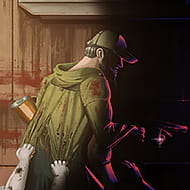





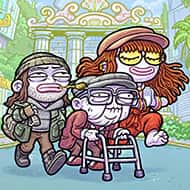
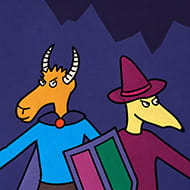
PAPERHEAD looks like a cute cardboard diorama someone built for a school project, but it plays like a boomer shooter that genuinely wants to hurt you. That contrast is the entire hook, and it doesn’t take more than a few minutes inside the research facility for the game to make its point loudly.
A Cardboard World With Actual Teeth
The premise is simple on the surface: something has gone horribly wrong inside an abandoned research facility built entirely out of cardboard and cutout aesthetics, and you’re the one walking in to find out why. What starts as a charming art style quickly reveals itself to be a setup for genuine horror beats layered underneath fast, physical combat. Cardboard enemies bleed, walls hide things that shouldn’t exist in a set made of paper, and the tonal whiplash never fully wears off no matter how many rooms you clear.
What sells this contrast is how seriously PAPERHEAD treats its own atmosphere in between fights. Quiet stretches of the research facility linger on details — torn documents, redacted notes, environmental storytelling scattered through hallways — before dropping you back into combat that moves at a completely different speed. The game never lets one tone dominate for too long.
New players usually expect a straightforward gore-comedy shooter based on the marketing alone. What they get instead is a facility that keeps quietly building dread in the margins, which makes the eventual reveals land harder than a purely comedic game would allow.
The Pencil as Weapon and World Tool
The pencil is PAPERHEAD’s signature mechanic, and it does more than any single weapon in the game. You can sketch bombs and kick them into enemies, draw doors to open new paths, or scribble directly onto walls in the environment. It blurs the line between combat tool and traversal tool in a way that most shooters don’t attempt, and figuring out when to use the pencil offensively versus environmentally is one of the first real skill checks the game throws at you.
Early on, most players default to treating the pencil as a secondary weapon and nothing else. That changes fast once the research facility starts demanding creative solutions — a locked path that only opens if you draw your way through it, or an enemy cluster that’s far easier to handle with a well-placed sketch bomb than a straight fight with the shotgun.
The learning curve here isn’t about memorizing a moveset, it’s about recognizing which rooms are secretly pencil puzzles wearing a combat encounter’s clothing. Players who miss this distinction tend to burn through ammo fighting battles the level actually wanted them to solve differently.
Boots, Barrels, and Kicking Everything
Combat in PAPERHEAD leans heavily on physical interaction rather than pure gunplay. Enemies can be launched into the air and juggled, exploding barrels can be kicked directly into crowds, and your boots function as a legitimate offensive tool alongside the shotgun and whatever else you’re carrying. The game clearly wants you moving constantly rather than holding an angle, and standing still tends to get punished quickly once enemy density picks up in later sections of the facility.
Kicking specifically rewards spatial awareness over reaction speed. Lining up a barrel kick into a cluster of enemies takes more forethought than simply aiming a weapon, and the payoff for pulling it off cleanly is disproportionate to how simple the input feels.
Corpse-Erasing as the Core Survival Loop
Here’s the mechanic that reshapes how you actually play PAPERHEAD once it clicks: erasing corpses is how you recover ammo and health. There’s no separate healing item pool to hoard, no coin-based health economy — killing things and then erasing what’s left of them is the loop that keeps you alive. This pushes the pace forward aggressively, because standing back and playing safe means starving yourself of the resources you need to survive the next room.
It’s a deliberate shift away from more traditional shooter economies, and it’s also one of the more divisive choices players discuss. Some find it liberating because it removes inventory management from a fast game that doesn’t want you slowing down. Others feel it removes a layer of strategic resource planning that similar games rely on.
Coins still exist in PAPERHEAD, but they’ve been shifted away from healing entirely and serve a different purpose within runs. That change alone tells you how deliberately the corpse-erasing loop was built to be the game’s central resource system rather than one option among several.
Exploration Rewards in the Research Facility
- Optional side rooms that hide pencil upgrades away from the critical path
- Environmental documents that add context to what happened before you arrived
- Small combat arenas tucked off the main route, rewarding players who backtrack
Even though PAPERHEAD moves fast, the research facility rewards players who peel off occasionally. It’s a light layer of exploration wrapped around an otherwise relentless combat loop, and it gives the cardboard setting more weight than the shooting alone would provide. By the time you reach the facility’s later sections, the environment has quietly told you more than any single cutscene would.
What Players Argue About Most
The corpse-erasing economy isn’t the only point of debate. Weapon pacing draws just as much discussion — how early certain tools like sketch bombs show up relative to how useful they become later. Players who found the pencil bombs arriving too late in earlier builds have been vocal about wanting that curve smoothed out, and it’s one of the more consistent threads in community feedback.
What happens if you never use the pencil offensively at all? You can technically push through most encounters using just your kicks and the shotgun, but you’ll be ignoring roughly half of what makes PAPERHEAD’s combat interesting, and several tighter fights become noticeably harder without sketch bombs available as crowd control.
PAPERHEAD earns its contrast honestly — the cardboard aesthetic never feels like a gimmick once the pencil, the boots, and the corpse-erasing loop start working together. By the time the research facility’s later rooms open up, what looked like a cute art experiment has fully turned into a shooter with real bite.