














Pinata Smash: Incremental Circus
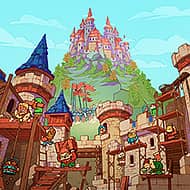








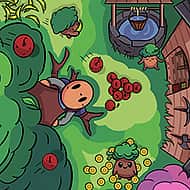
Pinata Smash: Incremental Circus looks like a party game about hitting piñatas, but it plays like a crash-gambling incremental with a circus paint job over the top. The stands are packed, the crowd’s already throwing, and none of it is as harmless as the candy makes it look.
| Genre | Incremental, Casual |
| Perspective | Third-person, crowd-driven combat |
| Currency | Candy, sorted by rarity |
| Goal | Grow a permanent engine across repeated short runs |
Pinata Smash: Incremental Circus Turns the Crowd Into Your Weapon
You don’t click piñatas to death yourself here — the crowd does, and your job is pointing a spotlight to lock targets while a growing audience multiplies how fast projectiles fly. It’s a small reversal of the usual incremental formula, where you’re normally the one clicking, and it changes how you think about pacing a run.
As the crowd grows, your attention becomes the actual bottleneck rather than your raw damage output, since misplaced spotlight time means wasted throws.
That tension between crowd size and your own targeting accuracy is the first thing that separates a sloppy run from a clean one.
Footballs, Bats, and the Thrown Gun That Fires Mid-Air
The crowd doesn’t throw one uniform projectile. Footballs ricochet between targets once upgraded, bats land home-run shockwaves that clear a cluster at once, and — in the game’s most absurd escalation — a thrown gun eventually fires again in mid-air after leaving someone’s hand.
Each weapon type has its own signature special buried in the skill tree, so a run built around footballs plays completely differently from one leaning on bat shockwaves.
Mixing weapon types early tends to spread your upgrade currency too thin, and most experienced players end up specializing hard into one weapon per run instead.
Why Not All Candy Pays the Same
Smashed piñatas drop several kinds of candy, and the game is explicit that rarer candy pays out more per piece than common candy. At the end of a run, everything gets itemized by type and totaled, and that total is what funds upgrades between shows.
This is where the incremental framing actually rewards paying attention rather than just spamming the spotlight — a run full of common candy nets far less than a shorter run that happens to hit a few rare drops.
Players optimizing for pure Candy income learn fast to prioritize targets that flash rare colors over just clearing whatever’s closest.
The JACKPOT Pinatas Everyone Chases
Scattered rarely through a run are JACKPOT piñatas, which drop massive candy hauls compared to standard targets. Spotting one early and redirecting the crowd toward it can single-handedly double a run’s total, which makes them the single most valuable read you can make mid-show.
Chasing a JACKPOT piñata too aggressively can backfire if it pulls your crowd’s fire away from a cluster of easier targets, so timing the redirect matters as much as noticing the piñata exists.
Building an Engine With Shiny Crystal and Bigger Swarm
Relics are where individual runs start compounding into something closer to a real build. Shiny Crystal increases attack speed for every piñata currently on screen, which scales harder the bigger your crowd already is. Bigger Swarm pushes crowd size up directly, and pairing the two turns a modest early run into something the game itself describes as sending the ring berserk.
A handful of relics in, your specific combination of weapon focus and relic pairing starts feeling distinct from anyone else’s run, which is clearly the intended hook for players who like optimizing incremental engines.
Tesla Coils, Black Holes, and the Late Skill Tree
Deep enough into the skill tree, upgrades stop being incremental multipliers and start rewriting the arena itself. Tesla coils fork lightning across an entire swarm of piñatas at once, and black holes pull piñatas into a void instead of requiring direct hits.
Layering Shockwave and Sky Lightning on top of those lets a late-game run essentially play itself for a few seconds at a time, which is either the payoff players grinded 38-plus skills for or a moment where the game briefly stops needing you at all, depending on how you look at it.
That’s a genuinely divisive design choice among players who prefer staying hands-on for the whole run rather than watching the finale resolve automatically.
The Casino Pinata and the Nerve to Cash Out
Smashed piñatas also drop casino tickets, which feed a separate casino piñata that swells as its multiplier climbs every second toward a hidden pop point. Cashing out banks whatever multiplier you’ve reached, but hold on a beat too long and the piñata bursts, costing you the round’s casino winnings entirely.
This crash-style mechanic answers a question a lot of players ask before their first run: no, cashing out early doesn’t cost you anything extra beyond the multiplier you left on the table, but waiting too long can genuinely erase what you’ve built up.
After a bank, the piñata keeps growing on screen anyway, so you see exactly how much bigger it would have gotten — a small psychological twist of the knife aimed squarely at greedy players.
What Carries Over Between Shows in Pinata Smash: Incremental Circus
Every run ends, but the engine you’ve built across skills, weapons, and relics does not reset with it, which answers the other common question new players have about whether progress in Pinata Smash: Incremental Circus is wasted between sessions. Short shows paired with permanent growth is the entire pitch, and it holds up because losing a single casino piñata gamble only costs that round’s ticket winnings, not your accumulated skill tree.
That safety net is what makes the casino risk feel worth taking in the first place, since a bad gamble stings without actually setting back your long-term progress.
Balancing Greed Against the Growing Piñata
The whole game, underneath the circus theming, is a lesson in reading your own greed. Every system — weapon specialization, relic pairing, the JACKPOT chase, the casino piñata — comes back to deciding how much longer you can push before the number in front of you turns against you.
Pinata Smash: Incremental Circus never punishes ambition outright, but it consistently rewards players who know exactly when the Shiny Crystal-fueled swarm and the swelling casino piñata have both hit their ceiling for the round.