





















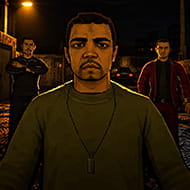


Police Chief Simulator
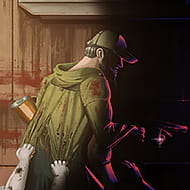









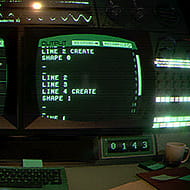
In Police Chief Simulator you start as a newly appointed Chief with an almost empty station, a handful of untrained staff, and a county already overrun by organized crime, and that imbalance between your resources and the scale of the problem is what shapes almost every early decision you make.
| Genre | First-person police management and investigation simulation |
| Setting | Winston Springs County, spanning multiple districts and neighbourhoods |
| Core Loop | Register cases, deploy Patrol Units, expand the station, and dismantle criminal organizations |
| Perspective | First person, walking between station offices to handle tasks directly |
Taking Charge of an Empty Station in Winston Springs
Police Chief Simulator opens with almost nothing working. The station has minimal staff, no real investigative capacity, and a backlog of unresolved crime spreading through Winston Springs County. Your first real decisions revolve around which office to staff first — an empty desk in the wrong department can bottleneck everything downstream of it, since cases move through a defined pipeline rather than resolving themselves automatically.
Early in the game, you’re mostly reacting: taking whatever reports come in, assigning whoever’s available, and hoping the basics hold together long enough to afford your first real upgrade.
Case Registration, Examination, and Execution
Every incident that comes into the station moves through three distinct stages. Case Registration is where a report first gets logged, Case Examination is where officers and detectives gather evidence and leads, and Case Execution is where you actually act on what’s been uncovered — typically an arrest. Skipping ahead or under-staffing any one stage creates a backlog that slows down everything behind it, so a station that’s fast at registering crimes but slow at examining them just accumulates a pile of half-finished cases.
Detective-minded players tend to prioritize the examination stage heavily, building up evidence before ever sending a Patrol Unit out, while more aggressive players push straight to execution the moment they have a plausible lead, accepting a higher failure rate in exchange for faster turnover.
Patrol Units and the Tactical Map
The Tactical Map is where most of the strategic layer of Police Chief Simulator actually lives. It lets you send Patrol Units into specific districts, gather intelligence on local activity, and gradually take hold of neighbourhoods that were previously outside your influence. Rewards from successful patrols and closed cases feed directly back into station funding, which is what eventually lets you afford better equipment and more personnel.
- Deploying Patrol Units into unclaimed districts generally yields more intelligence early on than repeatedly patrolling territory you already control.
- Once a district is under your influence, patrol activity there shifts toward maintaining order rather than gathering new leads.
Hiring Officers, Detectives, and Office Workers
Personnel management is one of the quieter systems that ends up mattering the most. Office Workers keep Case Registration moving without delay, Detectives handle the interrogation and evidence work during Case Examination, and Officers carry out the actual arrests during Case Execution. Hiring too many of one role while neglecting the others creates exactly the kind of bottleneck the station starts with, just later and more expensive to fix.
Building a Detective Board Against the Biker Gang
One of the more involved investigations in Police Chief Simulator centers on a Biker Gang operating through Winston Springs County. Interrogating Biker Gang Members through your Detectives slowly builds out a Detective Board full of leads, connections, and evidence pointing toward the Gang Leaders running the operation. It’s a slower, more deliberate track than most single-report cases, and it’s usually the point where players realize the game rewards patience over speed.
Whether the Biker Gang storyline feels like a satisfying long-term goal or a slow grind compared to shorter cases is something the community is genuinely split on — for players who enjoy piecing together a Detective Board over several sessions, it’s a highlight, while others find the pacing too slow next to the immediacy of individual case work.
Mistakes New Chiefs Make Early On
The most common early misstep is overexpanding the station’s physical footprint before personnel can actually keep up with it, leaving new offices sitting empty while the original bottleneck problem persists elsewhere. A close second is neglecting Case Examination in favor of rushing to Execution, which tends to produce failed arrests that cost more in wasted Patrol Unit time than a slower, evidence-backed approach would have.
Winston Springs never fully stops needing attention in Police Chief Simulator, and that’s really the appeal — every closed case against the Biker Gang or newly staffed office feels like a small, earned step toward a county that used to run entirely on backlog and guesswork.