




















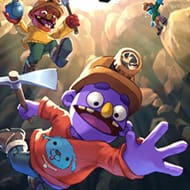
Pratfall

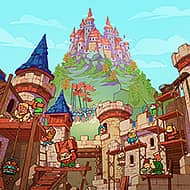









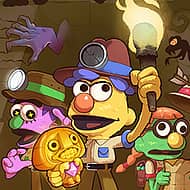
You and three friends drop into the mouth of a cave with nothing but a pickaxe and a missing dog to justify the descent, and within about thirty seconds someone’s already tunneled straight into open air and is falling past you screaming. Pratfall turns that exact kind of chaos into the entire point of the game.
| Genre | Physics-based co-op party game |
| Player Count | 1 to 6+ players |
| Biomes | Dirt Cave, Ice Cave, Lava Cave |
| In-Cave Items | 30+ |
Digging Through Dirt Cave, Ice Cave, and Lava Cave
Dirt Cave is where most groups start, and for good reason — hazards are predictable and fall angles behave the way you’d expect, which makes it the obvious training ground before anything harder. Ice Cave changes that almost immediately by introducing slippery surfaces that redirect momentum mid-fall, turning a controlled descent into something closer to a pinball run where a single misjudged landing sends you skidding into a teammate’s path.
Lava Cave is where the terrain itself starts fighting back. Reactive sections trigger chain reactions if you dig through them carelessly, and experienced groups have learned to route around those spots rather than plow straight through the way Dirt Cave habits might tempt you to. Newer players who carry their Dirt Cave digging instincts straight into Lava Cave are, almost without exception, the first ones to trigger a cave-in that splits the whole party.
Each biome asks for a slightly different instinct, and groups who treat all three the same way tend to lose teammates to hazards a more cautious dig would have avoided entirely. Veteran players — the ones who’ve logged enough runs to recognize a biome’s tell within the first few seconds of dropping in — will often call out a route change before newer teammates even notice the terrain has shifted.
The Catch Mechanic and Proximity Voice
The catch mechanic lets you position beneath a falling teammate and grab them before they hit the ground, turning what would be fall damage into a shared save. Learning to read a falling teammate’s trajectory early is consistently named as the single biggest jump in survivability for new groups, since it’s the one skill that scales across all three biomes without needing to be relearned.
Proximity voice chat reinforces this constantly, since audio naturally fades as players drift apart during a chaotic descent. That fade doubles as a built-in warning system — if you can barely hear your team anymore, you’ve probably split further than you meant to, and regrouping becomes the priority over continuing to dig deeper.
Speedrun-minded players treat catching as optional overhead, while co-op groups playing more casually tend to lean on it heavily, turning near-misses into some of the most replayed moments from a run. A third type, the self-appointed “designated catcher” that most groups end up with by their third or fourth session together, will often sacrifice their own digging progress just to stay positioned under whoever’s currently falling.
Tools, Traps, and the Weight of Gravity
Among the 30-plus items scattered through the caves, flares and ziplines get the most consistent recommendations, especially once Ice Cave’s dim lighting starts making hazards harder to spot early. Destructible terrain means every dig is a real decision rather than a formality, since a wrong tunnel can collapse a path your teammates were relying on, and there’s no simple undo for a section of cave that’s already come down.
Achievement hunters have plenty to chase too, with the game’s achievement count growing from 25 at launch to 35 after the Gumballs & Glory update added a gumball-machine cosmetics economy alongside new goals. Community guides in multiple languages have already sprung up walking through completion strategies, which says something about how quickly this small co-op game built a following.
The gap between tools that look useful and tools that are actually worth carrying is a point of honest disagreement in the community — some players swear by stacking flares for visibility in every biome, while others argue that carrying too many utility items just slows down a run that’s supposed to stay chaotic and fast. Both camps agree, at least, that ziplines earn their inventory slot once a Lava Cave run starts stretching vertically.
Playing With Larger Groups
Officially Pratfall supports up to 250 players in a single session, though the developers themselves note that four is the stable, thoroughly tested count and eight already starts feeling rough around the edges. Most guides steer new groups toward the smaller end regardless of the higher cap, since coordination and the catch mechanic both get noticeably harder once the group spreads out across a cave system built with a much smaller party in mind.
This gap between the technical player cap and the recommended count is one of the more common questions newcomers ask before their first session, and it’s worth setting expectations on before inviting a full lobby. A four-person crew still gets the core experience — coordinated digging, catches, and the occasional gravity-fueled disaster — without the diminishing returns larger lobbies tend to introduce.
Solo players aren’t left out either, since an offline mode exists for anyone without a group to drop with, though the catch mechanic and the panic of proximity voice fading obviously lose their meaning without teammates to share the descent. Most of the game’s community energy still centers on the co-op side, reflected in the fact that Pratfall crossed 130,000 copies sold within its first two weeks as a small, four-person studio release.
Between the reactive terrain of Lava Cave, the fading proximity chat that tells you exactly how far your group has scattered, and a missing dog that somehow still feels worth chasing after three collapsed tunnels, Pratfall earns its chaos honestly instead of just relying on gravity as a punchline.