

















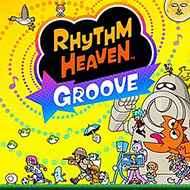
Rhythm Heaven Groove
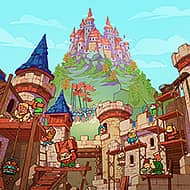



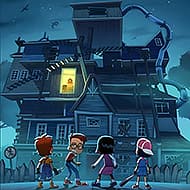




In Rhythm Heaven Groove you start with nothing but a beat and a couple of buttons, which matters more than it sounds like it should — the whole game is built on the assumption that your ears will save you long before your eyes do.
| Genre | Rhythm, music |
| Platform | Nintendo Switch |
| Mode | Single-player and local multiplayer |
| Series entry | Fifth mainline installment |
Learning to Trust the Beat Over the Screen
Visual cues exist in Rhythm Heaven Groove, but they’re a crutch the game slowly takes away from you. Early minigames give clear, readable animations timed to the music — a ball jumping through hoops, an umbrella opening and closing — and the input timing lines up almost exactly with what you’re seeing on screen. That comfort doesn’t last.
Once you clear enough minigames to reach the harder difficulty tier, some sequences deliberately obscure their audio cues, forcing you to keep the beat in your head without the game confirming it for you. This is the moment most new players describe as the wall where Rhythm Heaven Groove stops being charming and starts being genuinely demanding — reviewers have half-jokingly called this the Dark Souls of rhythm games for exactly this reason.
Players who came up on earlier entries like Fever or Megamix tend to adjust faster, since the franchise has always rewarded internal rhythm over visual pattern memorization. Newcomers who try to treat every minigame like a pure reaction-time test usually burn through their patience by the third or fourth Remix stage.
Eighty Solo Minigames Building Toward Each Remix
The solo mode strings together more than 80 minigames, and no two feel like reskins of each other — one has you boosting frogs into the air, another has you flapping a living umbrella in sync with three others, and Slice N Dice Kitchen turns cooking prep into a call-and-response timing test. The sheer variety is deliberate; Rhythm Heaven Groove wants every four-minigame stretch to feel like a different game entirely.
Every fourth minigame folds into a Remix stage that stitches together everything you’ve learned so far under one new track, and these are consistently cited as some of the best music in the whole collection. Remix 9 is the one exception worth flagging on its own — it’s exclusive to this entry and flashes through both prior minigames and upcoming ones as a kind of victory-lap preview.
Speedrun-minded players chase perfect combo streaks across an entire Remix without a single miss, while completionists are more focused on medaling every individual minigame to unlock everything sitting behind the Rhythm Toy Box. Both goals pull from the same mastery, but they reward very different play patterns session to session.
Color-Coded Multiplayer in Rhythm Heaven Groove
Local multiplayer supports up to four players across more than 30 competitive and cooperative minigames, and one detail keeps chaos manageable even at full player count: everyone picks a color, and every on-screen element tied to their input matches that color throughout the minigame. It sounds like a small UI choice, but on a shared screen with four sets of hands moving at once, it’s the difference between readable and unplayable.
The competitive cake-stealing minigame gets brought up constantly in community discussion, mostly because it turns a genuinely funny concept — musically timed theft — into one of the tensest four-player matches in the whole roster. Cooperative games ask for a different kind of coordination, closer to synchronized timing than competition, and groups that treat multiplayer sessions as a pure free-for-all tend to underperform against ones who call out the beat out loud.
One minigame specifically calls back to Fever’s Tambourine stage by flipping its call-and-response structure — now a monkey copies your rhythm instead of the other way around — and longtime fans treat spotting these lineage nods as part of the fun.
Beatspell Turns Timing Into Combat
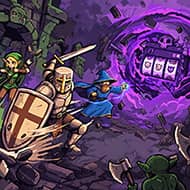
Beatspell is the mode that gets the most attention from players who’ve played every prior Rhythm Heaven entry, because nothing quite like it has existed in the series before. It’s a full RPG campaign spanning eight chapters plus a roguelike bonus chapter, where you tap buttons to the beat to cast rhythm-based spells like fire and healing against enemies instead of clearing a standalone minigame.
The pacing here is noticeably slower and more deliberate than the main minigame gauntlet, since Beatspell wants you managing spell timing across a full encounter rather than a 15-second burst. That shift catches some players off guard early on, expecting Beatspell to feel like more minigames strung together rather than a genuinely different mode with its own rhythm and stakes.
It’s also one of the more divisive additions — some players love that Rhythm Heaven Groove finally gives the beat mechanics a narrative frame, while others feel Beatspell’s slower pace drags compared to the tight, bite-sized rush of the core minigame gauntlet.
Lil’ Miss Reeds and Rhythm Heaven Groove’s Accessibility Layer
Every menu and instruction in Rhythm Heaven Groove is narrated by Lil’ Miss Reeds, a text-to-speech presenter whose extensive narration exists specifically to make the game more accessible to blind players. Her narration can be switched off entirely for anyone who’d rather read prompts silently, which matters given how audio-dependent the harder content becomes elsewhere.
It’s a small addition compared to the headline minigame count, but community response has been largely positive toward the choice, especially since accessibility features this thorough are rare in the rhythm genre specifically because so much of the genre leans on audio and visual timing simultaneously.
- How many minigames does Rhythm Heaven Groove have? Solo mode includes more than 80 minigames, with an additional 30-plus multiplayer minigames supporting up to four local players.
- What is Beatspell? Beatspell is a standalone RPG campaign across eight chapters plus a roguelike chapter, where players tap buttons to the beat to cast spells like fire and healing rather than clearing traditional minigames.
- Can you turn off the narration in Rhythm Heaven Groove? Yes — Lil’ Miss Reeds handles all menu and instructional narration by default, but her extensive narration can be disabled for players who prefer silent text prompts.
Between the Remix stages testing everything you’ve absorbed and Beatspell asking you to fight monsters to the same internal metronome, Rhythm Heaven Groove keeps finding new ways to make you trust your ears over your eyes, right down to the moment Lil’ Miss Reeds reads out your final Superb rank.